

AI CERTS
3 months ago
Investigative Journalistic Ethics Dispute Fuels ProPublica Strike
Meanwhile, executives insist policies should stay flexible as tools evolve rapidly. Industry observers describe the talks as a landmark Investigative Journalistic Ethics Dispute. Moreover, more than 80% of eligible staff have signed strike pledges. Practice pickets in February signaled willingness to escalate if talks stall further. Consequently, analysts see the standoff as an early test case for newsroom AI governance. This article unpacks the debate, weighs competing interests, and explores possible resolutions for both sides.
Escalating Labor Ethics Dispute
The ProPublica Guild formed in 2023 and won recognition within weeks. Subsequently, bargaining for a first contract stretched beyond two years. Union negotiators cite stalled progress on just-cause discipline, layoff protections, and AI safeguards. Furthermore, more than 180 employees could join a strike if management refuses concessions. Observers label the negotiations an Investigative Journalistic Ethics Dispute with national ramifications. In contrast, leadership claims discussions remain productive and insists no immediate newsroom disruption looms.
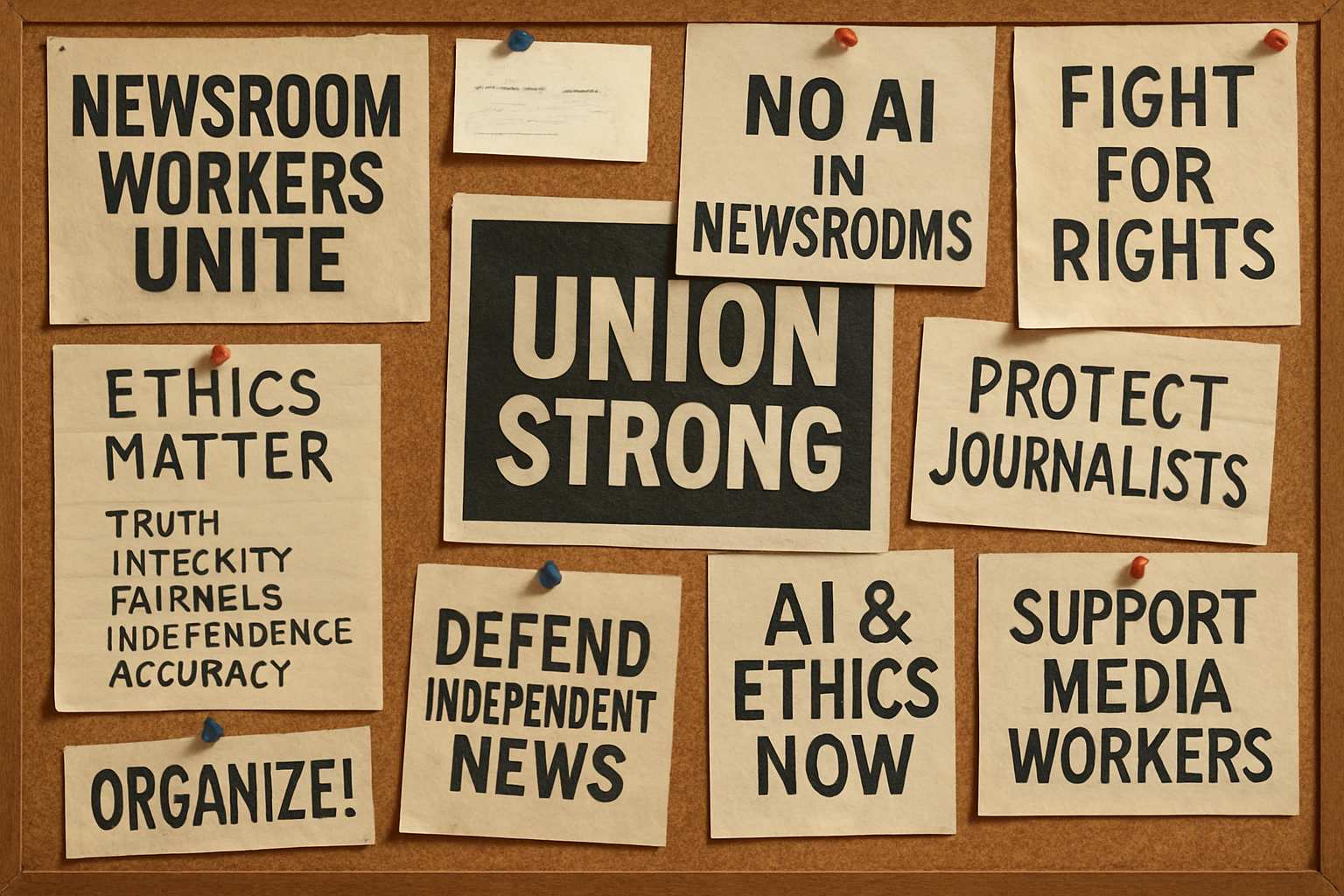
These timelines highlight deep frustration among staff. However, the conflict’s origin explains why emotions now run high.
Next, we examine the union’s specific AI demands that place humans at the heart of every investigation.
Union Seeks Human Disclosure
Guild members want clear language stating algorithms will never replace humans in core reporting roles. Moreover, any published work created or edited by AI must carry prominent disclosure. Therefore, the union proposes a contractual human-in-the-loop requirement to preserve accountability. Additionally, they seek advance notice and bargaining over future tool rollouts. Such measures, representatives argue, align with investigative transparency principles championed by ProPublica’s founders.
Union leaders frame these points as non-negotiable ethical pillars. Nevertheless, management holds a different view on permanence.
The following section details why executives resist locking AI rules into a decade-long contract.
Management Favors Agile Flexibility
Company spokesperson Tyson Evans says the organization approaches AI with both curiosity and skepticism. However, he warns it would be a mistake to freeze editorial decisions in a binding contract. Management instead offers expanded severance packages if automation impacts positions. Consequently, leaders believe flexible internal policies can evolve with advancing tools. Additionally, executives point to viral essays like “Something Big Is Happening” to justify caution against static rules. This branch of the Investigative Journalistic Ethics Dispute exposes contrasting innovation philosophies.
Executives acknowledge ethical concerns yet prioritize adaptability. In contrast, labor advocates fear adaptability might mask future cuts.
Industry data reveals how other newsrooms reconcile similar tensions through negotiated clauses.
Industry Deals Add Guardrails
NewsGuild statistics suggest the debate is no outlier. Moreover, 57 of 283 active newsroom agreements already contain AI provisions. Consequently, analysts track a clear trend toward contractual oversight. Alex Mahadevan of Poynter calls the movement “pretty monumental.”
- 57/283 NewsGuild contracts mention AI governance.
- More than 80% of unit members have signed walkout pledges.
- Practice pickets spanned three cities during February.
- Staff size exceeds 180 journalists, data technologists, and editors.
These numbers underline growing acceptance of negotiated technical standards. Nevertheless, company leadership argues each newsroom faces unique investigative workflows that generic clauses may not fit. Each settlement contributes data to the broader Investigative Journalistic Ethics Dispute playing out across media.
Comparative evidence pressures management to compromise. However, differing risk assessments still complicate talks.
The next section explores why reader trust amplifies the dispute’s stakes.
Reader Trust At Stake
Investigative journalism rests on credibility earned through meticulous verification by humans. Therefore, undisclosed algorithmic help could erode that trust quickly. Union members warn that readers may question every revelation if AI participation stays hidden. Furthermore, mislabeled or unlabeled outputs risk legal exposure during sensitive corruption probes. Consequently, the Investigative Journalistic Ethics Dispute resonates beyond payroll issues and touches audience confidence.
Transparency obligations make disclosure clauses more than symbolic. Yet, aligning moral duty with operational flexibility remains challenging.
Possible scenarios outline how both parties might avoid an actual strike.
Scenarios Before Potential Strike
Mediators could help finalize wage bands and finalize AI wording without prolonging conflict. Additionally, negotiators might insert sunset clauses allowing periodic agreement reviews. Such mechanisms grant flexibility while assuring protections for humans today. Moreover, the guild could delay a formal strike vote in exchange for targeted management guarantees. Alternatively, leadership may test resolve by waiting past practice pickets. Successful mediation could close the Investigative Journalistic Ethics Dispute without walkouts.
Each scenario offers a path to consensus. Nevertheless, failure would escalate pressure toward walkout.
Regardless of outcome, professionals can prepare by expanding skills in AI governance.
Upskilling For AI Governance
Journalists and editors increasingly shoulder responsibility for evaluating algorithmic tools. Consequently, practical expertise in responsible deployment strengthens bargaining power across newsrooms. Professionals can enhance their expertise with the AI Human Resources™ certification. Moreover, curriculum modules cover risk assessment, disclosure frameworks, and change management. Such knowledge equips humans to negotiate balanced contract clauses and to audit emerging systems. Importantly, these capabilities support ethical missions no matter how the Investigative Journalistic Ethics Dispute resolves.
Skill development insulates careers against automation shocks. Therefore, proactive learning complements collective action strategies.
The concluding section distills key insights and highlights next steps for stakeholders.
The newsroom showdown compresses multiple newsroom dilemmas into one high-profile theater. Moreover, AI guardrails, wage equity, and just-cause protections converge within a single contract negotiation. Both sides recognize evolving tools yet differ on permanence, disclosure, and risk. Consequently, the Investigative Journalistic Ethics Dispute may set precedents for future bargaining across media. Nevertheless, flexible review clauses and shared training could bridge gaps before a disruptive strike. Finally, all stakeholders should monitor developments closely. Pursuing certifications will deepen ethical AI literacy.
Stay ahead of rapid change—enroll in accredited AI governance programs today and strengthen your newsroom’s ethical foundation.
Disclaimer: Some content may be AI-generated or assisted and is provided ‘as is’ for informational purposes only, without warranties of accuracy or completeness, and does not imply endorsement or affiliation.


