

AI CERTS
4 hours ago
Meta-AMD Pact Fuels Next-gen Superintelligence Buildout
Analysts quickly compared the agreement to energy mega-projects. However, the structure is novel in technology markets. Meta gains guaranteed capacity, while AMD secures multi-year revenue visibility. The phrase Next-gen Superintelligence Buildout now anchors discussions about future AI factories.
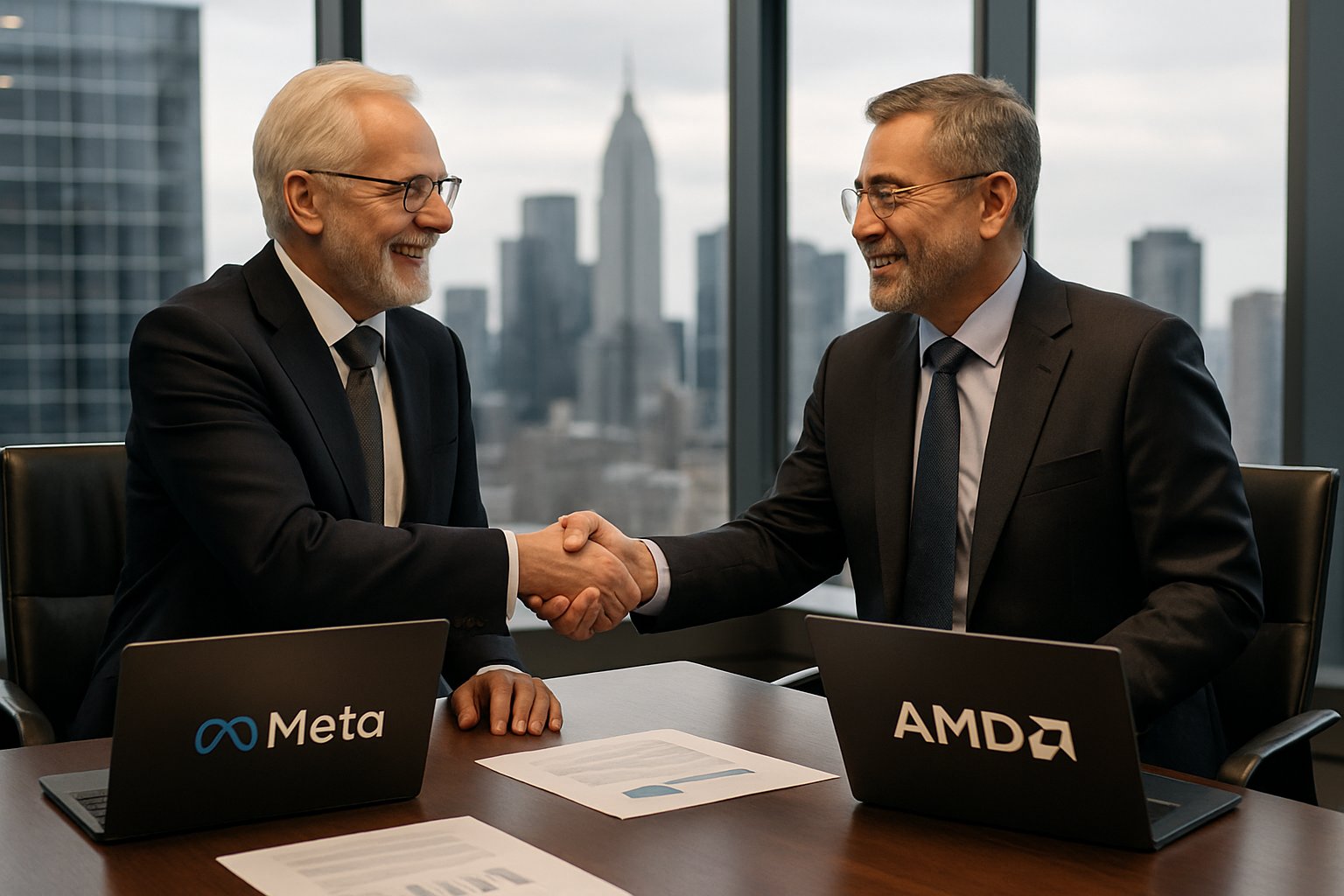
Meta AMD Deal Overview
Under an amended Master Purchase Agreement dated 23 February 2026, Meta committed to buy one gigawatt of custom AMD Instinct GPUs immediately. Moreover, the roadmap extends to six gigawatts across several product generations.
AMD issued Meta a warrant covering 160 million shares at one cent per share. Vesting tranches depend on hardware milestones and escalating share-price hurdles, peaking at $600. Consequently, equity value shifts alongside silicon shipments.
Lisa Su stated, “We are proud to expand our strategic partnership with Meta.” Mark Zuckerberg added that efficient inference compute will deliver personal superintelligence. The term Next-gen Superintelligence Buildout therefore moved from concept to contractual reality.
These headline terms underscore growing supplier diversification. Nevertheless, they also introduce complex financial mechanics. Therefore, deeper examination follows.
Gigawatt Scale Roadmap
The deal’s centerpiece is the six-gigawatt ceiling. One gigawatt ships during the second half of 2026. Subsequently, deliveries ramp each year as packaging, HBM memory, and rack production align.
Each gigawatt equates to roughly 150,000 high-end GPUs, depending on thermal design limits. Furthermore, Meta will integrate sixth-generation EPYC “Venice” CPUs and Helios racks to balance compute, storage, and power density.
Industry analysts translate six gigawatts into tens of billions in hardware revenue. In contrast, AMD’s filing discloses no dollar total. Estimates vary because unit mix, forward pricing, and component inflation differ by generation. Still, the sheer scale cements this Next-gen Superintelligence Buildout as one of history’s largest infrastructure programs.
Meta gains secured capacity and roadmap input. Consequently, AMD strengthens credibility against Nvidia dominance. These dynamics set the stage for the warrant discussion.
Financial Mechanics Explained Clearly
The warrant deserves special attention. Vesting triggers combine shipment thresholds and AMD share prices. Additionally, Meta receives registration rights, enabling rapid liquidity if desired.
Independent analysts argue that the warrant functions like volume discounts financed via future dilution. Nevertheless, AMD avoids near-term cash erosion. Meanwhile, Meta aligns incentives, lowering risk that AMD misses delivery timelines.
Key warrant facts appear below:
- Exercise price: $0.01 per share
- Maximum shares: 160 million
- Expiration: 23 February 2031
- Share-price hurdles: up to $600
- Hardware milestones: 1 GW, 3 GW, and 6 GW
Consequently, Meta holds potential upside exceeding $90 billion if AMD’s valuation soars. Yet the arrangement only materializes if gigawatt targets are met. Thus, the Next-gen Superintelligence Buildout embeds mutual accountability.
These mechanics illustrate financial engineering’s growing role in hyperscale procurement. However, technology questions remain equally critical.
Technical Architecture Details Revealed
The first deployment uses a custom Instinct MI450 variant tailored for Meta’s recommendation workloads. Moreover, the Helios rack enables disaggregated networking and shared memory pools, driving higher utilization and lower power overhead.
ROCm provides the open software layer, easing migration away from Nvidia CUDA. Additionally, Meta’s internal frameworks already support heterogeneous accelerators, smoothing adoption. Subsequent generations will introduce “Verano” EPYC CPUs, further boosting compute per watt.
Analysts view this stack as a template for future AI factories. Therefore, the Next-gen Superintelligence Buildout could influence open standards and supplier roadmaps beyond Meta.
This architecture promises efficiency gains. Nevertheless, external factors will shape ultimate performance, as the market section explains next.
Market Impact Assessment Today
Shares of AMD surged more than 14% on announcement day. Meanwhile, Nvidia fell modestly as investors assessed competitive risk. Furthermore, memory vendors rallied, expecting higher HBM demand.
Revenue estimates span $60 billion to over $100 billion across the program’s life. Consequently, brokerage models now include multi-year cash-flow inflections for AMD. However, uncertainty around component inflation and factory yields tempers exuberance.
Industry benefits stretch beyond Meta. Additional hyperscalers may pursue similar structures, intensifying competition and distributing power among suppliers. If that occurs, the phrase Next-gen Superintelligence Buildout may describe an entire market cycle, not one contract.
Investors greeted the news positively. Nevertheless, risk factors deserve equal scrutiny, covered next.
Key Risks And Considerations
Dilution tops many analyst concerns. If all tranches vest, Meta gains roughly 9% of AMD’s current float. Moreover, production bottlenecks in substrates, HBM, or advanced packaging could delay shipments.
The agreement also fuels “AI bubble” commentary. Critics argue that circular equity deals inflate valuations without underlying profitability. Nevertheless, proponents counter that aligned incentives accelerate innovation while preserving cash.
Environmental groups highlight six-gigawatt energy requirements. Consequently, Meta must secure renewable power contracts, or face sustainability backlash. Regulatory scrutiny of large stock warrants may intensify as well.
These risks could slow the Next-gen Superintelligence Buildout. However, mitigation strategies exist, as outlined below:
- Advance purchase agreements with HBM suppliers
- Geographic diversification of data centers
- Transparent warrant disclosures to investors
- Investment in clean energy offsets
Understanding these challenges informs strategic planning. Consequently, attention shifts to actionable insights.
Strategic Takeaways Moving Forward
First, Meta secures critical compute while diversifying suppliers. Second, AMD gains a marquee customer and validates its MI450 and Helios architectures. Third, the warrant structure demonstrates creative financing that others may emulate.
Professionals can deepen domain expertise through the AI Data Robotics™ certification. Moreover, mastering supply-chain analytics will prove invaluable as the Next-gen Superintelligence Buildout becomes a multi-firm reality.
These lessons close the analytical loop. However, a concise summary reinforces core insights and next steps.
Conclusion
The Meta–AMD pact redefines hyperscale procurement. Furthermore, it propels the Next-gen Superintelligence Buildout from vision to funded roadmap. Deal terms blend large hardware volumes, advanced racks, and innovative financing. Consequently, market dynamics shift, competitive pressures rise, and sustainability considerations intensify.
Professionals should monitor delivery milestones, warrant vesting events, and supply-chain signals. Additionally, pursuing specialized learning paths will enhance career resilience. Therefore, explore the linked certification, stay informed, and position yourself at the center of tomorrow’s superintelligence economy.


