

AI CERTs
3 hours ago
Google’s Real-time Image Model Strategy Behind Nano Banana 2
Google DeepMind has unveiled a new Real-time Image Model called Nano Banana 2, and the news matters. Moreover, the February 26 announcement pushes advanced image generation into Search, Lens, Ads and Cloud in one stroke. Industry leaders note that integrated generative tools will soon influence every marketing storyboard, product catalog and social feed. Consequently, professionals must grasp what powers the release and where it sits in Google's stack. They also need to understand how provenance safeguards attempt to quell synthetic-media fears. This feature unpacks the technical upgrades, market stakes, and competitive context, while providing actionable guidance for enterprise teams. Furthermore, analyst forecasts place the generative-AI market at USD 161 billion by 2026, underscoring why Google accelerates deployment. Meanwhile, rivals such as OpenAI and Adobe continue to iterate rapidly, tightening the race for photorealistic, provenance-aware tools. Nevertheless, Nano Banana 2's blend of speed and control sets a notable benchmark that merits close examination.
Market Stakes Keep Rising
Global demand for generative visuals is soaring. Fortune Business Insights projects the market will hit USD 161 billion in 2026 and surpass one trillion early next decade.
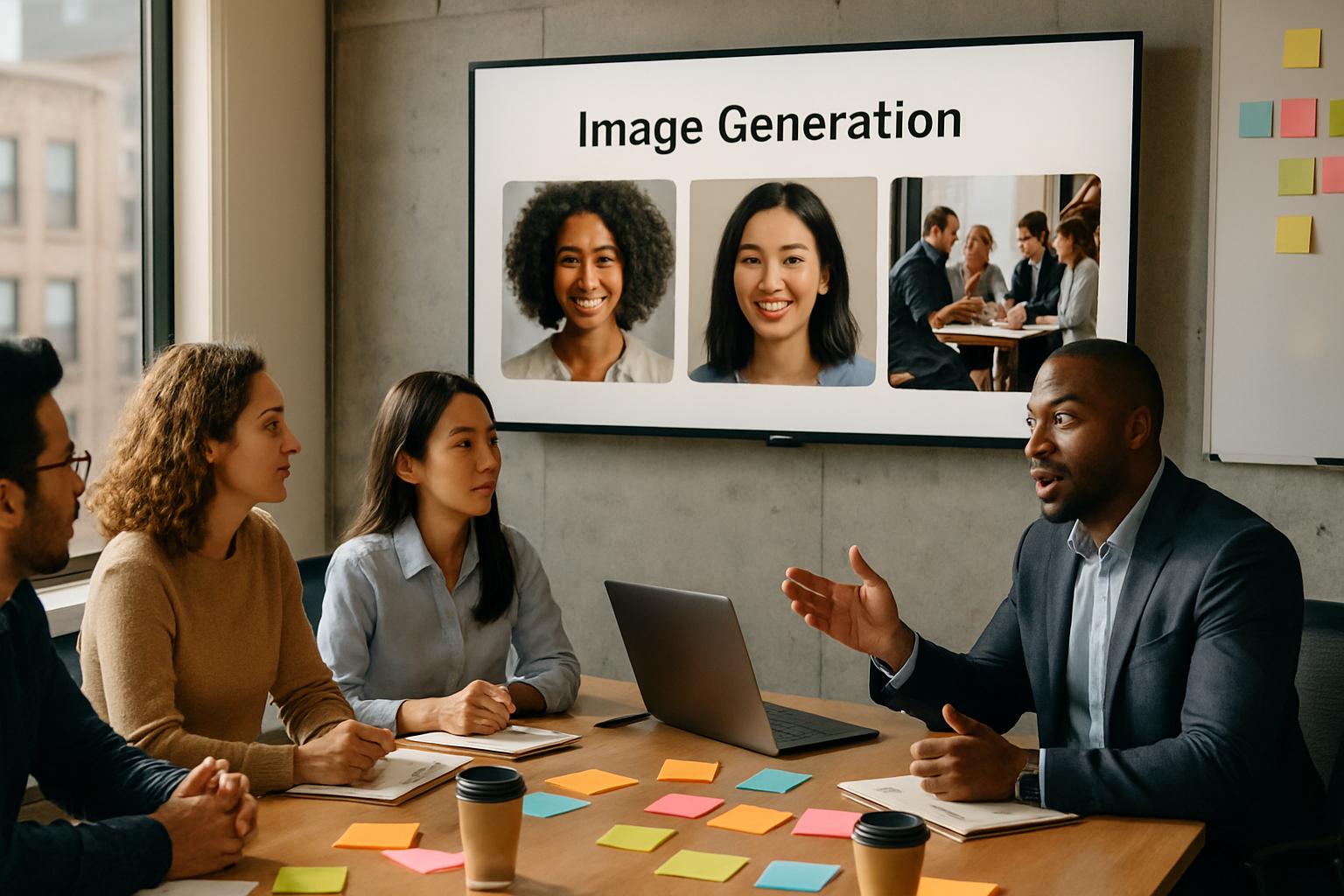
Consequently, vendors race to embed creation tools directly into existing workflows. Google uses its Real-time Image Model integration across Gemini, Search, Lens, Ads and Cloud to capture that growth.
In contrast, competitors such as OpenAI, Adobe and Stability AI rely on standalone portals or limited plug-ins. The deeper Google's hooks go, the harder it becomes for users to switch.
Meanwhile, the Nano Banana brand enjoys strong recall after months of blind tests and social buzz. Therefore, marketing momentum compounds the technical advantage.
These numbers and positioning reveal why the rollout matters. However, product specifics deserve equal attention before budgets shift.
Inside Nano Banana 2
Nano Banana 2, officially Gemini 3.1 Flash Image, merges the Pro model's fidelity with Flash speed. Moreover, Google promotes real-time web grounding that injects current facts, scores, or weather into generated scenes.
The Real-time Image Model handles multilingual text rendering, 4K resolution, and subject consistency for five people and fourteen objects. Additionally, it supports multi-turn editing and aspect-ratio changes without losing likeness.
Google claims the system delivers Flash-tier latency across most prompts. Furthermore, Pro quality now reaches free Gemini tiers, a shift highlighted by The Verge.
Important safeguards ride alongside. SynthID watermarking remains embedded, and C2PA Content Credentials attach verifiable metadata at creation.
These technical elements underpin the release. Consequently, performance and provenance intertwine in Google's narrative about trustworthy speed.
Therefore, the Real-time Image Model also underpins new infographic templates inside Workspace Slides.
Speed Meets Pro Fidelity
For many creatives, latency dictates adoption. Consequently, Google fused Flash inference stacks with Pro weights.
That fusion created a Real-time Image Model rendering drafts in under two seconds during demos.
Moreover, text-on-image quality remains legible at small fonts, a point stressed in the November Pro release. Wired's hands-on review confirmed crisp signage and packaging shots.
Subject consistency also benefits. The model tracks pose, lighting and wardrobe across multi-step edits, keeping up to five characters coherent.
These improvements narrow the gap with specialist tools like Midjourney and Adobe Firefly. However, cloud integration gives Google a distribution edge those rivals lack.
Speed and fidelity therefore reinforce each other. Nevertheless, provenance remains the looming question driving policy debates.
Provenance Tools Under Scrutiny
Google pairs SynthID watermarks with C2PA metadata to flag generated assets. Additionally, the Gemini app features a verification button already used 20 million times.
However, researchers demonstrate that cropping or down-scaling weakens invisible marks, though removal remains difficult. In contrast, C2PA relies on platforms preserving signatures, something many social networks still strip.
Consequently, policy groups urge broader adoption of Content Credentials and legal disclosure mandates. Google supports these aims but cannot enforce external adherence.
DeepMind argues that layered approaches deter misuse even if no single method proves infallible. Nevertheless, critics call the toolkit a marketing shield.
Stakeholders thus face a trade-off between velocity and verifiability. Therefore, enterprises must plan policies around both mechanisms.
Ultimately, any Real-time Image Model is only as trustworthy as the channels that respect its markings.
Competitive Landscape Snapshot
OpenAI's DALL·E 4, Adobe Firefly 3, Midjourney v8 and Stability AI's SDXL all target similar users. However, only Google delivers a Real-time Image Model woven into a mass consumer search engine.
Furthermore, Google controls the funnel from query to creative asset, reducing friction and capturing telemetry for future improvements. That data advantage feeds rapid iterations like Nano Banana 2.
The following feature matrix highlights the current state:
- DALL·E 4: strong composition, slower API throughput, limited provenance features.
- Firefly 3: enterprise licensing, C2PA metadata, moderate speed.
- Midjourney v8: stylistic strength, Discord workflow, no formal watermarking.
- Gemini 3.1 Flash: Flash latency, Real-time Image Model grounding, SynthID plus C2PA.
Competitors will answer quickly, and diffusion of features will compress differentiation. Nevertheless, Google's distribution moat remains wide today.
Dynamics will likely shift again within quarters. Consequently, decision makers should evaluate roadmaps at least bi-annually.
Enterprise Workflow Impacts
Marketing teams gain immediate benefits. For example, product managers can invoke the Real-time Image Model to generate localized packaging in minutes.
Moreover, subject preservation lets advertisers tweak color schemes while maintaining brand mascots across channels. Consequently, iteration cycles compress and media spend decreases.
Vertex AI customers also obtain programmatic access, enabling automated A/B tests at scale. Additionally, Flow users can sync still images into video storyboards in a click.
The operational upside comes with governance duties. Teams must store C2PA hashes and build SynthID checks into review pipelines.
These practices ensure traceability and compliance. However, leaders also need skill upgrades to orchestrate multimodal workflows.
Preparing Your Teams
First, audit existing creative pipelines for bottlenecks. Then, map where a Real-time Image Model can replace manual steps without compromising quality.
Secondly, establish provenance checkpoints. Integrate SynthID detectors and preserve C2PA metadata through publishing stages.
Professionals can enhance expertise with the AI Prompt Engineer certification. Moreover, structured training accelerates adoption and reduces governance gaps.
Finally, revisit risk policies every quarter, because the technology evolves rapidly. Consequently, continuous monitoring protects brand integrity.
These actions create readiness for accelerating innovation. Therefore, organizations can capture value while maintaining trust.
In summary, Google’s Real-time Image Model strategy, embodied by Nano Banana 2, blends speed, fidelity and provenance at massive scale. Furthermore, the integration across Search, Lens, Ads and Vertex AI positions Google to own critical creative surfaces. Nevertheless, open questions persist around watermark robustness and metadata survival. Still, early metrics signal strong user interest, and market forecasts show room for multiple winners. Consequently, forward-looking teams should experiment now, refine guardrails, and skill up before competitors outpace them. Moreover, legislative momentum in Europe and Asia will likely mandate disclosure, making early compliance efforts worthwhile. Therefore, leaders who act today gain both creative agility and reputational advantage.


