

AI CERTS
4 months ago
Shoeless Offices and AI Startup Culture
Cursor recently raised $2.3 billion at a $29.3 billion valuation, amplifying interest in every office quirk. Consequently, investors, HR leaders, and future recruits all ask why footwear has vanished inside those glass walls. This article dissects the no-shoes phenomenon, its origins, benefits, risks, and practical rules for companies considering adoption. Throughout, we examine what the mini-movement reveals about modern AI Startup Culture and the wider workplace trend.
Shoeless Startup Office Buzz
Images of shoe racks outside tech offices circulate regularly on X and LinkedIn. Nevertheless, the Cursor snapshot went further because the company handles code for millions of developers. Furthermore, the firm’s stratospheric funding meant mainstream outlets could not resist a quirky headline. In contrast, smaller startups like Speak or Replo draw niche attention when adopting similar ground rules. Therefore, shoeless entrances have become shorthand for relaxed yet demanding AI Startup Culture inside venture-backed lofts.
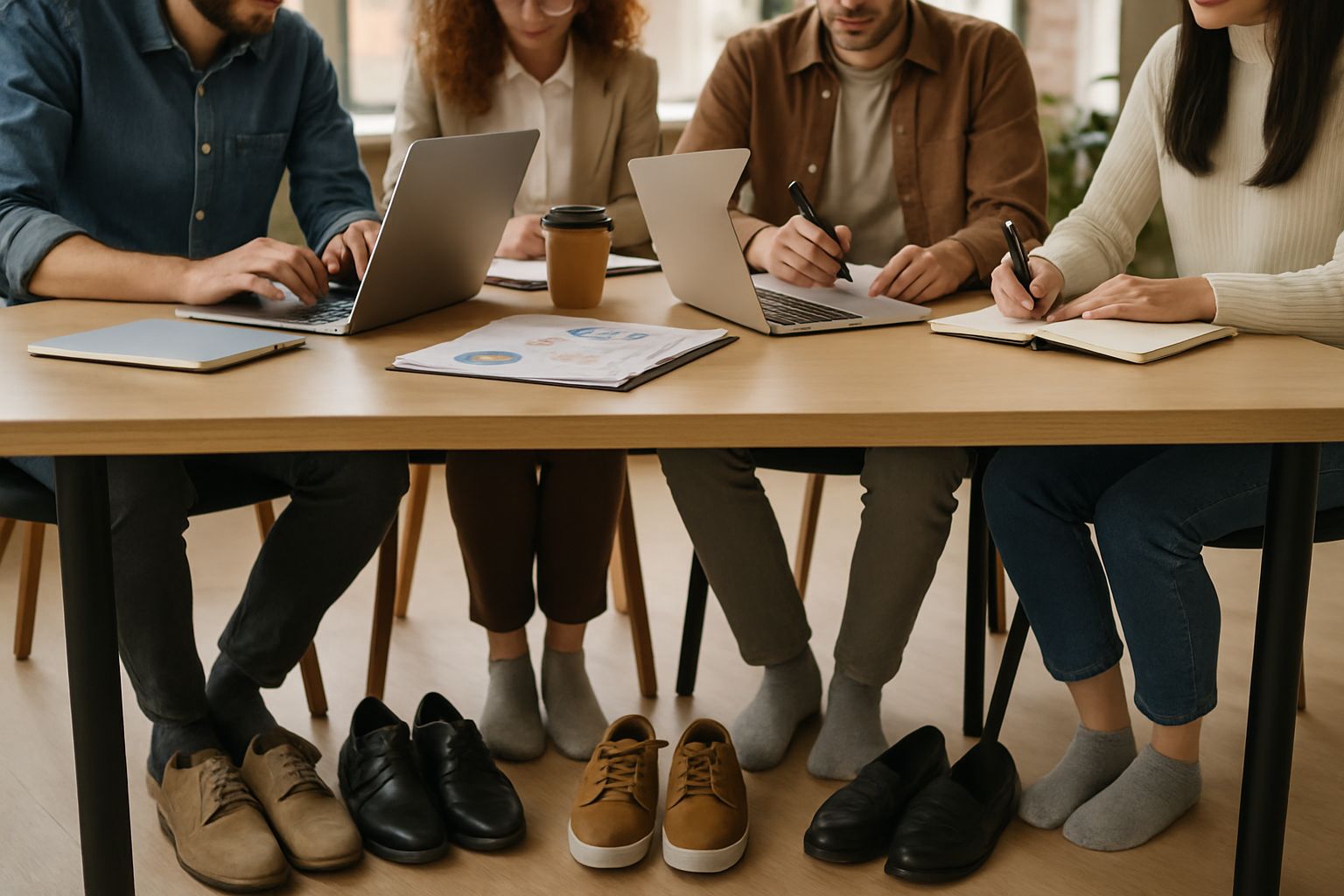
Cursor’s fame magnified a long-standing habit. However, virality does not explain where the practice began. The backstory unfolds next.
Origins And Viral Timeline
Ben Lang, then a new Cursor product lead, posted the first public photos in August 2025. Subsequently, he launched noshoes.fun, a lightweight directory logging companies with comparable rules. Moreover, business press revisited the list each quarter as more names appeared. The February 2026 post by developer Andre Landgraf reignited coverage, pushing the story onto morning broadcasts from Delhi to Dallas. Meanwhile, academics from MIT joined radio panels to discuss cultural diffusion among startups. Consequently, a simple hygiene gesture became proof of shifting norms in AI Startup Culture beyond California.
The timeline shows consistent visibility since 2025. Yet, motives rather than dates drive persistence. Those motives appear next.
Pros And Core Motivations
Comfort tops every internal survey. Employees tell reporters that socks and branded slides make long debugging sessions less tiring. Additionally, founders argue the ritual dissolves hierarchy, letting interns and executives meet as equals. Moreover, shoe removal reduces outdoor microbes, dust, and pesticides, according to National Academies reviews.
Key Cleanliness Study Highlights
- University data found 421,000 bacterial units average on sampled soles.
- Researchers measured 13 times more lawn pesticides indoors when shoes stayed on.
- Carpets retained microbial traces for up to five days.
- Slip-resistant indoor footwear cut fall incidents by 8% in one pilot office.
- Surveyed staff reported 17% fewer allergy complaints after six months shoeless.
In contrast, supporters also cite Eastern cultural heritage and founders educated at MIT or Seoul National University. Consequently, the decision doubles as a recruiting narrative, reinforcing innovative AI Startup Culture branding. Equally, AI Startup Culture prizes small rituals that make enormous symbolic impact.
Comfort, identity, and hygiene intertwine to sustain adoption. However, critics raise legitimate counterpoints. Those counterpoints follow.
Risks And Noted Critiques
Not everyone likes exposed socks. Nevertheless, some visitors perceive the scene as unprofessional or exclusionary. Safety professionals remind founders that OSHA rules still mandate protective footwear near hazards. Furthermore, shared mats can amplify odor issues if cleaning lags. Anita Williams Woolley of Carnegie Mellon warns blurred boundaries may complicate feedback conversations.
Meanwhile, employees with medical conditions may need supportive shoes and rightful accommodation. Therefore, companies risk legal exposure if they enforce blanket rules without exemptions. Cursor provides slippers at the foyer, but reporters could not locate a formal written policy. Ultimately, unbalanced AI Startup Culture can backfire when comfort overrides compliance.
The critiques underline hygiene, safety, and inclusion gaps. Still, structured mitigation strategies exist. Practical guidelines appear next.
Smart Implementation Best Practices
HR teams can neutralize most hazards through considered planning. Firstly, leaders should complete an OSHA hazard assessment covering kitchens, labs, and delivery zones. Secondly, draft clear signage explaining when shoes are optional and when protective gear remains mandatory. Professionals can strengthen credibility by earning the AI Developer™ certification, which deepens technical awareness and supports policy design.
Comprehensive Policy Drafting Checklist
- Define scope and exceptions in written rules.
- Budget for branded slippers or stipends.
- Schedule daily floor sanitation and quarterly deep cleans.
- Create guest protocols with optional indoor shoes.
- Document accommodation processes for health needs.
Moreover, communicating the rationale through town-halls reduces confusion and supports inclusive AI Startup Culture. Consequently, companies like Speak grant “slipper stipends” and publish FAQs inside onboarding wikis.
Structured steps convert a quirky idea into a safe perk. Next, we compare adoption across the sector.
Broader Startup Workplace Trend
Noshoes.fun currently lists more than twenty companies following similar customs. Recruiters from Gusto and Composite mention slippers when pitching flexibility perks. Additionally, media outlets compare shoeless offices to open-source values, framing them as visible signals of transparency. MIT entrepreneurship lecturers cite the habit during seminars on symbolic culture building. Furthermore, cross-border coverage shows interest in India, Vietnam, and Germany, suggesting the workplace trend now travels globally. Therefore, analysts view it as one measurable artifact of agile AI Startup Culture diffusing into traditional sectors. In contrast, public corporations seldom risk the optics, fearing shareholder questions about professionalism.
Adoption clusters around founder-led startups still shaping identity. However, the pattern indicates growing mainstream curiosity. Final insights arrive below.
Cursor’s no-shoes foyer illustrates how everyday rituals can broadcast values louder than any slide deck. Moreover, comfort benefits converge with hygiene science, recruitment narratives, and cost efficiency. Nevertheless, unmanaged risks around safety, inclusion, and odor can erode trust faster than funding accumulates. Therefore, leaders embracing this workplace trend must establish clear rules, sanitation budgets, and documented accommodations. Engage with evolving AI Startup Culture today by reviewing certifications and refining office policies.
Disclaimer: Some content may be AI-generated or assisted and is provided ‘as is’ for informational purposes only, without warranties of accuracy or completeness, and does not imply endorsement or affiliation.


