

AI CERTS
3 hours ago
Algorithmic Bias Error Spurs Wrongful Arrests, Legal Fallout
Meanwhile, experts warn that similar technology still rolls out across departments from Detroit to Thames Valley. This article unpacks the roots of those failures, recent settlements, and the reforms now reshaping policing. Moreover, it explores the financial damages already paid and the looming liability if agencies ignore warning signs. Readers will also discover practical steps for mitigating risks and advancing ethical practice. Finally, we highlight a certification path that helps professionals drive responsible AI governance.
Wrongful Arrests Surge Worldwide
Washington Post reporters now count at least eight Americans wrongfully jailed after faulty facial matches. In contrast, researchers suspect the hidden total is higher because many police departments withhold usage logs. Furthermore, every documented case traces back to an Algorithmic Bias Error compounded by human confirmation bias.
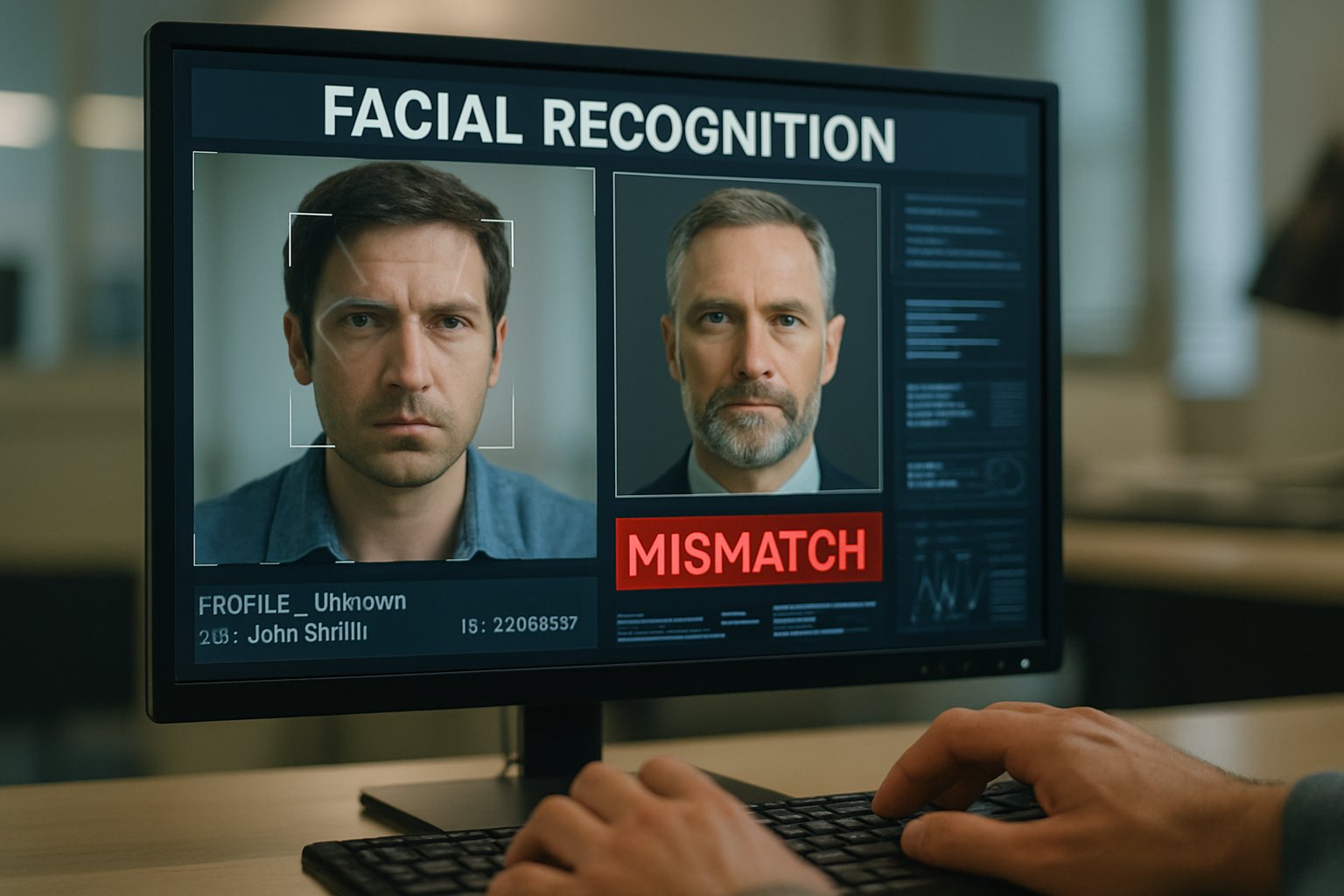
Robert Williams, Michael Oliver, Nijeer Parks, and Christopher Gatlin suffered public humiliation, missed work, and long court fights. Consequently, cities from Detroit to St. Louis have begun settling lawsuits before juries hear chilling details. Detroit alone paid $300,000 in damages after Williams sued, while audits of old warrants continue.
These stories prove the stakes are personal and systemic. However, to solve them we must first understand technical roots.
Roots Of Bias Explained
Face recognition involves either 1:1 verification or 1:N identification against vast image galleries. Moreover, NIST found false positive rates that vary up to 100 times between demographic groups. Joy Buolamwini reported error rates topping 30 percent for darker-skinned women in commercial systems.
Consequently, training data gaps propagate into the field, where low-light CCTV further degrades accuracy. Automation bias then prompts investigators to treat algorithm scores as facts rather than uncertain leads. That chain often ends with an Algorithmic Bias Error triggering arrest paperwork.
Understanding bias mechanics clarifies why mere software upgrades cannot erase disparities. Therefore, examining measurable performance data becomes vital.
High False Positive Rates
NIST’s FRVT evaluations rank algorithms by accuracy, yet even top performers show demographic gaps. In contrast, real-world images from Thames Valley street cameras are blurrier than NIST test photos. Consequently, false positives spike when lighting, angles, or occlusions deviate from controlled benchmarks.
- Low quality surveillance frames increase false positives by up to 10 times.
- Demographic imbalances raise mismatch odds, particularly for Black and female faces.
- Operator over-confidence leads police to skip corroborating evidence before arrests.
Moreover, each factor multiplies the next, culminating in an Algorithmic Bias Error that appears authoritative on paper.
These statistics underscore the technology’s fragility under street conditions. Next, we examine how one landmark settlement turned data into reform.
Detroit Settlement Key Lessons
The Williams v. Detroit agreement, signed June 2024, banned arrests based solely on facial matches. Additionally, it mandates training, audits back to 2017, and public disclosures for every future query. City officials accepted liability and paid damages rather than risk a courtroom narrative.
Patrick Grother of NIST praised the audit clause, noting it aligns with empirical evaluation best practices. Meanwhile, civil-rights groups hailed enforceable guardrails as a blueprint for other police departments. Nevertheless, advocates stress that an Algorithmic Bias Error can still occur if staff ignore new rules.
The settlement shows reform is possible through litigation pressure and transparent metrics. Consequently, attention now shifts to international forces adopting similar tools.
Global Policing Bias Repercussions
United Kingdom agencies, including Thames Valley Police, pilot live facial recognition for crowd monitoring. However, civil liberty groups warn that European data protection rules may clash with current deployment methods. Furthermore, wrongful Misidentification overseas could spark costly damages and erode public trust fast.
Australian and Brazilian forces face similar scrutiny as vendors market improved accuracy scores. In contrast, Amazon, Microsoft, and IBM restrict sales, citing unresolved Algorithmic Bias Error concerns. Consequently, procurement officers weigh investigative utility against reputational risk.
International debates mirror the American experience of promise and peril. Therefore, reform proposals now dominate policy meetings.
Proposed Guardrail Policy Measures
Scholars outline layered safeguards to cut errors before they reach court. Moreover, suggested steps include threshold confidence scores, independent audits, and mandatory defense disclosure. Jurisdictions also consider banning photo lineups that rely on any single Algorithmic Bias Error.
Below are widely cited recommendations:
- Publish annual police usage logs with demographic statistics.
- Require corroborating evidence beyond algorithm outputs before warrants.
- Provide ongoing bias training certified by external bodies.
Furthermore, professionals can enhance expertise via the AI Ethics Certification teaching fairness auditing. Nevertheless, success depends on consistent funding and executive oversight. Consequently, budget negotiations must align technical controls with civil rights priorities.
These guardrails promise measurable risk reduction. Next, we assess business angles shaping vendor strategy.
Business And Ethical Upsides
Market analysts value the broader image recognition sector in the tens of billions. However, lawsuits over Algorithmic Bias Error already influence valuations and investor sentiment. Moreover, companies positioning transparency as a product feature see faster procurement cycles with cautious police buyers.
Clearview AI, NEC, and DataWorks Plus highlight human-trafficking successes to counter bias narratives. Meanwhile, regulators consider fines or damages when vendors overstate accuracy claims. Therefore, aligning revenue growth with proven fairness may unlock sustainable competitive advantage.
Professionals armed with governance skills bridge business goals and ethical mandates. Consequently, certification holders often guide procurement, audit outcomes, and stakeholder communication.
Commercial incentives thus reinforce the call for stronger oversight. We now conclude with actionable reflections.
Facial recognition will remain a powerful investigative tool when deployed with humility and guardrails. However, every practitioner must assume that Misidentification risk persists despite improving code. Therefore, teams should document each Algorithmic Bias Error and feed lessons into retraining cycles. Moreover, transparent disclosure enables defense attorneys to challenge dubious matches before lives derail.
Meanwhile, settlements prove that courts will impose costs whenever sloppy workflows harm citizens. Consequently, gaining structured expertise such as the AI Ethics Certification offers immediate value. In contrast, organizations ignoring Misidentification signals invite reputational fallout. Act now to audit systems, rewrite policy, and prevent the next Algorithmic Bias Error.


