

AI CERTS
3 hours ago
Benchmark Ethics drive India’s AI sovereignty scoreboard
Consequently, Benchmark Ethics becomes the guiding phrase for policymakers seeking transparency and trust. This article dissects the emerging Indian blueprint, budget numbers, and competing viewpoints. Moreover, it explains how cultural reasoning tests could anchor procurement rules. Professionals can deepen skills with the AI+ Quantum™ certification referenced by summit speakers. India now backs this push with a ₹10,371-crore mission. Ultimately, readers will see why a rigorous scoreboard may matter more than another massive model.
Sovereignty Vision Gains Urgency
At the India AI Impact Summit, Prime Minister Modi declared data and model control a strategic imperative. Furthermore, CEOs from global and domestic firms echoed the message. They unveiled three multilingual models labelled sovereign and trained on Indian datasets.
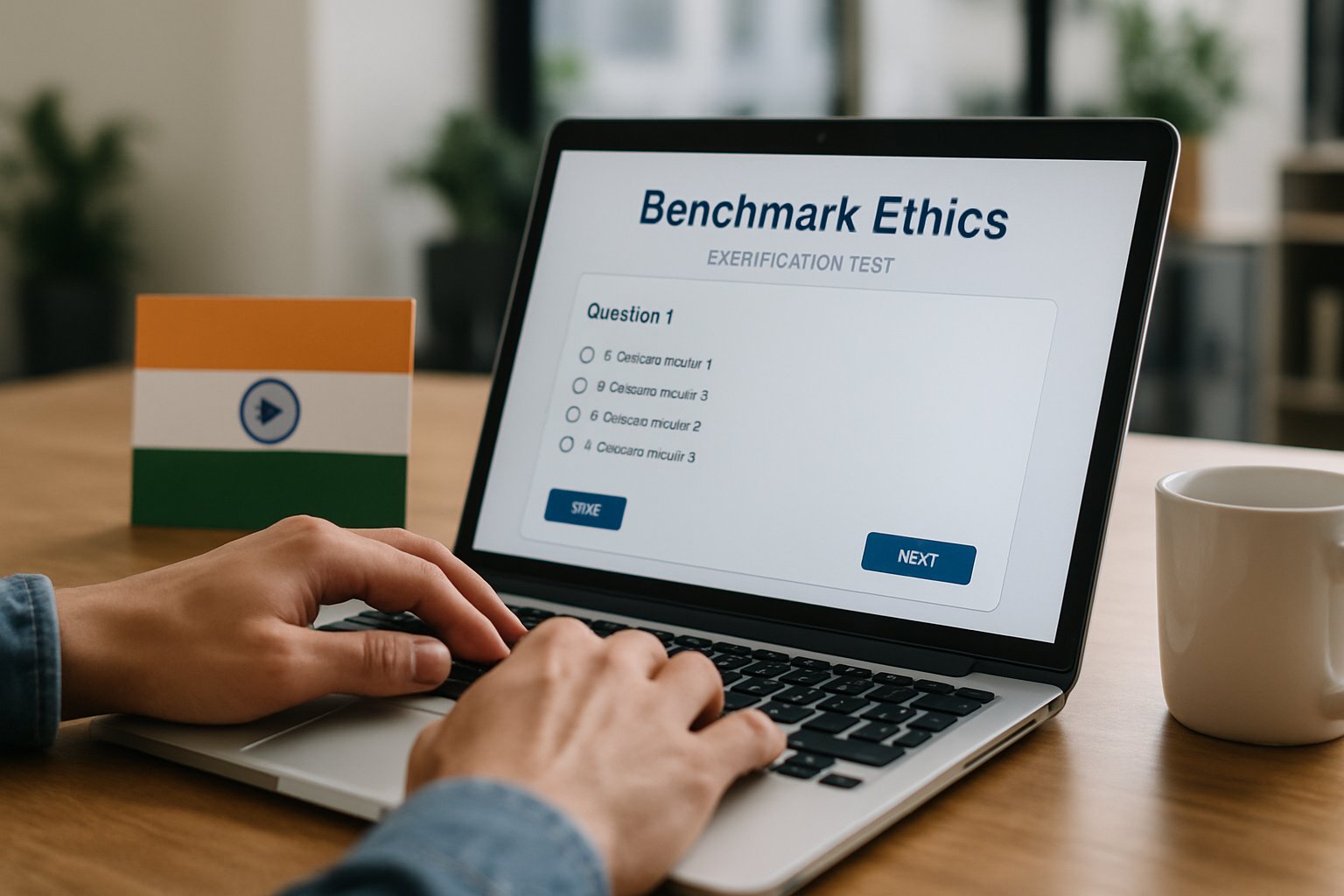
Funding details reinforced urgency. Moreover, the IndiaAI compute portal lists nearly 38,000 GPUs reserved for national projects. Officials promised additional clusters during the five-year ₹10,371-crore rollout.
Consequently, commentators note that hardware alone cannot guarantee useful outcomes. They insist a transparent Benchmark Ethics framework must accompany every deployment. These observations summarize summit sentiment. In contrast, the next section explores why evaluation beats scale.
Why Metrics Now Matter
International leaderboards still drive media hype. However, these tests rarely capture cultural context or regional compliance norms. For example, MMLU struggles with caste references or dialect code-switching.
Therefore, analysts advocate an Indian Scoreboard that weights Indic language accuracy and safety equally. Such metrics would guide procurement decisions across healthcare, agriculture, and justice workflows. Benchmark Ethics assures that metrics remain unbiased, reproducible, and publicly verifiable.
Moreover, transparency attracts foreign vendors willing to fine-tune systems for local demands. These advantages clarify why metrics overshadow pure model size. However, creating that scoreboard requires careful design, explored next.
- ₹10,371 crore allocated over five years to the IndiaAI Mission.
- Approximately 38,000 GPUs already empanelled for public projects.
- Three sovereign models unveiled: Sarvam 105B, BharatGen 17B, Gnani Vachana.
Designing Indian AI Scoreboard
Experts propose a multistakeholder governance council led by AI4Bharat and MeitY. Meanwhile, open datasets covering land records, RTI appeals, and village dialect speech would form the core. Model cards would document training sources, limitations, and mitigation steps for each submission.
Additionally, the council could mirror Stanford HELM yet prioritize cultural sensitivity scores. Reasoning depth would be tested through IndQA plus new domain-specific case sets in Hindi, Tamil, and Bhojpuri. Consequently, providers must optimise logic, safety, and local idiom rather than only perplexity.
Benchmark Ethics insists that scoring scripts stay open source and regularly audited. Subsequently, external researchers can reproduce rankings and file challenges, boosting legitimacy. These design steps lay the foundation. The following section illustrates real-world application.
Benchmark Ethics In Practice
Government agencies already test chatbots that draft land ownership transfers. Moreover, early pilots reveal hallucinations when legal jargon shifts between English and Gujarati. Benchmark Ethics demands that every misclassification is logged and traced back to training gaps.
In contrast, openAI’s IndQA focuses on fact recall rather than workflow completion. Therefore, the national evaluation suite adds step-wise reasoning tasks that simulate clerk approvals and citizen appeals. Reasoning coverage now spans fiscal calculations, crop advisory, and RTI drafting across ten languages.
Professionals piloting these systems often seek recognised credentials. Consequently, many enrol in the AI+ Quantum™ program to master audit techniques. These deployments show policy meeting practice. Next, we examine market opportunities.
Opportunities For Local Ecosystem
Auditing platforms, dataset curators, and red-team consultancies could see immediate demand. Moreover, startups building Indic speech testbeds can license tools to both domestic and foreign vendors. Government tenders already reference cultural coverage scores.
Consequently, venture capital follows these new metrics. Carnegie analysts estimate a ₹2,000-crore market for evaluation services by 2028. Benchmark Ethics appears prominently in investor memos, signalling trust expectations.
These prospects highlight economic upside. However, critics warn of hidden risks discussed next.
Risks And Rising Criticisms
Some researchers fear benchmark overfitting that degrades generalisation. Additionally, opaque committee membership could erode legitimacy. Sovereignty ambitions may also fuel protectionist licensing demands.
In contrast, global labs already publish India-centric tests, challenging nationalist narratives. Nevertheless, advocates argue that community governance can mitigate capture. Benchmark Ethics proposes open audit logs as a safeguard against manipulation.
These criticisms underscore implementation hazards. Meanwhile, policymakers draft phased roadmaps explored in the final section.
Roadmap Toward Global Respect
MeitY officials outline three sequential actions. First, release a beta portal with language, safety, and reasoning metrics by October 2026. Second, tie public procurement to minimum threshold scores within twelve months. Third, mandate annual external audits using Benchmark Ethics criteria.
Additionally, the mission will fund rural data collection to improve cultural coverage. Consequently, more dialects and minority scripts will gain test representation. These steps aim to earn international acceptance. In contrast, failing transparency could isolate the ecosystem.
Stakeholders now agree that transparent measurement, not raw parameter counts, will shape public trust. However, building credible tests demands sustained funding, open data, and political independence. India can seize leadership by releasing its beta portal on schedule and honouring audit commitments. Consequently, aligned industry incentives will raise overall model quality for citizens and businesses. Professionals should watch funding tranches and join community comment periods. Meanwhile, skill seekers may validate their expertise through the linked AI certification and stay ahead of policy changes. The coming year will reveal whether visionary plans translate into measurable impact.


