

AI CERTS
4 hours ago
AI Tops Corporate Risk Rankings, Security Leaders Respond
This article distills fresh findings, expert views, and policy shifts into actionable insight. Moreover, we map technical Threat vectors to practical countermeasures. As Encryption strategies evolve, decision makers must align budgets with reality. Read on for a structured briefing designed for busy executives managing Corporate Risk portfolios.
Recent Survey Data Signals
Survey evidence confirms sentiment shifts within security communities. Thales reported that nearly 70% of organizations flagged AI as their fastest-rising security priority. Meanwhile, 73% are already funding AI-specific defenses, signalling budget realignment.
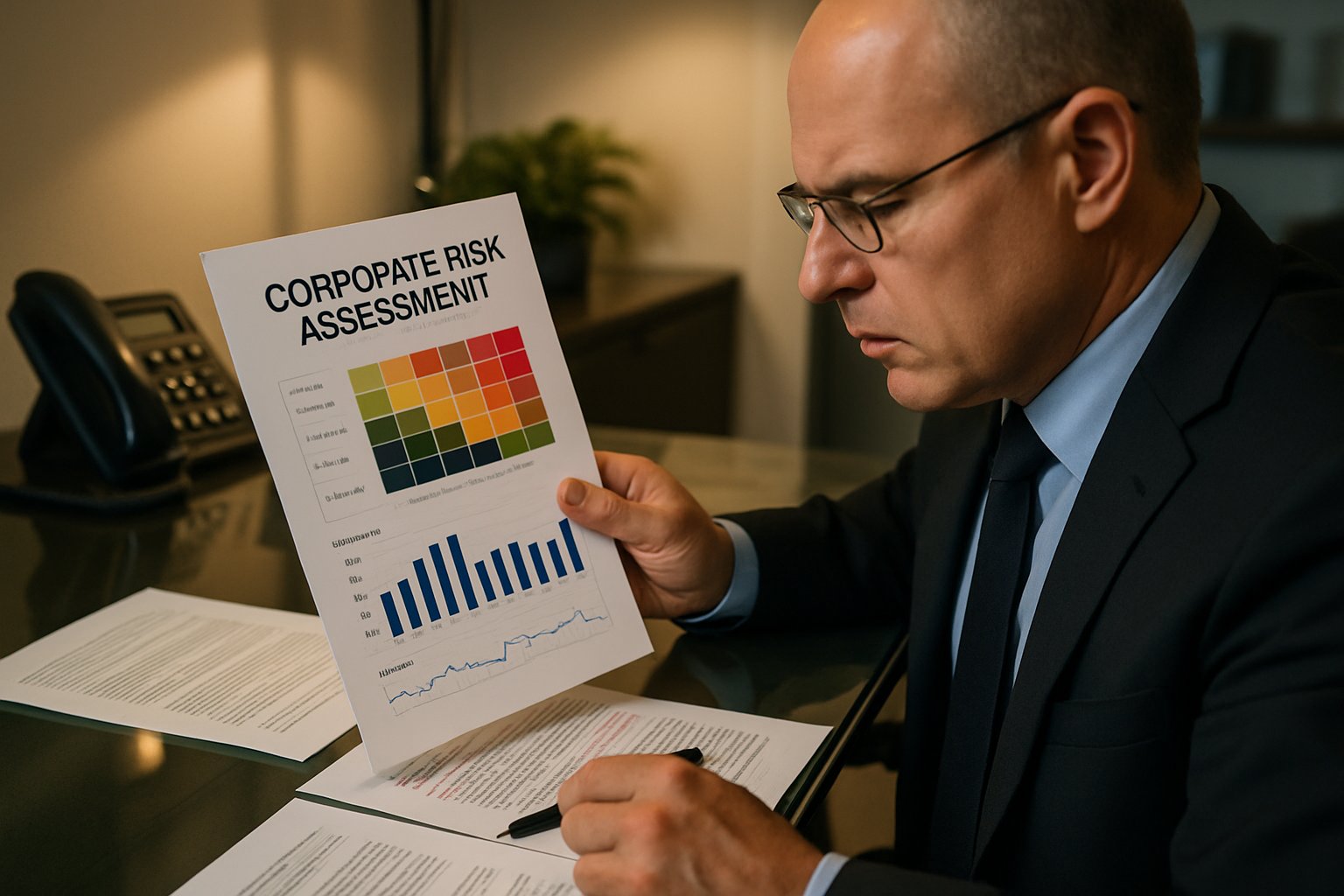
HackerOne and SANS echoed the pattern, where 48% ranked AI the single largest Threat. Furthermore, Gartner found 69% suspect employees use unsanctioned tools, heightening Corporate Risk.
Key Statistics Snapshot Now
- 70% cite AI as top security issue — Thales 2025 report.
- 73% invest in AI defense tooling — same study.
- 48% list AI as biggest Threat — HackerOne/SANS.
- 69% detect or suspect shadow AI activity — Gartner.
Analysts caution that respondent pools skew toward regulated industries. Nevertheless, sector variance remains narrow, reinforcing AI’s universal profile.
These figures underscore perception turning into allocation. However, numeric snapshots require technical context, explored next.
Evolving Technical Attack Surface
AI changes the vulnerability map in unexpected ways. Prompt injection tops OWASP lists, letting attackers override system safeguards. Model poisoning embeds hidden logic during training, risking catastrophic output manipulation. Moreover, supply-chain weaknesses expose companies to library or agent compromises.
Deepfakes illustrate another Threat, facilitating social engineering and potential financial Breach. Consequently, Encryption alone cannot shield workflows, because malicious outputs bypass perimeter filters. Agentic systems escalate stakes because they autonomously call APIs. In contrast, traditional software lacked such dynamic authority boundaries.
Technical vectors multiply faster than legacy defenses adapt. Therefore, human Insider behavior magnifies exposure, demanding separate analysis.
Shadow AI Pressure Points
Unauthorized chatbots appear wherever policies lag behind innovation. Gartner predicts 40% of enterprises will face a shadow AI Breach by 2030.
Employees copy code, client data, or designs into public models without Encryption safeguards. Consequently, compliance teams confront privacy, trade secret, and Insider governance failures.
However, outright bans often push staff toward riskier consumer tools. Leading organizations now publish clear usage matrices, approved model lists, and monitoring playbooks.
Legal departments fear export-control violations when shadow AI crosses borders. Meanwhile, auditors struggle to inventory hidden prompts.
Culture and clarity reduce unsanctioned tool adoption. Subsequently, regulators are stepping in with structured guidance.
Government Standards Response Grows
Policy makers recognize escalation and act quickly. In January 2025 CISA released the JCDC AI Cybersecurity Collaboration Playbook.
Moreover, UK and EU bodies issued voluntary codes pairing model evaluation with Encryption baselines. These frameworks encourage information sharing, red teaming, and taxonomy alignment.
Meanwhile, cloud vendors joined tabletop simulations, demonstrating practical readiness. Consequently, board reporting now references external benchmarks, shifting Corporate Risk narratives.
Japan, Israel, and Singapore draft parallel guidance focused on critical infrastructure. Moreover, insurance regulators explore mandatory disclosure of AI control maturity.
Public guidance legitimizes investment requests from security leaders. Nevertheless, tooling remains fragmented, which our next section addresses.
Mitigation Playbooks Emerging Now
Vendors and communities translate frameworks into concrete controls. OWASP and MITRE publish checklists covering prompt filtering, output validation, and agent identity.
Palo Alto Networks, Robust Intelligence, and Protect AI release runtime monitors flagging Threat activity. Furthermore, enterprises integrate Encryption key management with model pipelines to prevent exfiltration.
Notably, Thales hardware security modules now support inference tokenization, reducing Breach fallout. Professionals can enhance governance expertise through the AI Product Manager™ certification.
Red teams now simulate prompt injection chains during annual penetration tests. Subsequently, C-suite discussions include tabletop outcomes within quarterly board packets.
Unified playbooks translate aspiration into repeatable practice. However, leadership still needs strategic alignment with enterprise objectives.
Strategic Guidance For Leaders
Boards should classify AI assets alongside traditional systems within Corporate Risk registers. Moreover, metric dashboards should tie model availability, accuracy, and exposure to overall Corporate Risk appetite.
Budget projections should allocate reserves for incident response, monitoring, and specialised insurance addressing Corporate Risk from AI misuse. Consequently, insurers request evidence of Encryption controls, Insider policy enforcement, and third-party audit before pricing Corporate Risk.
Leaders must foster cross-functional drills reflecting realistic Threat scenarios, compressing Breach detection times and protecting Corporate Risk value. Boards also demand quantitative scenario modeling to price residual exposure. However, data scarcity complicates stochastic modeling, forcing proxy metrics.
Strategic discipline turns innovation into resilient advantage. Therefore, the discussion closes with a concise recap and action call.
Conclusion
AI’s rapid evolution elevates Corporate Risk while simultaneously empowering defenders. Consequently, surveys, standards, and vendor innovations converge toward shared mitigation playbooks. Leaders must integrate Thales data insights, government guidance, and OWASP frameworks into governance routines.
Moreover, dedicating funding for Encryption upgrades, Insider training, and Threat simulations strengthens resilience. Nevertheless, sustained vigilance remains essential as attack surfaces expand. For practical next steps, pursue red-team exercises and explore the linked certification to deepen strategic expertise.


