

AI CERTs
3 months ago
Biometric Privacy Backlash Hits Amazon Ring Facial Recognition
Doorbell cameras have become household IoT icons. However, a fresh twist now fuels controversy. In December 2025, Amazon Ring quietly activated Familiar Faces, an opt-in facial recognition tool. The rollout triggered an immediate Biometric Privacy Backlash. Critics say home cameras now assign covert identities instead of simple motion alerts. Moreover, Senator Edward Markey demanded answers on consent gaps. Market analysts note tens of millions of Ring devices already watch porches nationwide. Consequently, any design change scales quickly. Ring insists features remain local and optional. Nevertheless, civil-liberties groups fear normalization of private mass identification. This article unpacks technology, law, market forces, and mitigation strategies behind the storm.
Feature Launch Sparks Scrutiny
Ring documented Familiar Faces on its support portal when the beta reached 2K and 4K models in December 2025. Additionally, the company aired a Super Bowl commercial in February 2026 to highlight the upgrade. Those glossy clips framed recognition as neighborly convenience. In contrast, privacy groups warned the promotion normalized doorstep surveillance.
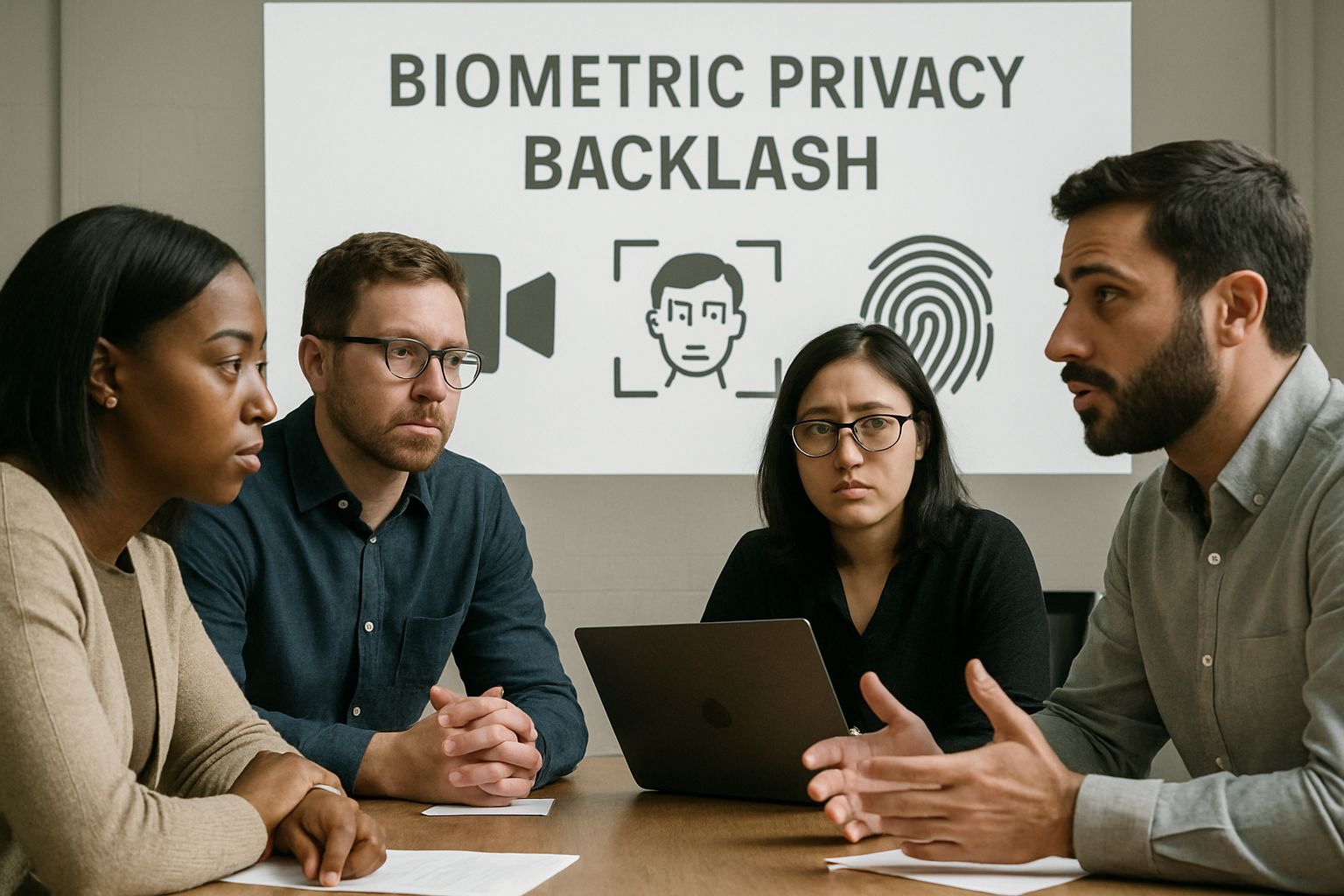
Analyst estimates place the Amazon Ring installed base near 20 million units, granting massive reach on day one. Moreover, each camera continuously captures passers-by, whether or not owners label those profiles. Consequently, adoption decisions by a single household ripple across entire sidewalks.
These launch choices seeded public alarm. However, legal pressure would soon intensify, as the next section explains.
Legal Landscape Tightens Fast
Illinois and Texas already restrict biometric collection under BIPA and CUBI statutes. Therefore, Ring blocks Familiar Faces in those states and in Portland, Oregon. Nevertheless, Senator Markey argued that national safeguards remain absent. His December 2025 letters accused Amazon Ring of lacking clear consent workflows.
Meanwhile, the 2023 FTC settlement still looms over the firm. That action forced refunds and security audits after employee snooping incidents. Consequently, regulators watch any new face-matching code closely. Civil litigators also eye potential class actions under biometric laws should misused profiles emerge.
The legal spotlight grows sharper each quarter. Next, we examine how technical compromises could widen the Biometric Privacy Backlash.
Technical Tradeoffs Raise Questions
Enabling Familiar Faces deactivates end-to-end encryption for affected recordings. Moreover, it stores labeled embeddings locally until users delete them. Ring says unlabeled captures vanish after 30 days. However, independent labs have not verified this workflow.
- Encryption disabled, raising interception exposure.
- Accuracy varies with lighting, height, and angle.
- Demographic error rates remain undocumented for doorbells.
- Unclear retention of deleted profiles in backups.
Consequently, security teams must weigh convenience against fresh attack surfaces. Professionals can enhance their governance skills with the AI Security Level 3™ certification. These tradeoffs demonstrate why architecture matters. However, bias and accuracy issues create a second technical hurdle.
Bias And Accuracy Gaps
NIST evaluations show error disparities across demographic groups, especially dark-skinned women. Moreover, outdoor doorbell footage complicates matching because of glare and low angles. Ring has not released empirical accuracy numbers for Familiar Faces. Consequently, misidentifications could wrongly tag visitors and fuel Biometric Privacy Backlash.
Technical opacity magnifies accountability concerns. Next, we explore how market forces shape deployment speed.
Market Pressure And Competition
Smart-doorbell revenue already sits in the billions and climbs year over year. Furthermore, analysts give Amazon Ring roughly 39 percent share in 2024. Competitors such as Google Nest or Arlo test similar AI upgrades. Consequently, vendors race to differentiate on intelligence rather than image quality alone.
Moreover, subscription revenue grows when features lock behind paywalls. That incentive collides with compliance costs from biometric lawsuits. Competitive urgency therefore accelerates risky rollouts. The economic backdrop also feeds public surveillance risk perceptions, discussed next.
Surveillance Risk Debate Intensifies
Civil-liberties advocates warn that doorstep cameras expand private monitoring of public walkways. In contrast, Ring frames the tech as personalized security, not broad surveillance. Nevertheless, evidence shows police increasingly request footage via warrants. Consequently, critics fear face-labeled profiles could become searchable by law enforcement. Moreover, the canceled Flock Safety integration highlighted that aggregation threat. These factors deepen the Biometric Privacy Backlash within policy circles.
Public trust erodes when casual recording morphs into perceived corporate policing. Therefore, stakeholder positions now diverge sharply.
Stakeholder Perspectives Diverge Sharply
Homeowners appreciate fewer nuisance notifications and quicker visitor identification. However, bystanders receive no opt-in screen, raising a fresh Biometric Privacy Backlash. EFF labels the feature an unconsented surveillance risk that may contravene state law. Meanwhile, Amazon Ring highlights opt-in design and the ability to delete profiles.
Policymakers balance safety narratives against civil rights precedents. Consequently, some city councils pursue outright bans, while others draft disclosure rules. These contrasting priorities fuel policy flux. The concluding section offers practical steps for professionals navigating the storm.
Facial recognition turns mundane doorbells into potent data sensors. Therefore, the Biometric Privacy Backlash will persist until transparency, consent, and encryption coexist. Professionals should audit deployments, map data flows, and document legal bases for collection. Additionally, limit stored profiles, delete unused records, and enable encryption where possible. These steps reduce surveillance risk while preserving homeowner convenience. Moreover, organise cross-functional reviews with counsel, security, and product teams every quarter. Consequently, organisations can stay ahead of evolving statutes and dampen the Biometric Privacy Backlash. Finally, share findings publicly to rebuild trust and reshape the broader Biometric Privacy Backlash narrative.
Disclaimer: Some content may be AI-generated or assisted and is provided ‘as is’ for informational purposes only, without warranties of accuracy or completeness, and does not imply endorsement or affiliation.


