

AI CERTs
3 hours ago
US Tech Corps Spurs AI Export Geopolitics Strategy
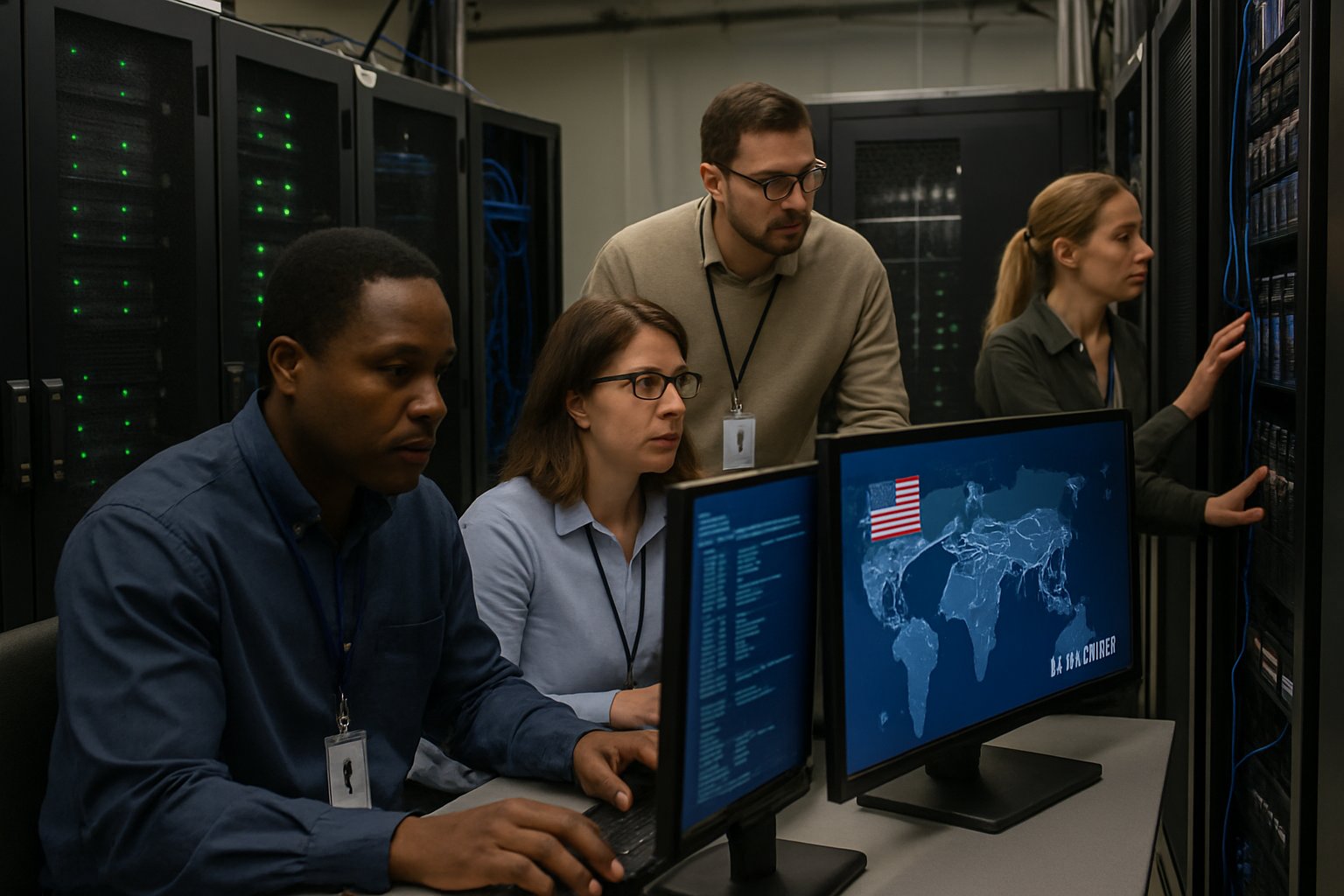
Washington’s newest soft-power tool arrived on 20 February 2026. OSTP Director Michael Kratsios unveiled the Tech Corps at India’s AI Impact Summit. The initiative positions volunteer technologists as last-mile enablers for American ‘full-stack’ artificial intelligence exports. Consequently, analysts immediately linked the announcement to escalating AI Export Geopolitics. The program deliberately mirrors the Peace Corps ethos while pursuing twenty-first-century strategic aims abroad.
Executive Order 14320 makes the American AI Exports Program deliver hardware, models, and finance as one package. Meanwhile, Tech Corps volunteers will train local teams, adapt datasets, and integrate applications across health, agriculture, and education. Moreover, the White House frames these deployments as advancing partner sovereignty without ceding influence to rival tech blocs. Therefore, questions emerge about talent, infrastructure, and oversight. This article dissects the launch, examines strategic drivers, and weighs risks shaping AI Export Geopolitics.
Program Launch Details Unpacked
Kratsios announced Tech Corps alongside Indian cabinet ministers, signaling early focus on South Asian partnerships. Additionally, he linked the corps to Washington’s July 2025 executive order creating the export program. The order instructs Commerce to assemble industry consortia that ship chip-to-application stacks overseas. Consequently, Tech Corps becomes the human interface attached to that technical offering within broader AI Export Geopolitics.
Peace Corps materials outline 12–27 month deployments, three months of training, and modest stipends with healthcare coverage. Furthermore, virtual service pilots offer shorter remote engagements when on-site infrastructure proves fragile. Recruitment opens spring 2026, with first boots on the ground by fall, pending host-country agreements.
Tech Corps therefore marries volunteer service traditions with aggressive technology diplomacy timelines. However, deeper policy instruments drive the mission, as the next section explains.
Strategic Policy Framework Explained
EO 14320 directs multiple agencies, including EXIM and DFC, to finance American AI packages abroad. Moreover, it mandates export-control compliance to keep sensitive models from adversarial hands. In contrast, the Tech Corps mandate focuses on capacity building rather than financing. Nevertheless, both levers converge on AI Export Geopolitics by embedding U.S. standards inside partner infrastructures. Supporters argue the framework preserves standards while reinforcing pathways to global dominance.
Kratsios emphasized 'sovereign infrastructure, sovereign data, sovereign models' when pitching the plan. The sovereignty argument positions Washington as an enabler, not a controller, of domestic AI policies abroad. Consequently, the administration claims the program fosters democratic values while countering foreign digital authoritarianism.
The legal scaffolding thus integrates development, commerce, and security prerogatives. Subsequently, operational mechanics determine whether those lofty goals survive real-world constraints.
Operational Model Mechanics Overview
Peace Corps recruiters target data scientists, ML engineers, and domain experts fluent in local languages. Furthermore, volunteers must navigate limited bandwidth, patchy power grids, and regulatory ambiguity in emerging markets. The American export consortia must therefore bundle low-latency hardware, secure networking, and localized datasets. Meanwhile, volunteers customize training curricula, transfer code repositories, and establish governance playbooks.
- AI-optimized chips and edge servers
- Cloud credits and hybrid networking gateways
- Pre-trained models adapted to local languages
- Cybersecurity and monitoring dashboards
- Sector applications in health and agriculture
Bootcamp curricula cover ethical AI, data governance, and deployment troubleshooting in low-resource environments. Additionally, language immersion modules help volunteers communicate technical concepts to non-specialist public servants. Mentorship circles pair each volunteer with experienced expatriate engineers to ensure continuity and peer support. Consequently, field readiness progresses beyond classroom theory toward practical adaptation skills.
These components anchor technical feasibility in resource-constrained contexts. However, AI Export Geopolitics will intensify once technical blueprints meet political realities.
Geopolitical Stakes Assessed Thoroughly
Observers frame the initiative as Washington’s answer to Beijing’s Digital Silk Road. Moreover, EXIM financing reduces procurement friction, encouraging governments to choose U.S. systems over Chinese alternatives. Consequently, supporters see future market share and global dominance accruing to domestic cloud and model vendors. Experts at CSIS note that standards exported alongside code can lock in long-term influence.
In contrast, critics warn that host nations may perceive strategic strings attached to apparently altruistic assistance. Nevertheless, administration officials argue that respecting data residency preserves sovereignty while advancing alignment. AI Export Geopolitics thus hinges on balancing influence with credible local control guarantees.
Regional blocs like ASEAN and the African Union monitor the initiative for potential collective bargaining leverage. Furthermore, European regulators evaluate interoperability with upcoming AI Act compliance regimes. Analysts suggest synchronized standards could lower certification costs for multinational firms. Nevertheless, overlapping jurisdictions may create complex audit requirements for cross-border datasets.
The stakes revolve around trust, standards, and strategic supply chains. Next, we examine emerging risk narratives challenging that trust.
Risks And Skeptics Voice
Engadget analysts highlight talent economics as the first hurdle. Additionally, senior engineers earning six-figure salaries rarely accept volunteer stipends. Consequently, the corps may skew junior, potentially limiting complex system integration effectiveness. Privacy advocates also fear exported models could facilitate surveillance if governance lags.
Infrastructure gaps compound the challenge; many host grids cannot sustain GPU clusters without costly upgrades. Moreover, export-control compliance layers administrative burden on already stretched teams. Therefore, unresolved costs could undermine AI Export Geopolitics before pilots even launch. Nevertheless, supporters argue phased deployments and cloud bursting can mitigate capacity shortages.
Rights groups warn that facial recognition exports could entrench mass surveillance if guardrails stay vague. In contrast, administration advisors claim federated learning can minimize raw data movement. Moreover, Peace Corps safety protocols include whistleblower channels for ethical concerns. Independent oversight boards are under discussion but remain unfunded.
These critiques expose operational fragility beneath headline ambitions. However, strategic talent pipelines might close some gaps, as discussed next.
Talent Pipeline Questions Raised
Peace Corps recruitment drives target graduate programs, diaspora networks, and corporate sabbatical schemes. Furthermore, returning alumni receive non-competitive eligibility for federal AI posts, enhancing career appeal. Companies are encouraged to treat service as leadership development, yet participation remains voluntary. Professionals may deepen expertise via the AI Government Specialist™ certification. Consequently, a mixed incentive stack tries to attract mid-career technologists critical for project success.
Attracting seasoned talent remains pivotal for sustained AI Export Geopolitics impact. Subsequently, financing mechanisms must cover infrastructure and oversight shortfalls.
Financing And Oversight Gaps
EXIM and DFC pledged support, yet no public budget outlines Tech Corps headcount. Moreover, Congress has not earmarked specific appropriations within the FY2027 request. In contrast, Commerce has issued RFIs seeking industry cost-sharing proposals. Therefore, questions persist about sustainable funding and transparent performance metrics.
Civil-society groups demand clear human-rights safeguards and independent audits of algorithmic impacts. Nevertheless, official guidance remains high-level, referencing existing Peace Corps risk frameworks. AI Export Geopolitics could suffer reputational damage if oversight lags deployments.
The administration hints at using outcome-based grants that trigger disbursement after verified service milestones. Additionally, blended finance structures could rope in philanthropic capital for high-risk rural deployments. Consequently, layered funding might spread risk across public and private stakeholders. Yet, market appetite will depend on transparent metrics and predictable timelines.
Funding opacity and governance ambiguity cloud the initiative’s future. However, iterative policy updates may address these gaps before first deployments.
Tech Corps embodies Washington’s ambition to entwine service, commerce, and influence. Moreover, the program anchors AI Export Geopolitics, promising mutual resilience and market growth. Supporters envision accelerated capacity building and future global dominance for U.S. platforms. Critics counter that talent shortages, funding opacity, and sovereignty sensitivities could derail momentum. Consequently, measurable safeguards, attractive incentives, and transparent budgets will decide success. Industry leaders and policymakers should act quickly, aligning governance with deployment speed. For practitioners, enrolling as volunteers or securing specialized credentials unlocks frontline vantage points. Take the next step and explore the linked certification to shape responsible, strategic AI deployment worldwide.


