

AI CERTs
3 hours ago
Datacenter Land Wars: Farmers Reject Sky-High Bids
A new contest is unfolding across rural America.
Multi-billion-dollar cloud builders want fertile fields for hyperscale campuses.
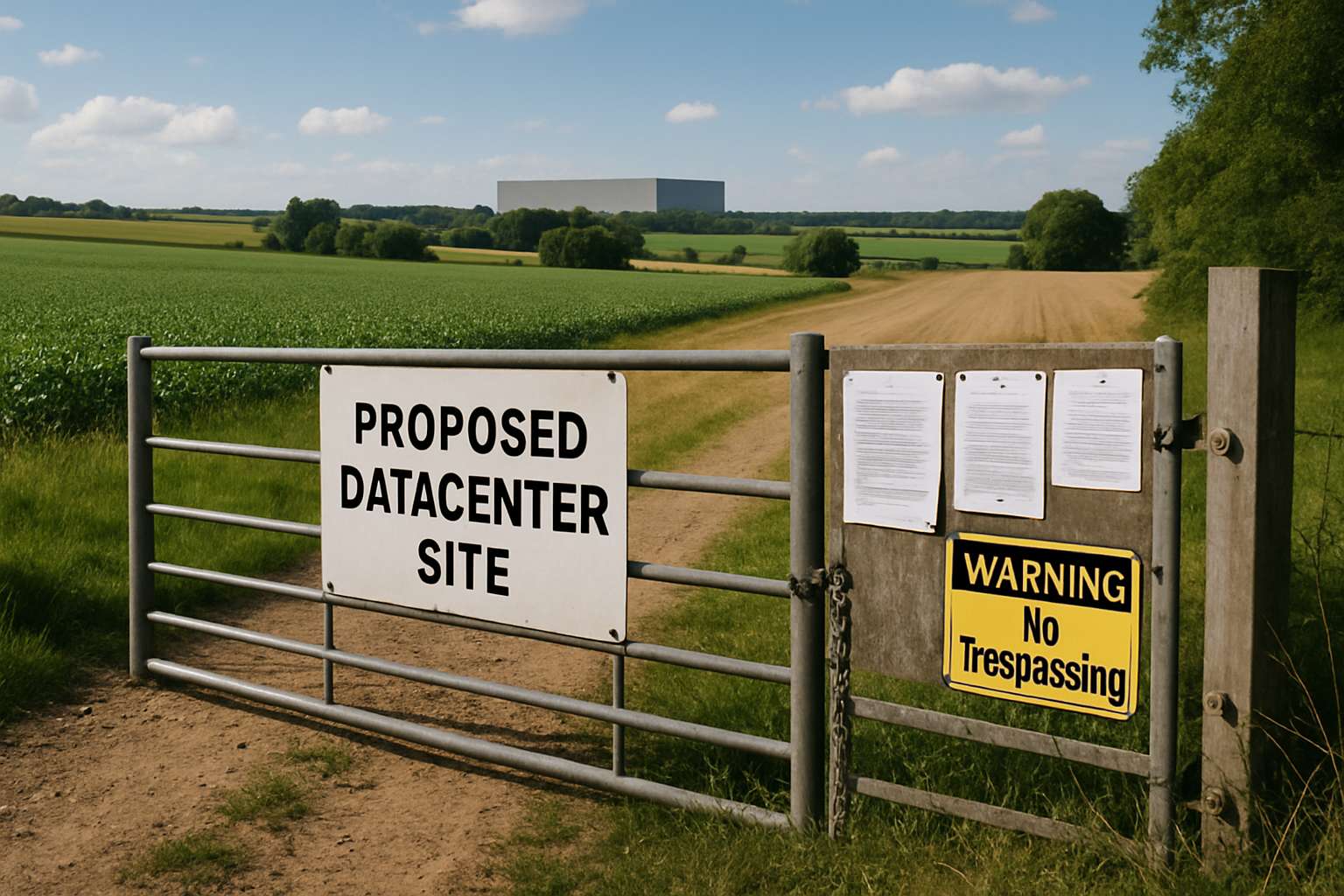
However, many landowners are refusing unprecedented checks.
This standoff, widely labeled the Datacenter Land Wars, pits digital growth against generational stewardship.
Farmers from Kentucky to Pennsylvania have said no to offers exceeding $120,000 per acre.
Consequently, developers face zoning defeats, legal fights, and mounting public scrutiny.
The Guardian, Fortune, and local outlets chronicle a mounting pattern of resistance.
Meanwhile, analysts predict hyperscale demand will swallow 40,000 additional global acres within five years.
Energy and water needs also surge, intensifying worries about a looming Resource drain.
Therefore, policymakers, investors, and communities watch these Datacenter Land Wars as a bellwether for AI infrastructure.
The following report unpacks motives, pressures, and future scenarios in clear, data-driven detail.
Rising Bids Ignite Conflict
Developers often dispatch discreet brokers to isolated townships.
These intermediaries dangle sums that eclipse lifetimes of crop revenue.
Moreover, Guardian reporters documented a $33 million overture for 650 Kentucky acres.
In Pennsylvania, an 86-year-old owner rejected roughly $15 million for 261 acres.
- $60,000 per acre offered in Cumberland County, Pennsylvania.
- $120,000 per acre rumored in Mason County, Kentucky filings.
- Hundreds of millions paid for powered land in Virginia and Georgia.
Moreover, Hines Research links soaring prices to scarce grid commitments, not just dirt value.
Such economics intensify the Datacenter Land Wars by incentivizing aggressive acquisitions.
Extreme bids highlight a structural mismatch between farmland values and hyperscale appetites.
Nevertheless, money alone fails where community identity prevails.
Next, we examine why farmers choose permanence over payouts.
Farmers Voice Preservation Motives
Stewardship remains the dominant refrain during township hearings.
Mervin Raudabaugh summed it up: “It was my life.”
Additionally, many families view soil health as legacy capital, not liquid capital.
In contrast, datacenters offer few permanent jobs, often fewer than fifty per campus.
Consequently, promised tax revenue feels abstract compared with daily agriculture duties.
Grassroots protest networks now circulate zoning notices on social media and church bulletins.
Meanwhile, land trusts present conservation easements that pay owners while preserving tillable acres.
These options strengthen farmer resolve and broaden local alliances.
Preservation motives derive from culture, economics, and environmental ethics.
Therefore, emotional capital proves potent during Datacenter Land Wars negotiations.
Water and power pressures now amplify that resolve.
Water And Power Pressures
Datacenters consume electricity relentlessly, driving regional load forecasts skyward.
LBNL projects American usage could reach 580 TWh by 2028.
Moreover, direct site cooling already drinks 66 billion liters annually.
Indirect generation adds nearly 800 billion additional liters, deepening the Resource drain warning.
Dry cooling reduces water but requires more megawatts.
Conversely, evaporative systems spare power yet intensify local aquifer withdrawals.
Consequently, farm irrigation faces future competition with server chillers.
Agriculture economists now model yield impacts under constrained water scenarios.
Water-energy trade-offs transform technical design into political flashpoints.
Subsequently, these pressures escalate Datacenter Land Wars debates in drought-prone counties.
Economic promises enter the spotlight next.
Economic Promises Versus Reality
County officials often cite construction payrolls nearing one thousand workers.
However, permanent staffing rarely surpasses a few dozen technicians.
Loudoun County’s tax windfall offers a tempting benchmark for hopeful treasurers.
Critics counter that transmission upgrades shift costs onto ratepayers, eroding net gains.
Moreover, required public services—roads, schools, emergency response—scale with development, not with datacenter headcount.
Grassroots protest leaders distribute simple cost-benefit calculators during hearings.
These tools question whether promised prosperity outweighs lost agriculture revenue.
Fiscal modeling remains contested and highly site specific.
Nevertheless, uncertain math feeds local skepticism during Datacenter Land Wars testimony.
Policy frameworks attempt to settle such doubt.
Policy And Legal Pushback
Zoning boards from Indiana to Michigan have enacted moratoria on new permits.
Furthermore, Kosciusko County rejected a 500-acre rezoning unanimously.
Saline Township’s decision spurred a developer lawsuit alleging economic discrimination.
Meanwhile, utilities pursue eminent-domain easements for transmission corridors serving future campuses.
Consequently, township solicitors face complex litigation over land rights.
Grassroots protest organizers coordinate legal defense funds and public records requests.
In contrast, some states weigh streamlined siting bills that preempt local vetoes.
Regulatory uncertainty slows capital deployment and complicates negotiations.
Therefore, legal dynamics form a central battleground within Datacenter Land Wars.
Investors are recalibrating land strategies accordingly.
Emerging Land Market Dynamics
Powered land has become a distinct real-estate class.
Hines forecasts 40,000 new acres needed globally within five years.
Moreover, brokers now bundle substations, fiber, and water rights before marketing parcels.
Consequently, price discovery favors insiders who understand grid queue politics.
Agriculture lenders monitor collateral exposure as speculation spreads into traditional croplands.
Resource drain modeling increasingly appears in prospectuses, signaling investor awareness.
Professionals gain insight through the AI Customer Service Strategist™ certification.
Market shifts reward transparent, power-aligned parcels.
Subsequently, these dynamics influence the trajectory of Datacenter Land Wars.
Attention now turns to future scenarios and actions.
Future Paths And Actions
Stakeholders acknowledge that demand for compute will not subside.
Consequently, balanced siting frameworks must align infrastructure with community goals.
LBNL authors urge granular reporting on water and electricity at every facility.
Moreover, conservation easements and agrivoltaic hybrids could preserve agriculture while supplying renewable power.
Grassroots protest groups now lobby for mandatory cooling disclosures within zoning ordinances.
States might establish land banks that lease, rather than sell, acreage to operators.
Finally, hyperscalers could redirect expansion toward brownfields, reducing additional Resource drain.
Collaborative planning can temper conflict while enabling digital progress.
Therefore, constructive compromise may ultimately de-escalate Datacenter Land Wars.
Rural landscapes now sit at the center of unparalleled technological ambition.
However, the debates reveal deeper questions about food security, water stewardship, and civic identity.
Numbers confirm that electricity, water, and land scarcity are inseparable from profitability.
Consequently, transparent metrics and community engagement will decide how Datacenter Land Wars evolve.
Professionals, policymakers, and citizens should continue tracking data, filings, and local votes.
Meanwhile, career specialists can deepen their understanding with the AI Customer Service Strategist™ certification.
Act now to build informed, balanced strategies that honor both servers and soil.


