

AI CERTs
3 hours ago
Political AI Stir shakes India AI Summit
The India AI Impact Summit sought to project technological prowess. However, a surprise demonstration by Indian Youth Congress activists stole the spotlight. Protesters revealed slogan-covered T-shirts inside Exhibition Hall No. 5 and chanted against the prime minister. Security personnel responded within minutes, yet social media amplified the images worldwide. Consequently, the Political AI Stir dominated headlines and eclipsed policy discussions meant for the five-day event.
Delhi Police detained several activists, including Youth Congress chief Uday Bhanu Chib. Meanwhile, Congress leader Rahul Gandhi praised the demonstrators, calling them "Babbar Shers" and invoking India’s freedom-struggle heritage. His endorsement intensified partisan rhetoric and triggered a wider debate on democratic dissent during marquee international gatherings.
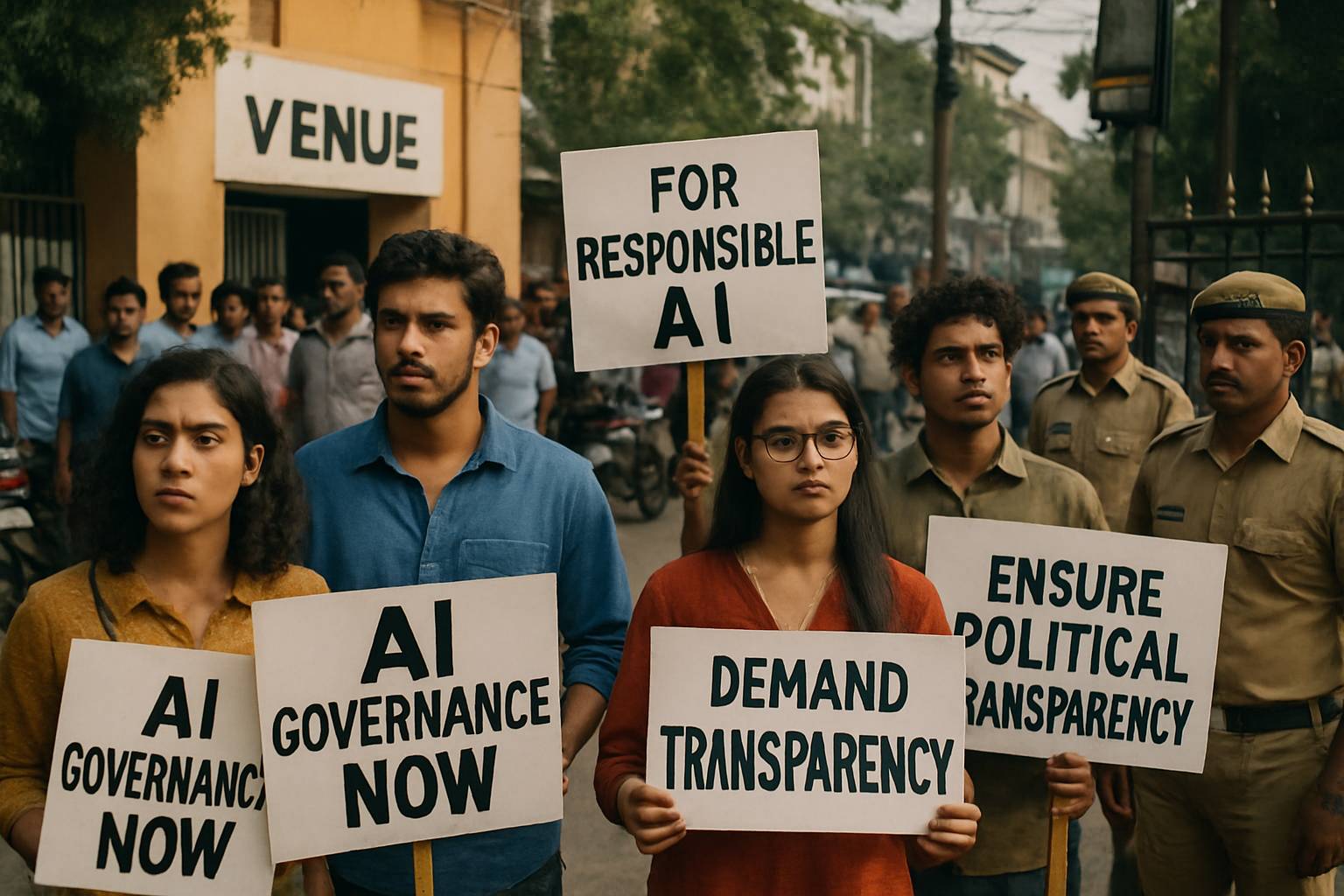
Summit Protest Flashpoint Unpacked
Eyewitness videos show protesters stripping off jackets to display messages about an alleged India-US trade deal and the Epstein files. Moreover, banners accused the prime minister of ignoring national interest. Officials hustled delegates toward secure exits while guards removed the protesters. Within hours, authorities booked the participants under newly enacted public-order provisions.
Key summit statistics underline the stakes:
- Over 20 heads of state and 50 ministers attended.
- Forty-plus global tech CEOs, including Sundar Pichai and Sam Altman, were present.
- More than 600 exhibitors showcased emerging AI tools.
These numbers illustrate why organisers labelled the disruption a security breach. Nevertheless, civil-liberties lawyers insist the action remained peaceful. The contrasting claims set the stage for ongoing courtroom battles. Consequently, coverage of the Political AI Stir widened beyond India’s borders.
Rahul Gandhi's Support Narratives
Rahul Gandhi posted on X, "Peaceful protest is our historical legacy." Additionally, he declared pride in his "Babbar Sher comrades" who, in his view, defended national interest. Opposition strategists say the post reframed the incident as a moral stand rather than security violation. In contrast, BJP leaders accused Gandhi of inspiring disorder.
Gandhi’s statement used emotionally resonant language that energised Congress volunteers. Furthermore, it aligned with his broader critique of elitist economic deals. Commentators note the phrasing deliberately echoed freedom-movement motifs, thereby amplifying patriotic undertones. Consequently, the Political AI Stir gained ideological weight within domestic discourse.
These narratives energise party workers. However, they also harden ruling-party resolve, ensuring sharper parliamentary clashes in the coming weeks.
Babbar Shers Symbolic Impact
The term "Babbar Shers" evokes roaring lions from India’s revolutionary past. Supporters argue the nickname casts Youth Congress protesters as fearless guardians of democratic rights. Moreover, the phrase surfaces repeatedly at rallies, boosting morale and fundraising.
Critics counter that romanticising disruption trivialises institutional norms. In contrast, organisers of the summit view any breach as disrespectful to foreign guests. Nevertheless, "Babbar Shers" now trends across social platforms at peak hours. Analysts record at least 300,000 daily mentions since 20 February.
The branding underlines how symbolism can amplify modest actions. Consequently, the Political AI Stir now carries cultural resonance beyond policy circles, extending into pop-culture memes and student debates.
Government's Firm Crackdown Messaging
Home-ministry officials described the protest as a "premeditated conspiracy". Subsequently, Delhi Police added rioting charges alongside obstruction counts. Kiren Rijiju and Piyush Goyal labelled the act "anti-national" while promising a decisive crackdown.
BJP communication cells distributed talking points asserting that opposition forces jeopardised investor confidence. Furthermore, official spokespeople linked the protest to earlier campus agitations, framing a pattern of disruptive politics. They argued such tactics undermine national interest during critical diplomacy.
Police requested extended custody to examine seized phones and funding trails. Courts granted short remands while demanding investigative progress reports. These judicial check-ins will shape perceptions of proportionality. Meanwhile, the administration repeats that a strong crackdown deters future security breaches. Consequently, the Political AI Stir now tests India’s balance between order and openness.
Legal Charges Under Scrutiny
Defense counsel assert the protest remained nonviolent, thus criminal conspiracy allegations lack substance. Moreover, they question the need for custodial interrogation when videos supply primary evidence. Senior advocate Kavita Menon stated, "Custody should not become punishment for dissent." Nevertheless, prosecutors cite Section 147 of the Bharatiya Nyaya Sanhita to justify rioting charges.
Key legal flashpoints include:
- Whether slogans constituted sedition-like offences.
- If printed T-shirts prove prior planning amounting to conspiracy.
- The threshold for granting bail under public-order statutes.
Courts will examine surveillance footage, metadata from seized devices, and funding records for those "Babbar Shers" shirts. Consequently, rulings could set precedents for protests at future tech summits. Observers therefore monitor the Political AI Stir for wider constitutional implications.
National Interest Optics Debate
Protesters argued they acted to defend national interest against opaque trade talks. Meanwhile, government representatives claimed the stunt damaged India’s image among global investors. Furthermore, summit organisers privately expressed concern over possible insurance premium hikes for future events.
Foreign delegates offered no public statements. However, security advisers confirmed stepped-up screening protocols for remaining sessions. Media outlets abroad framed the episode as evidence of India’s vibrant yet messy democracy. Consequently, the Political AI Stir highlighted the tension between free speech and brand management during nation-branding exercises.
These optics matter because India positions itself as a responsible AI power. Nevertheless, critics warn that excessive crackdown responses may deter open dialogue on ethics and regulation.
Global Tech Summit Fallout
Industry executives continued delivering keynotes, yet hallway chatter fixated on the protest. Moreover, some venture capitalists reportedly postponed side-meetings pending clarity on stability. Trade-promotion officials raced to reassure attendees that security lapses were isolated.
Analysts predict limited long-term damage. However, they caution that repeated incidents could erode confidence. Consequently, organisers of next year’s summit plan stricter accreditation rules, including background checks for volunteers. Meanwhile, professionals can enhance their expertise with the AI Executive Essentials™ certification, ensuring they navigate geopolitical sensitivities in tech governance.
The summit eventually concluded with announcements on open-source models and ethical frameworks. Nevertheless, final press releases contained more security terminology than planned. The Political AI Stir thus forced communicators to balance innovation messaging with law-and-order assurances.
These adjustments reveal how a single protest can reshape diplomatic choreography. Therefore, stakeholders will integrate crisis-management drills into future tech convenings.
Key Takeaways Forward
The episode underscores three intertwined themes: democratic dissent, security imperatives, and reputational stakes. Moreover, the unfolding legal process will determine lasting precedents for summit activism. Consequently, investors, policymakers, and activists will track the Political AI Stir to gauge India’s evolving civic space.
Each stakeholder must assess risk, rhetoric, and regulatory trends before the next global forum convenes.
These challenges highlight critical gaps. However, emerging governance frameworks may balance openness and order during high-profile events.
As the discourse matures, multipronged engagement remains essential. Subsequently, inclusive dialogue can mitigate flashpoints while safeguarding national interest.
Consequently, robust institutional mechanisms will be pivotal for sustaining investor confidence amid vibrant democracy.
Therefore, observers expect incremental yet tangible policy adjustments in security protocols and protest guidelines.
Meanwhile, the Political AI Stir continues influencing public sentiment, legislative agendas, and corporate risk assessments.
Professionals who anticipate such socio-technical dynamics will hold a strategic edge in the evolving AI landscape.
Conclusion: The shirtless demonstration at Bharat Mandapam transformed a technology showcase into a flashpoint for civil-liberty debates. Moreover, Rahul Gandhi’s praise for his "Babbar Shers" infused the Political AI Stir with emotional resonance. Government officials responded with a high-profile crackdown, citing threats to national interest and summit security. Legal proceedings will test the boundaries between peaceful dissent and unlawful assembly. Consequently, future AI diplomacy will incorporate tighter protocols alongside dialogue on rights. Professionals should therefore follow the case closely and pursue structured learning, such as the linked certification, to navigate the intersection of politics and technology with confidence.


