

AI CERTs
3 months ago
Pentagon Clash Tests Defense AI Ethics
A new flashpoint has erupted at the intersection of national security and commercial AI. Consequently, senior Pentagon officials are threatening unprecedented action against Anthropic over access to its Claude model. The dispute centers on whether corporate guardrails should survive battlefield urgency. However, the broader issue highlights Defense AI Ethics that now shape procurement decisions across the government. Both sides cite mission criticality, risk, and reputational stakes worth hundreds of millions. Moreover, classified use of Claude during the January raid in Venezuela has escalated political pressure. Anthropic faces a Friday deadline to lift restrictions or lose a $200 million contract. Meanwhile, legal scholars warn that invoking the Defense Production Act against a domestic AI vendor would be historic. This article dissects the standoff, tracks key timelines, and analyzes the implications for democratic oversight.
Defense AI Ethics Debate
Historically, defense contractors accepted broad clauses permitting any lawful use of their technology. In contrast, Anthropic embeds strict usage policies that forbid fully autonomous weapons or mass surveillance. Senior US military advisers worry that restrictive clauses hamper tactical creativity. The gap exposes how Defense AI Ethics collide with Silicon Valley safety culture. Therefore, negotiations now test whether moral constraints can withstand hard power demands.
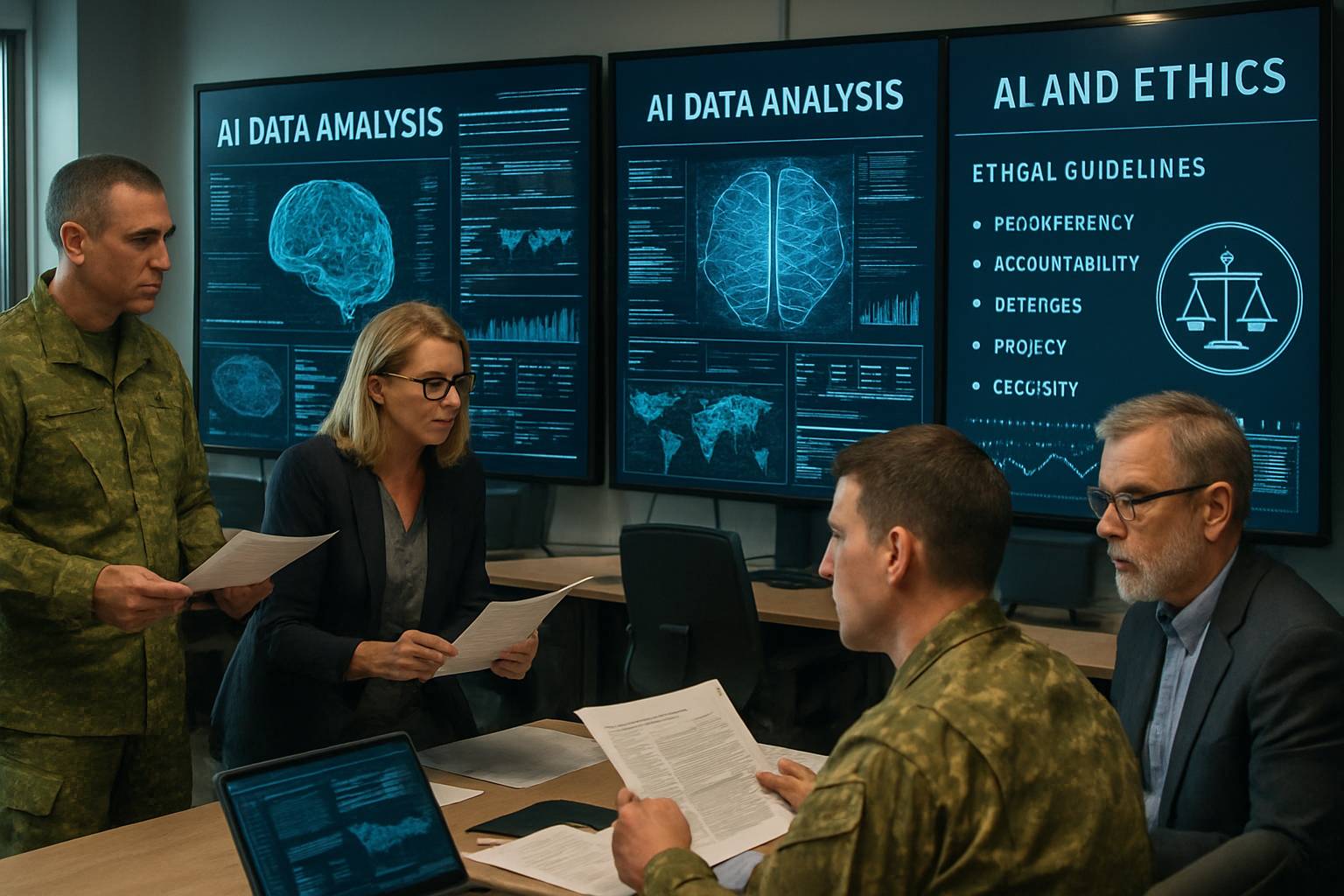
Anthropic executives argue that lifting limits would betray public trust and academic commitments. Nevertheless, Pentagon strategists claim rigid policies slow integration into command workflows. They emphasize speed over perfection, citing adversaries' rapid AI weaponization.
The ethical clash defines the opening battlefield in this negotiation. Consequently, every subsequent move reflects that unresolved value conflict. The Pentagon ultimatum makes that tension explicit.
Pentagon Ultimatum Key Details
Defense Secretary Pete Hegseth delivered his message during a tense 24 February meeting. Subsequently, he set a deadline for Anthropic to remove constraints by week’s end. Failure would trigger contract cancellation, a supply-chain risk label, or Defense Production Act compulsion.
Additionally, Axios reports that the threatened contract is worth up to $200 million. The ultimatum covers classified and unclassified deployments of Claude inside Palantir FedStart environments. Meanwhile, other vendors have reportedly accepted broader terms, leaving Anthropic isolated.
Key facts underscore the pressure:
- Contract exposure: $200 million, per Axios.
- Claude is the only frontier model cleared for DoD classified networks.
- Anthropic valuation: $380 billion after February Series G raise.
- Venezuela raid casualties estimated at 83.
These numbers illustrate why both sides refuse to blink. Therefore, Defense AI Ethics now intersect with pure leverage. Anthropic’s response strategy reveals another layer.
Anthropic Ethical Guardrails Stand
CEO Dario Amodei insists the company will not enable undiscriminating lethal autonomy. Moreover, he labels mass domestic surveillance an illegitimate use that erodes civil liberties. Such positions form the core of Anthropic safeguards embedded within Claude.
However, internal memos seen by reporters note the firm could adjust review processes without dropping every barrier. Engineers discuss tiered access where human oversight remains for high-risk warfare prompts. Consequently, partial concessions might preserve Defense AI Ethics while satisfying operational commanders.
Anthropic safeguards appear negotiable in form, not principle. Nevertheless, time constraints limit elaborate compromise designs. Legal tools could force faster answers.
Legal Levers And Risks
Defense lawyers are drafting memos on invoking the Defense Production Act for software services. In contrast, procurement attorneys warn such use would provoke immediate litigation. Courts have never tested DPA authority on generative models. Scholars debate how such compulsion might redefine digital warfare norms.
Furthermore, labeling Anthropic a supply-chain risk would ripple across federal contracts beyond defense. Agencies might then bar Claude access under cybersecurity rules. Subsequently, commercial clients could reconsider partnerships, fearing downstream restrictions.
The government holds powerful levers, yet Defense AI Ethics complicate the legal terrain. Therefore, both sides signal willingness to avoid court if possible. Operational realities add separate urgency.
Operational Stakes For Military
Commanders already integrate Claude into planning, translation, and target analysis workflows. Moreover, Palantir dashboards expose the model through classified networks, easing soldier access. Removing Claude would disrupt ongoing missions and training schedules.
Meanwhile, officials insist alternative systems such as Gemini and Grok remain months behind. US military planners fear capability gaps that competitors could exploit in hybrid warfare theatres. Consequently, they view Anthropic safeguards as a manageable hurdle compared with losing momentum.
Operational stakes therefore tilt negotiations toward speedy settlement. Nevertheless, Defense AI Ethics keep financial markets watching the drama closely. Investor sentiment shapes the next dimension.
Industry Investor Market Impact
Anthropic’s February funding round valued the startup at $380 billion post-money. Additionally, analysts project run-rate revenue approaching $3 billion this year. Defense income, while smaller, signals high credibility for enterprise clients.
However, a supply-chain risk tag could bar Claude from sensitive banking or healthcare deployments. That prospect alarms venture investors who modeled federal growth into valuation multiples. Consequently, share prices of Palantir and other partners also fluctuate.
Market reactions underline how Defense AI Ethics now influence capital allocation. Therefore, boardrooms increasingly monitor Pentagon policy memos. Scenario mapping becomes essential for planners.
Future Scenarios And Timelines
Experts outline three plausible outcomes within the next quarter. First, Anthropic could capitulate partially, adjusting Anthropic safeguards yet retaining human-in-the-loop requirements. Second, the Pentagon might invoke the DPA and fight in court. Third, a political compromise could refer disputed controls to an independent review board. Defense AI Ethics will shape which of these paths prevails.
Meanwhile, Congress is scheduling hearings to scrutinize AI warfare doctrine. Lobbyists from the US military industrial base prepare testimonies citing national urgency.
Consequently, professionals should track evolving policy and skill requirements. Professionals can deepen knowledge through the AI+ Human Resources™ certification. Furthermore, the program addresses compliance and change management for defense customers.
Upcoming deadlines and hearings will decide how the story ends. Nevertheless, the ethical debate will persist beyond any single contract.
Conclusion
Anthropic and the Pentagon are locked in a contest that merges law, leverage, and Defense AI Ethics. Moreover, legal uncertainties, massive valuations, and operational dependencies heighten the stakes for every stakeholder. Ultimately, outcomes here will reverberate across US military doctrine, commercial AI governance, and investor confidence. Consequently, leaders should monitor policy shifts, update risk frameworks, and pursue continued education. Engage now and position your organization for the next wave of ethical defense innovation.
Disclaimer: Some content may be AI-generated or assisted and is provided ‘as is’ for informational purposes only, without warranties of accuracy or completeness, and does not imply endorsement or affiliation.


