

AI CERTs
3 hours ago
Educational Shift: Universities Reframe IP Law for the AI Age
Generative AI now tests centuries-old assumptions about who owns ideas and creative output.
Consequently, law faculties are racing to update syllabi before courtroom precedents harden.
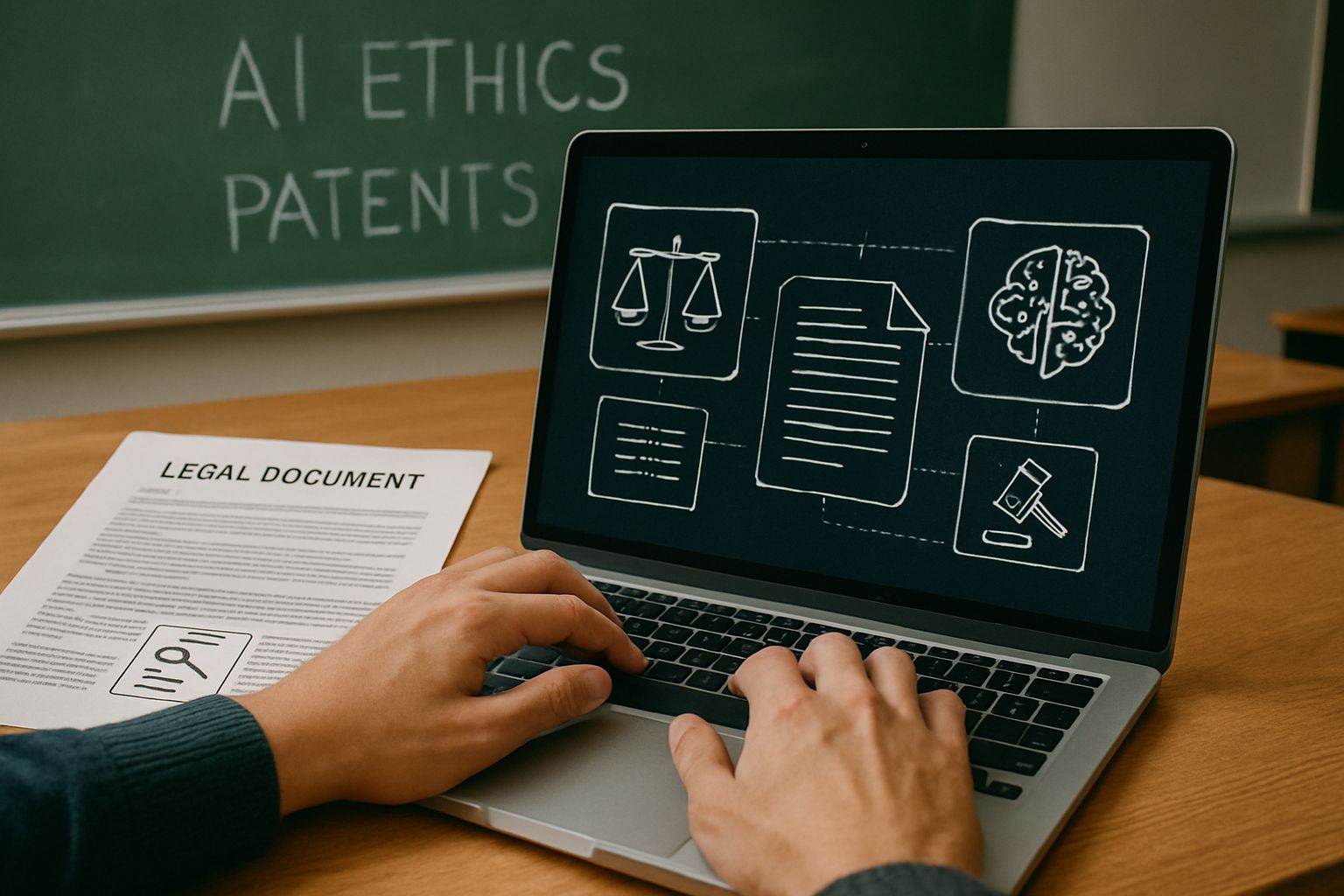
This rapid redesign marks an Educational Shift that reaches beyond academic paperwork.
Moreover, new modules weave litigation headlines into lecture halls, giving students live case material.
Queen Mary University’s SOLM338 course on AI and IP typifies the emerging model.
Meanwhile, regulators publish guidance almost weekly, forcing educators to adjust reading lists in real time.
The combined pressure from industry, policy, and lawsuits demands a second Educational Shift among practicing professionals.
Therefore, this article explores how curricula adapt, why patent battles dominate seminars, and where security certifications fit.
Along the way, we weigh creator concerns about Trade Secrets, training data, and ethics.
Finally, we outline skills professionals need to navigate uncertain global IP regimes.
Curriculum Faces AI Reality
Initially, Universities approached AI in elective workshops rather than core doctrine.
However, enrollment spikes and employer feedback pushed faculties toward mandatory modules.
At Queen Mary, course leaders link weekly lectures to Getty v. Stability AI pleadings.
Furthermore, similar updates appear at Fordham, Berkeley, and European consortium campuses.
Educators describe the change as another Educational Shift that blends doctrinal theory with live policy debates.
Students now map patents, confidential know-how, and ethics concerns onto the same hypothetical fact patterns.
Course redesign mirrors industry turbulence.
Consequently, subsequent sections examine litigation shaping content.
Court Battles Guide Syllabi
Litigation supplies case studies faster than publishers can update textbooks.
Moreover, the Getty dispute illustrates how training data claims differ from output infringement theories.
Professors assign docket filings so students compare UK trademark arguments with U.S. copyright positions.
In contrast, DABUS filings force discussions about whether Patents should ever list nonhuman inventors.
Consequently, workshops require teams to draft claims both for and against AI inventorship.
These exercises anchor abstract concepts in real financial exposure, including billion-dollar statutory damages.
Active dockets intensify the Educational Shift inside every classroom.
Therefore, policy trends gain equal attention next.
Policies Reshape Learning Paths
Meanwhile, regulators move almost as quickly as courts.
The U.S. Copyright Office’s multipart report stresses human authorship and disclosure of AI use.
Similarly, the EU AI Act imposes dataset transparency duties that intersect with Trade Secrets doctrine.
Universities translate these rules into compliance labs where students file mock registrations under tight deadlines.
Consequently, learners see immediate cost implications when inventorship data or training disclosures are incomplete.
Scholars label this regulatory race another Educational Shift toward proactive governance rather than reactive litigation.
Regulatory labs teach risk forecasting.
Additionally, invention debates deepen that foresight.
Inventorship Question Raises Heat
No topic sparks louder debate than whether code can invent.
Ryan Abbott’s Artificial Inventor Project champions inclusion of AI on patent forms.
However, UK and U.S. courts still insist inventors must be natural people.
Japan, Canada, and most offices follow that position, yet South Africa briefly allowed DABUS listings.
Subsequently, students analyze the policy gap between rewarding disclosure and protecting human prestige.
Patents academics worry that rigid rules push innovation into Trade Secrets, reducing public knowledge.
Educators frame the turmoil as a fifth Educational Shift, pressing scholars to rethink incentive structures.
Inventorship rulings remain unsettled.
Consequently, commercial implications now enter finance lectures.
Commercial Stakes Demand Clarity
Companies face real money, not theory.
Getty’s U.S. complaint references twelve million images and claims potential damages exceeding a billion dollars.
Moreover, WIPO counts hundreds of thousands of AI patent filings since 2013, signalling intense competition.
- 10,000+ comments filed in the 2023 U.S. Copyright Office inquiry.
- Hundreds of thousands of AI Patents published since 2013, per WIPO data.
- Twelve million images cited in Getty’s U.S. complaint against Stability AI.
Investors thus quiz founders about litigation reserves, licensing budgets, and ethical sourcing of data.
In contrast, start-ups sometimes conceal training materials as Trade Secrets to dodge licensing costs.
Such secrecy raises Ethics flags during due diligence, especially for public offerings.
Therefore, finance modules now integrate cost modelling for settlements, royalties, and compliance.
Faculty cite this pressure as yet another Educational Shift linking law, strategy, and accounting.
Financial exposure anchors academic theory in boardroom reality.
Meanwhile, balancing rights remains the final hurdle.
Rights, Innovation Seek Balance
Creators fear revenue loss when models reproduce signature styles without permission.
Nevertheless, developers argue that generous exceptions speed breakthrough content and lower entry barriers.
Policy panels at Universities compare these positions against historical arguments over photocopiers and VCRs.
Additionally, many propose licensing collectives or disclosure registries as middle-ground solutions.
Ethics scholars insist any framework respect cultural equity and labor recognition.
Consequently, most syllabi end with capstone negotiations, letting students simulate multistakeholder deals.
These scenarios represent the seventh Educational Shift, emphasizing collaboration over confrontation.
Balanced frameworks remain aspirational today.
Upskilling opportunities can bridge near-term knowledge gaps.
Upskilling Through AI Certification
Legal professionals cannot wait for stable statutes.
Therefore, many enroll in short security and compliance programs that complement university study.
Professionals can enhance their expertise with the AI Security Level-2™ certification.
Moreover, the credential embeds risk assessment methods already referenced in class case studies.
Universities often grant elective credit for such external courses, reinforcing the Educational Shift in career planning.
Consequently, graduates showcase combined academic and practical badges during recruitment.
Certification pathways sustain the Educational Shift beyond campus walls.
Finally, conclusions highlight main insights.
Conclusion
AI has transformed IP law education, litigation, and business planning within a single academic cycle.
Consequently, Universities now treat patents, Trade Secrets, and ethics as integrated pillars rather than isolated electives.
Court battles like Getty v. Stability AI supply urgent case studies with billion-dollar implications.
Moreover, regulators release guidance that rewrites classroom exercises almost monthly.
These forces together produce the tenth Educational Shift, demanding lifelong learning from legal professionals.
Practitioners who pair formal study with targeted certifications gain a decisive advantage.
Therefore, enroll today in advanced modules and secure certifications to navigate the uncertain yet rewarding AI IP landscape.
Future market leaders will act now, not after the next lawsuit drops.


