

AI CERTs
3 months ago
Voice Cloning Scams Hit Government Portals
Government communication channels once felt secure. However, Voice Cloning tools now let criminals impersonate senior officials with chilling accuracy. Attackers exploit Public Portals, eroding Safety, draining funds, and weakening public Trust. Recent FBI warnings show Fraud campaigns scaling quickly. Consequently, agencies must understand the surge and strengthen defenses.
Rapid AI Scam Surge
Deepfake audio attacks expanded dramatically during 2024–2025. Moreover, Voice Cloning now needs only 15 seconds of sample speech, according to Rachel Tobac. Mandiant red-team drills confirm clones can bypass human verification. FBI public service announcements on 15 May and 19 December 2025 detail smishing and vishing waves targeting officials. Additionally, industry trackers like Pindrop recorded a 600% rise in voice-deepfake events during 2024. These numbers illustrate accelerating Fraud across sectors.
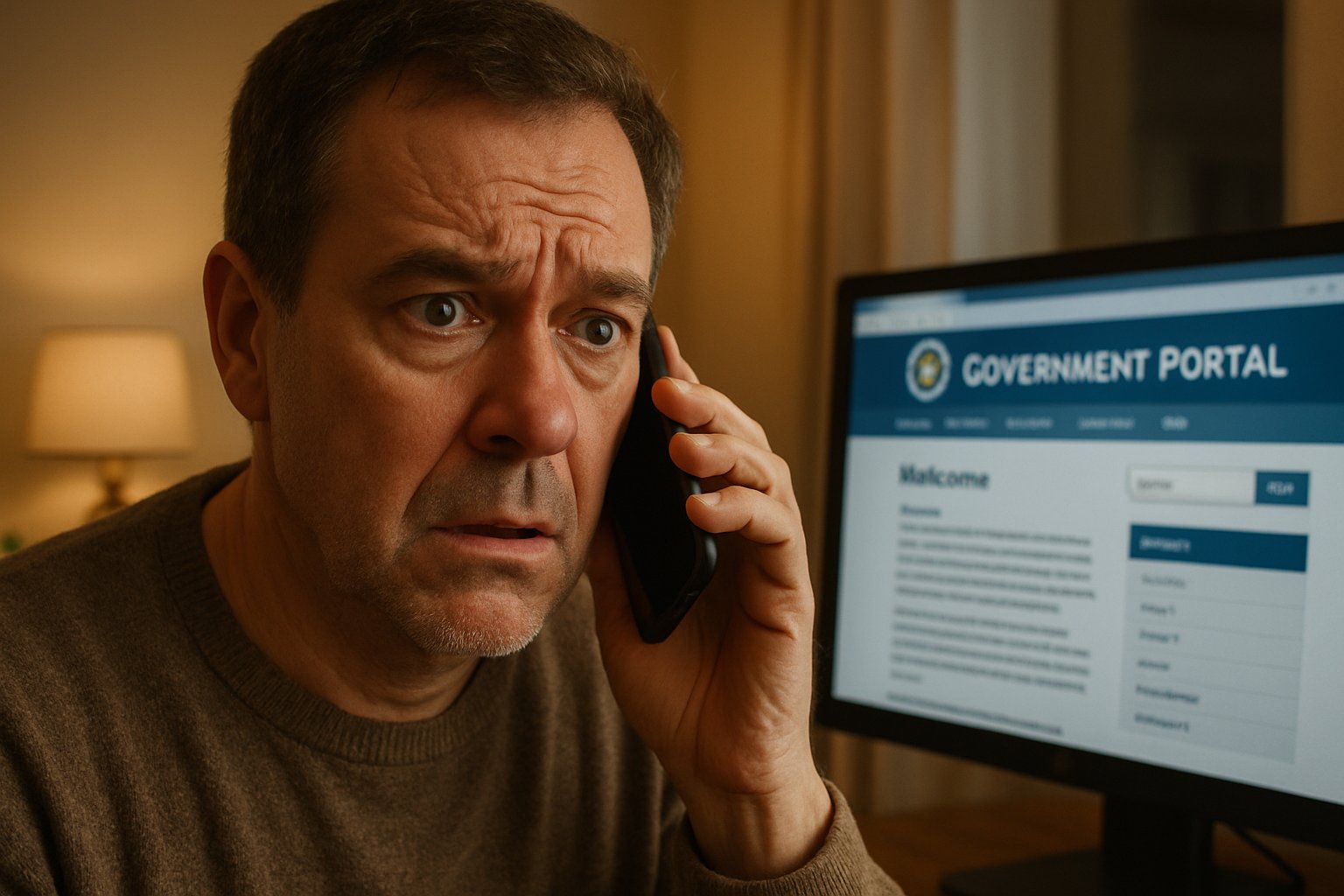
Law enforcement cites crypto losses of $4.6 billion in 2024, with deepfakes powering 40% of high-value cases. Meanwhile, foreign ministers received fake calls from a cloned “Secretary of State Marco Rubio.” Therefore, public confidence wavers when authoritative voices can be fabricated instantly.
The surge demonstrates a critical shift. Nevertheless, understanding specific targets clarifies defensive priorities. Subsequently, we examine how campaigns exploit government Public Portals.
Attacks Target Public Portals
Threat actors love centralized systems that broadcast legitimacy. Consequently, Public Portals handling licenses, benefits, or emergency alerts become ideal initial vectors. Fraudsters launch smishing messages that mimic agency texts, then escalate to Voice Cloning calls urging credential confirmation. In contrast, some campaigns employ deepfake videos to request urgent wire transfers.
Recent incidents show multiple entry methods:
- SMS alerts urging password resets using fake .gov domains
- Encrypted app invites supposedly from agency help-desks
- Voice calls spoofing switchboard numbers with cloned leadership voices
FBI analysts note actors often redirect victims to secondary platforms, limiting oversight. Moreover, cloned voices persuade staff to override policy, bypassing technical controls designed for Safety. The tactic capitalizes on procedural Trust built over decades.
Portal compromise risks expand beyond data theft. Consequently, operational continuity suffers when citizens question message authenticity. These realities underscore why understanding attacker tools matters. Therefore, the next section dissects evolving techniques.
Evolving Tactics And Tools
Attackers follow a predictable synthetic media chain: reconnaissance, cloning, contact, manipulation, and extraction. Furthermore, open-source AI models reduce barriers, offering real-time Voice Cloning through simple web interfaces. Smishing bots collect voice samples from posted speeches or interviews. Subsequently, criminals feed samples into neural pipelines, producing convincing audio within minutes.
Threat groups then automate outreach. Additionally, caller ID spoofing masks foreign VoIP origins, confusing investigators. Mandiant reports show cloned voices defeating callback verification steps at contact centers. Consequently, Fraud escalates quickly once inside government workflows.
Operational takedowns did occur. However, cross-border cooperation often lags, giving scammers months of advantage. These tactics reveal widening capability gaps. Nevertheless, financial metrics expose the damage scale, which we review next.
Escalating Fraud Financial Impact
Financial fallout stretches from individual victims to entire programs. Bitget, Elliptic, and SlowMist estimate deepfake-related crypto Fraud cost $1.8 billion in 2024 alone. Moreover, contact-center breaches enabled pension diversions worth millions. Government insurers now reevaluate risk models, citing Voice Cloning as an emerging systemic factor.
Consider these headline numbers:
- 600–680% growth in voice-deepfake activity year-over-year
- 40% share of high-value crypto scams involved synthetic media
- Thousands of officials targeted across 50 states since April 2025
Such losses threaten Public Portals delivering health or disaster relief funds. Furthermore, reputational damage erodes long-term Trust in state messaging. Consequently, stakeholders demand concrete Safety enhancements.
Financial indicators clarify urgency. However, psychological effects also matter. Subsequently, we assess how repeated deepfakes corrode civic confidence.
Deepfakes Erode Public Trust
Communication legitimacy underpins democratic governance. Nevertheless, Voice Cloning undermines that foundation by blurring authenticity. Citizens receiving fake evacuation orders may hesitate during crises. Additionally, officials grow wary of genuine outreach, slowing policy execution.
David Axelrod called the Rubio impersonation “only a matter of time.” Moreover, social-engineering experts warn of cascading skepticism surrounding official pronouncements. Consequently, restoring Trust requires transparent incident disclosure and rapid debunking of forged media.
Government press offices now publish verification hotlines. However, reactive efforts alone cannot scale. Therefore, proactive defenses become essential, as the next section details.
Defense And Safety Steps
Agencies adopt layered strategies combining technology, policy, and workforce education. Firstly, audio-watermark detection models flag synthetic cadence anomalies. Furthermore, secure caller authentication tools embed cryptographic proofs within VoIP packets. CISA recommends multi-channel callbacks using known numbers, reducing reliance on single mediums.
Policy teams update playbooks to limit transactional approvals over voice alone. Additionally, mandatory dwell-time rules require employees to verify urgent requests through alternate supervisors. FBI PSAs urge immediate reporting of suspicious calls or texts, enhancing collective Safety.
Professionals can enhance expertise with the AI+ Data Robotics™ certification. Graduates learn to deploy anomaly-detection pipelines and manage Public Portal resilience. Consequently, skilled analysts close operational gaps swiftly.
These countermeasures strengthen institutional defenses. Nevertheless, success depends on continuous staff development, explored below.
Upskilling Government Cyber Teams
Human vigilance complements automation. Therefore, agencies invest in scenario drills simulating Voice Cloning assaults. Moreover, tabletop exercises teach staff to spot unnatural pauses or mismatched intonation. Training incorporates transition words, prompting deliberate listening habits that slow impulsive actions.
Career pathways now reward cross-disciplinary skills in linguistics, machine learning, and incident response. Additionally, partnerships with universities provide micro-credentials focused on synthetic media forensics. Consequently, workforce capacity grows in parallel with technological advances.
Regular upskilling fortifies Safety culture and reduces Fraud exposure. However, success also relies on external coordination across jurisdictions. Subsequently, we summarize key insights and next actions.
Conclusion
Voice Cloning transformed traditional impersonation into an industrial threat. Furthermore, deepfake scams infiltrate Public Portals, jeopardizing funds, Safety, and civic Trust. FBI alerts, industry statistics, and high-profile diplomatic incidents highlight escalating Fraud. Nevertheless, layered defenses—ranging from detection algorithms to rigorous staff training—offer hope.
Agencies and professionals must act decisively. Consequently, explore specialized learning paths like the linked certification to stay ahead. Strengthen defenses now, protect communities, and rebuild digital confidence.
Disclaimer: Some content may be AI-generated or assisted and is provided ‘as is’ for informational purposes only, without warranties of accuracy or completeness, and does not imply endorsement or affiliation.


