

AI CERTs
3 months ago
Mandatory Markers Signal New Era of Digital Traceability
A new set of compulsory tracking markers is about to redraw the AI content landscape. From California to Brussels, lawmakers demand clear provenance for every synthetic image, clip, and audio snippet. At the center of this shift stands Digital Traceability, a framework linking content to its machine origin. Consequently, enterprises building or distributing generative systems face deadlines, technical questions, and heavy penalties for missteps. This article maps the key regulations, standards, and business decisions that define the road to 2026 compliance.
However, declaring policy goals is easier than embedding resilient proofs of origin. Mandatory latent markers, visible labels, and cryptographic manifests must survive remixing, compression, and platform workflows. Moreover, organisations must align engineering budgets with evolving standards while protecting user privacy and creative freedoms. Through balanced analysis, we reveal how Digital Traceability delivers trust, yet introduces fresh operational risk.
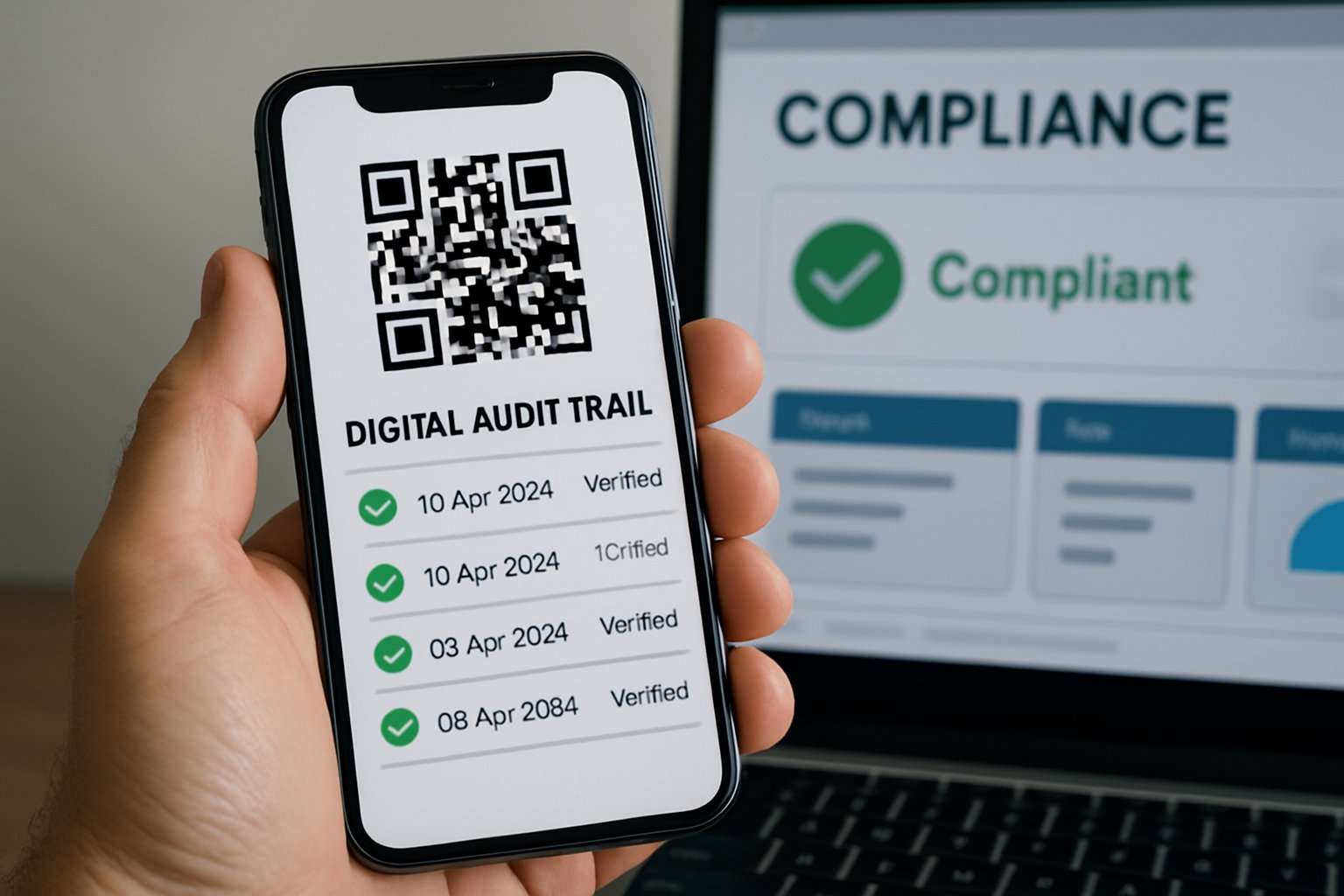
Global Regulation Wave Builds
California’s AI Transparency Act, SB-942, anchors the United States’ first binding provenance mandate. Therefore, starting 1 January 2026, covered providers must embed machine-readable Metadata and offer public detection tools. Civil penalties reach $5,000 per missing credential, creating meaningful financial exposure. Meanwhile, the bipartisan COPIED Act would extend similar duties nationwide and empower the FTC to punish tampering. Across the Atlantic, the EU AI Act sets phased watermarking and manifest requirements for generative systems by 2026. In contrast, several Asian jurisdictions are releasing voluntary guidelines rather than hard Law, yet monitoring global momentum. Collectively, these measures embed Digital Traceability into the legal fabric of large markets.
Regulators now treat provenance as consumer protection. Consequently, compliance timetables accelerate worldwide, pushing providers toward unified technical solutions. Next, we examine how standards bodies answer that call.
Standards Shape Provenance Practice
The Coalition for Content Provenance and Authenticity, or C2PA, supplies the dominant open specification. Under its model, signed manifests hold edit history, creator identity, and cryptographic hashes as durable Metadata. Additionally, C2PA encourages soft Watermarking that embeds pixel fingerprints, increasing survival under compression. Google’s SynthID and the VIDSTAMP research prototype follow similar principles for video frames. Moreover, Adobe, Microsoft, and OpenAI have pledged Content Credentials support across flagship tools. Digital Traceability relies on this convergence, because fragmented schemes would bloat file sizes and confuse verifiers. Yet the specification continues to evolve, with version 2.2 adding tamper localization fields. Therefore, teams should track release notes and update pipelines promptly.
Interoperable standards reduce integration cost. However, industry adoption still reveals uneven execution, as the next section shows.
Industry Adoption Diverges Widely
Major cloud and creative vendors now bake provenance support into export menus. Meanwhile, social platforms often strip those signals during transcoding. The Washington Post tested eight services and found only YouTube displayed any Transparency notice. Consequently, latent Metadata vanished everywhere else. Such gaps expose brands to impersonation, copyright claims, and consumer backlash.
- Gartner reports 62% enterprises faced deepfake incidents last year.
- SB-942 sets $5,000 fines per violation starting 2026.
- C2PA counts hundreds of member organisations across media, tech, and finance.
Digital Traceability can succeed only if every link in the chain preserves credentials faithfully. Nevertheless, many platform leaders cite performance costs and legacy workflows as reasons for delay.
Real-world adoption remains patchy. Therefore, technical limits warrant closer inspection.
Technical Limits Still Persist
Invisible Watermarking promises robustness yet remains vulnerable to aggressive cropping or adversarial noise. SynthID engineers concede extreme manipulations can erase the signal. VIDSTAMP improves temporal redundancy, achieving 95% bit accuracy under laboratory distortions. However, open-source removal tools already chase each new scheme, proving no watermark offers absolute certainty. Moreover, Metadata hashes break whenever a file is re-encoded without manifest merging. Digital Traceability therefore depends on combined hard and soft bindings acting together. In contrast, Transparency advocates worry that persistent identifiers could reveal personal editing habits. SB-942 mitigates this concern by forbidding personal data output from mandated detection tools.
Technology alone cannot guarantee unbroken provenance. Consequently, enforcement mechanisms carry equal importance. The following section reviews those mechanisms.
Enforcement Hurdles Loom Large
Under SB-942, the California Attorney General can sue providers that miss required credentials. Furthermore, the COPIED Act would empower state attorneys general and private plaintiffs to pursue anti-tampering claims. EU regulators plan audits and fines under the Digital Services Act alongside the AI Act. Nevertheless, cross-border content flows complicate jurisdiction, and platforms can sit outside the producing state. Case Law will clarify liability for distributors that strip credentials. Transparency therefore depends on coordinated monitoring, shared detection APIs, and standardized reporting dashboards. Digital Traceability gains potency only when tampering becomes both detectable and punishable. Consequently, businesses should expect regulators to request verification logs during investigations.
Legal sticks now accompany technical carrots. Meanwhile, firms must measure financial exposure, a topic explored next.
Business Impact Assessment Explained
Compliance spending will concentrate on engineering, legal review, and user interface redesign. Gartner estimates deepfake incident response already costs 10% of average security budgets. Therefore, allocating preventive funds toward Watermarking pipelines and manifest infrastructure may lower future liabilities. Boards also fear reputational damage when mislabeled content circulates, threatening brand Transparency commitments. Moreover, meeting provenance rules supports interoperability with procurement contracts that now reference C2PA clauses. Professionals can validate skills via the AI Cloud™ certification. Digital Traceability therefore becomes a board-level KPI alongside uptime and security. In contrast, smaller creators fear compliance complexity and request turnkey tooling from platform vendors. Contract templates increasingly reference governing Law that requires traceable media.
Cost-benefit equations now favor proactive investment. Subsequently, strategic planning shifts toward immediate readiness steps.
Preparing For Compliance Now
First, map every generation pipeline and document where Metadata or pixel Watermarking signals enter and exit. Next, integrate C2PA signing libraries and schedule automated manifest regression tests. Additionally, engage platform partners to confirm they preserve credentials through upload APIs. Create a public detection interface early to satisfy SB-942 and showcase corporate Transparency. Moreover, draft incident playbooks that outline takedown requests, regulator notifications, and consumer messaging. Digital Traceability success depends on this coordinated operational choreography. Finally, track NIST guidance emerging from the COPIED Act process and update risk matrices quarterly.
Preparation now reduces scramble later. Consequently, organisations will enter 2026 positioned for trust and compliance.
Mandatory tracking markers move from concept to global reality within eighteen months. California, the EU, and pending U.S. bills establish the core legal foundation. C2PA manifests, invisible Watermarking, and detection APIs convert that Law into operational code. However, platform stripping and adversarial tampering reveal remaining weaknesses. Therefore, Digital Traceability maturity demands equal focus on policy, engineering, and cooperation. Businesses that act now will reduce regulatory risk and protect brand trust when the 2026 deadlines hit. Explore certifications, form cross-functional teams, and start embedding credentials today. Your next upload should already carry its own passport.
Disclaimer: Some content may be AI-generated or assisted and is provided ‘as is’ for informational purposes only, without warranties of accuracy or completeness, and does not imply endorsement or affiliation.


