

AI CERTs
2 months ago
India’s New Regulatory Mandate Cuts Deepfake Takedown to 3 Hours
India has unveiled a sweeping Regulatory Mandate targeting ultrafast removal of deceptive deepfakes. Issued on 10 February 2026, the MeitY notification slashes takedown windows from 36 to three hours. Consequently, global platforms face a compressed response schedule unprecedented in any major market. Furthermore, the amendment updates the IT Rules and introduces formal safeguards for provenance labeling. Analysts emphasize that safe-harbour defenses remain intact when platforms obey each new requirement. Meanwhile, civil-society groups warn that review times are now too short for due process. This article explains what changed, why it matters, and how firms can maintain compliance. Moreover, professionals will find strategic guidance and a link to an advanced AI governance certification. Therefore, understanding this Regulatory Mandate early can prevent costly enforcement surprises. In contrast, late adopters may scramble to retrofit moderation pipelines under intense governmental scrutiny. Subsequently, shareholder confidence could waver if breach penalties erode quarterly earnings.
Takedown Timeline Shrinks Dramatically
Under the revised IT Rules, intermediaries must disable flagged synthetic posts within three hours of official notice. However, non-consensual sexual Deepfakes demand action within two hours when users lodge urgent complaints. Previously, the statutory window stretched to 36 hours, giving moderators time for multi-layer review. Consequently, platforms must now operate near real-time escalation channels staffed around the clock. Experts label the shift a formidable Regulatory Mandate that transforms content governance into a race against virality.
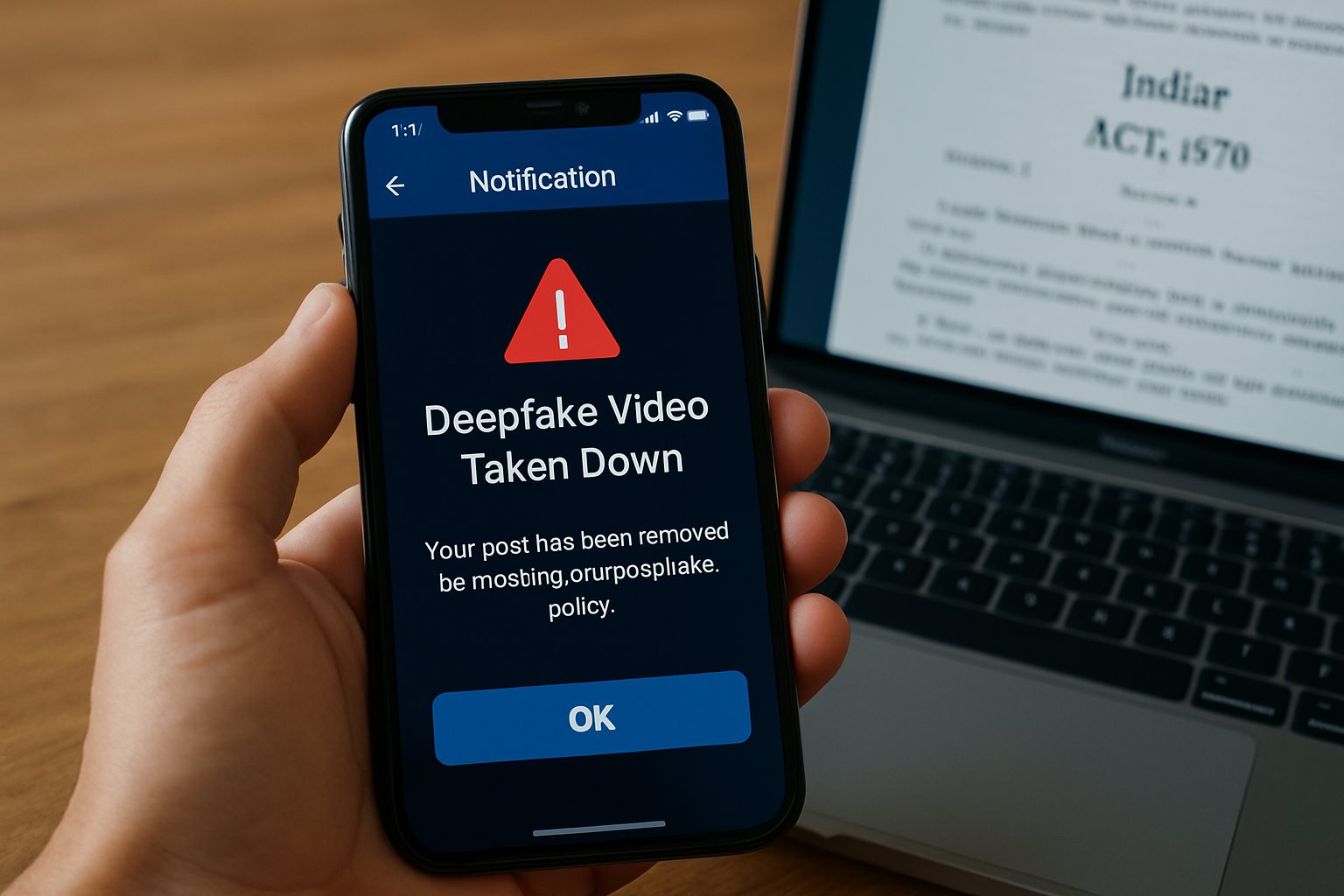
These compressed intervals prioritise harm reduction yet amplify operational stress. Nevertheless, labeling obligations deepen that stress, as the next section details.
Labeling Duties Expand Rapidly
MeitY now defines synthetically generated information as any AI-altered media perceived as authentic. Therefore, intermediaries must label every identified asset and embed immutable provenance metadata where technically feasible. Moreover, the Regulatory Mandate forbids removal of those markers, closing common evasion gaps. In contrast, routine edits or accessibility adjustments remain exempt, reducing false positives risk. Observers note that many creative tools lack standardized metadata hooks, complicating Compliance across diverse upload pipelines.
Robust tagging builds transparency yet introduces heavy engineering overhead. Consequently, companies must interpret safe-harbour assurances with precision, explored next.
Safe-Harbour Nuances Explained Clearly
The amendment clarifies that lawful takedowns executed under the rules protect safe-harbour status. However, failures or delays could remove that shield, exposing officers to personal liability. Legal advisers recommend documenting every moderation step to evidence good-faith Compliance. Additionally, the Regulatory Mandate links SGI offences to existing criminal statutes, raising potential police involvement.
Safe-harbour persists, yet proof of diligent action becomes essential. Industry stakeholders voice concerns about feasibility, as the following section shows.
Industry Concerns Mount Quickly
Major platforms such as Meta, Google, and X describe the three-hour target as daunting. Moreover, IAMAI and NASSCOM questioned whether smaller firms can fund 24/7 moderation teams. Rohit Kumar observed that compressed windows materially raise Compliance burdens and merit close scrutiny. Nevertheless, MeitY argues that viral Deepfakes demand speed, not comfort. Aprajita Rana warned that due-process rights risk erosion under the Regulatory Mandate.
The debate pits harm prevention against speech protection. Operational challenges demonstrate why the next section matters.
Operational Hurdles For Platforms
Detection systems must distinguish benign edits from malicious Deepfakes in seconds. Furthermore, live streams require on-the-fly watermark insertion and instant threat scoring. Subsequently, moderators need dashboards that surface court orders alongside government intimations in real time. Consequently, many firms will automate triage and risk over-blocking lawful satire. Compliance costs could escalate through increased staffing, GPU inference servers, and legal auditing.
- Real-time SGI classification accuracy above 95%
- Immutable metadata embedding across all codecs
- Three-hour grievance redress escalation routing
- Evidence preservation for law-enforcement retrieval
Professionals can enhance readiness with the AI Executive™ certification focused on governance strategy.
Technical, procedural, and training gaps must close swiftly. Global implications emerge as other regulators watch India's experiment.
Global Regulatory Ripple Effects
Several governments track India's playbook to inform their own synthetic media controls. Moreover, multinational platforms crave harmonized standards to avoid duplicative engineering. In contrast, rights advocates fear a domino effect of stricter takedown clocks worldwide. Therefore, this Regulatory Mandate could become either a blueprint or a cautionary tale. Comparative research shows no other market demands removal within three hours for AI content.
India's policy might standardise provenance labels yet intensify global moderation arms races. The article concludes by mapping practical next steps.
India has set a new benchmark by coupling rapid takedown clocks with provenance engineering. Moreover, the Regulatory Mandate demands disciplined architecture, documented oversight, and transparent user communication. Platforms that align early with the IT Rules will preserve safe-harbour and reputational goodwill. Nevertheless, rushed automation may silence legitimate speech if human review capacity lags. Therefore, leaders should invest in detection accuracy, metadata standards, and escalation training now. Professionals can pursue the AI Executive™ credential to master governance principles. Consequently, organizations will convert this Regulatory Mandate from costly risk into competitive advantage. Act today, and the next Regulatory Mandate may feel far less intimidating.


