

AI CERTS
7 hours ago
SK Hynix Bets Big on AI Memory Boost
Moreover, 2026 production slots are already sold out to hyperscalers. Analysts warn that supply will remain tight despite new fabs. Nevertheless, a multibillion-dollar packaging facility could shift the balance. This article unpacks the pledges, numbers, and risks for professionals. Finally, it outlines certifications that sharpen competitive skills.
Driving The AI Memory Boost
GPUs for large language models demand extraordinary bandwidth. Therefore, High Bandwidth Memory has become strategic silicon. Nvidia relies on SK Hynix for most HBM stacks. Meanwhile, cloud providers lock multiyear supply contracts. Such commitments fuel the company's AI Memory Boost narrative. In contrast, commodity DRAM buyers compete for shrinking allocations.
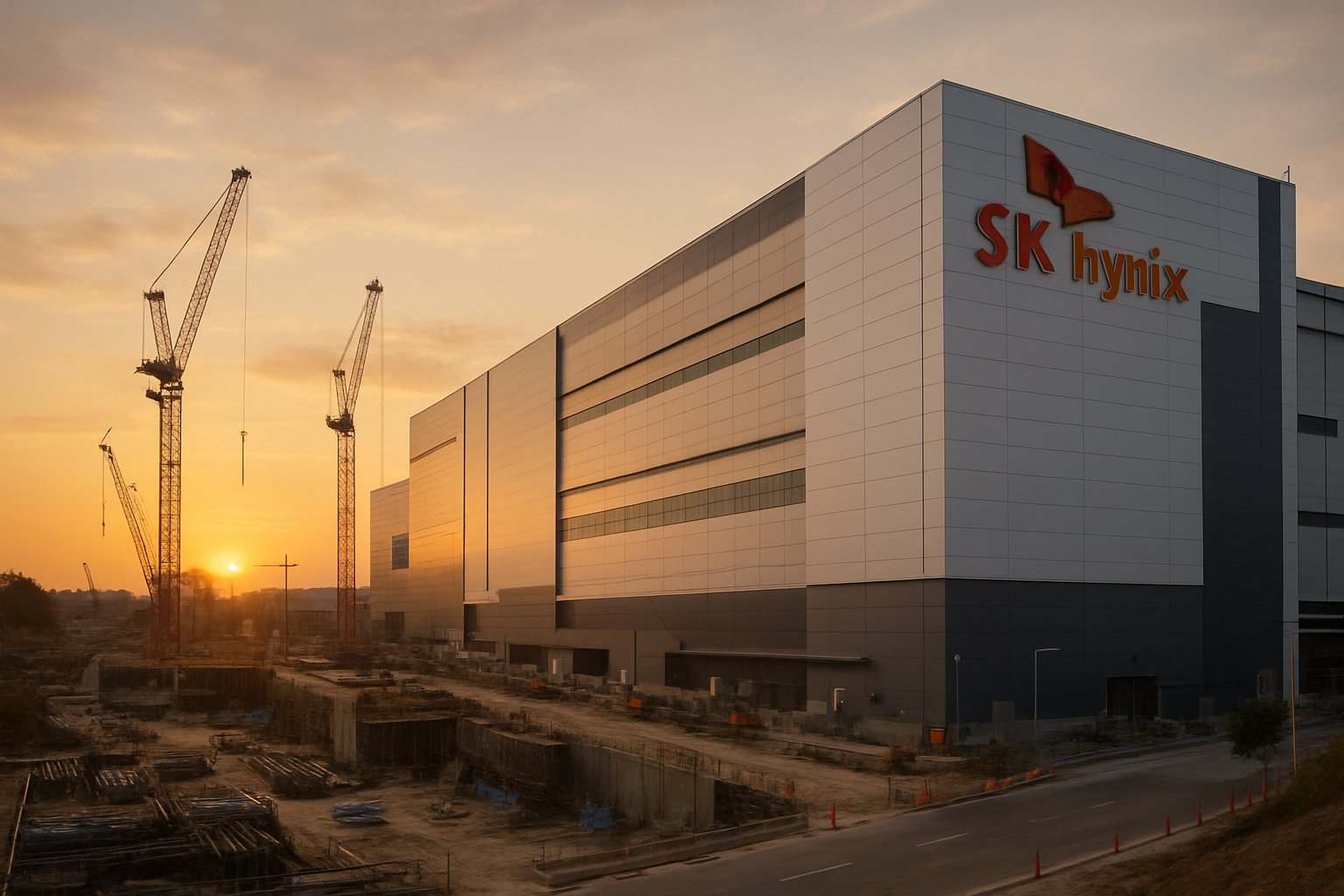
Recent earnings showed ₩11.4 trillion operating profit for Q3 2025. Moreover, shipments grew over 20 percent year on year. Management said 2026 capacity is entirely pre-sold. Consequently, scarcity supports premium pricing for HBM.
These numbers confirm surging demand and constrained supply. However, industry structure intensifies the global memory supply crunch.
Global Memory Supply Crunch
Only three firms dominate advanced DRAM production. Samsung, SK Hynix, and Micron hold most capacity. Therefore, any delay at one house ripples worldwide. In 2025 shortages raised contract prices 28 percent. Furthermore, packaging throughput proved an unexpected chokepoint.
Analysts forecast HBM demand a 30 percent CAGR through 2030. Meanwhile, wafer starts grow slower than appetite. Governments attempt to incentivize faster fabs with subsidies. Nevertheless, power and water availability remain limiting factors.
The following figures illustrate current tightness:
- HBM spot price surged 40% between Q1 and Q4 2025.
- SK Hynix sold out 2026 HBM production within two weeks post-earnings.
- Cheongju P&T7 investment equals roughly US$13 billion.
- Projected global HBM capacity covers only 70% of expected 2027 demand.
Collectively, these metrics show why buyers feel squeezed. Consequently, SK Hynix expansion strategy has drawn heavy attention.
SK Hynix Expansion Strategy
The company plans front-to-back capacity integration at Cheongju. Moreover, the M15X fab will feed wafers directly into P&T7 lines. Such verticalization cuts logistics time and yield risks. Additionally, it enhances negotiating power with hyperscalers.
Chairman Chey Tae-won labeled HBM a "monster chip" in Washington. He also warned profits could flip if demand cools. Nevertheless, SK Hynix raised 2026 CAPEX guidance again. The statement included fresh HBM Output Pledges SK Hynix.
Below are the expansion pillars:
- Increase wafer input for advanced DRAM nodes by 25%.
- Expand HBM packaging throughput via eight new lines.
- Secure renewable power agreements for fab sustainability.
Together, these initiatives underpin another AI Memory Boost cycle. Next, we examine specific capital allocations at Cheongju.
Cheongju Investment Scale Up
January 13 press releases detailed a 19-trillion-won spend. Furthermore, construction begins April 2026 with completion slated end 2027. The facility, dubbed P&T7, focuses on HBM stacking and test. Subsequently, monthly packaging output should double relative to 2025. SK managers repeated their HBM Output Pledges SK Hynix during the announcement.
Financial Times estimates annual revenue upside exceeding US$6 billion post-ramp. In contrast, analysts caution about labour shortages in Chungbuk province. However, SK Hynix offers generous stipends to attract technicians.
These capital moves reinforce confidence in delivery schedules. Nevertheless, timelines still depend on supply chain stability, which we analyze next.
Supply Timelines And Reality
Fabs demand years, not months, to reach mass production. Therefore, near-term relief remains limited despite bold rhetoric. Experts predict tight conditions through mid-2027. Meanwhile, wafer tool lead times exceed 18 months.
Production shift towards HBM reduces commodity DRAM output. Consequently, PC makers may face higher module prices. That tension echoes across smartphones and IoT devices.
Kim Kyu-hyun noted "total output will inevitably remain limited." Additionally, energy infrastructure could slow ramp schedules. Governments are accelerating grid projects; however, funding gaps persist.
Overall, timelines highlight execution risk despite the promised AI Memory Boost. Next, we unpack those risks and watchpoints in detail.
Key Risks And Watchpoints
Demand volatility tops the list of worries. If AI adoption slows, capacity could become overhang. Nevertheless, SK Hynix diversified end markets beyond GPUs. Furthermore, packaging complexity poses yield challenges. Any defect in TSV alignment can scrap an entire stack.
Analysts also cite geopolitical shifts as critical. Export controls could restrict equipment deliveries, delaying yet another AI Memory Boost. Meanwhile, competition from Samsung and Micron intensifies. However, SK Hynix holds performance leadership with HBM3E samples.
Taken together, these risks require vigilant monitoring. Subsequently, buyers must plan procurement strategies proactively.
Market Implications For Buyers
Enterprise architects already extend memory contract horizons to two years. Moreover, some negotiate index-linked pricing to hedge volatility. Those actions mirror lessons from recent GPU shortages.
Integrators can also optimize workloads for memory efficiency. Techniques like sparsity pruning reduce bandwidth needs by 30 percent. Consequently, internal demand management eases exposure to external shortages.
Professionals may upskill via the AI Cloud Architect™ certification.
Early adopters referencing HBM Output Pledges SK Hynix secure priority allocations.
Ultimately, proactive engagement can convert supply risk into advantage. Finally, we distill the article's core insights.


