

AI CERTS
3 months ago
Saipem Deploys Predictive Maintenance System on Flagship Vessels
Executives describe the move as a turning point for data led reliability. A second pilot will soon monitor diesel generators on the heavy-lift Saipem 7000. Collectively, these projects anchor Saipem 12000 Offshore Logistics Operations within a fleet wide transformation agenda. Industry analysts note similar programs across energy fleets, yet few match this scope.
Therefore, professional readers should examine the technical lessons emerging now. This article unpacks the pilots, market context, benefits, risks, and certification pathways. Readers will gain a concise roadmap for scaling any Predictive Maintenance System offshore.
Digital Ambition Takes Shape
Saipem’s digitalisation agenda stretches beyond isolated algorithms. Furthermore, management links AI to project delivery speed and sustainability targets. Paolo Albini recently cited fleet data as the company’s new competitive currency. Consequently, investment flows toward platforms that scale quickly across varied hulls.
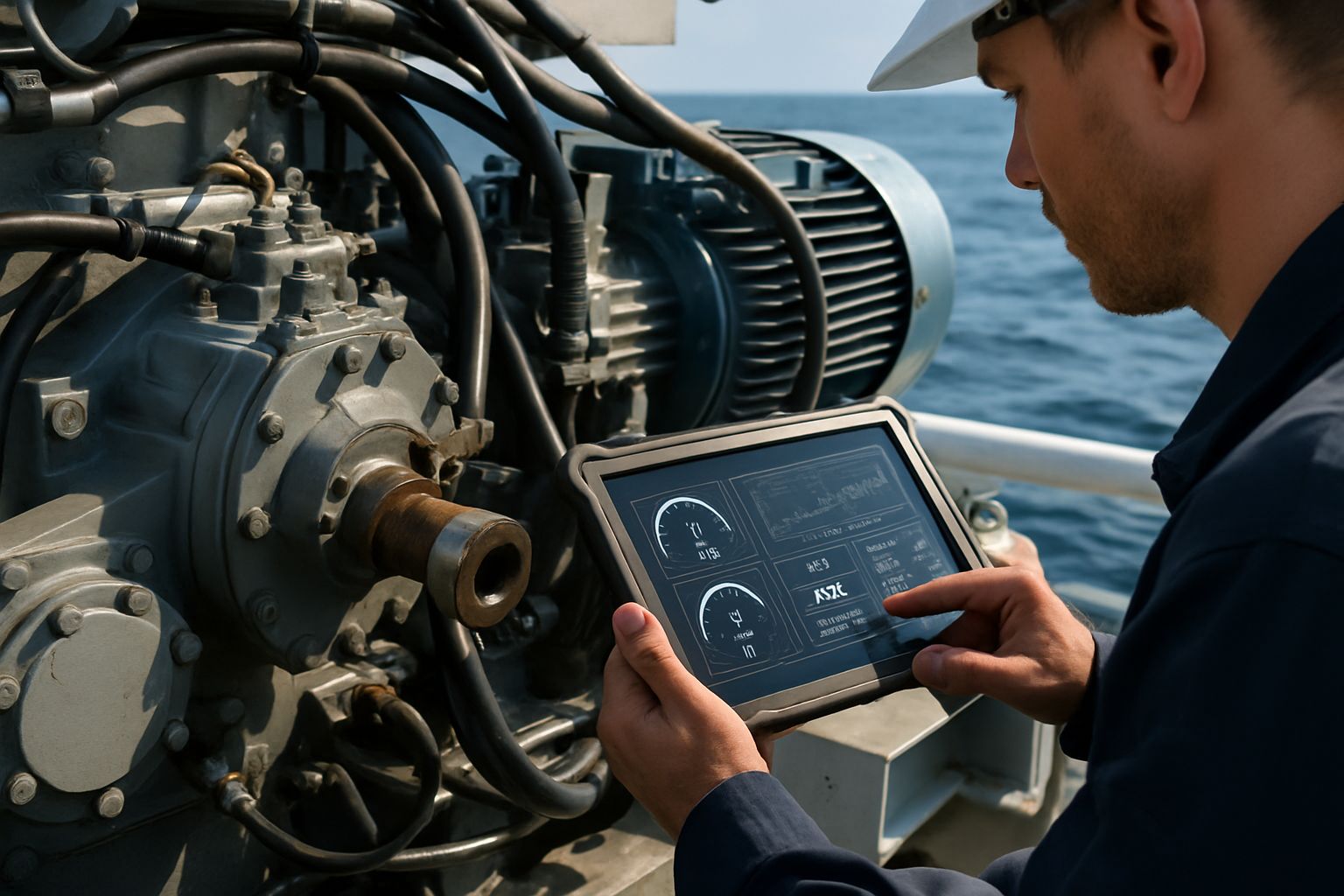
The Predictive Maintenance System therefore sits alongside digital twin rollouts on five major vessels. Meanwhile, DNV’s ShipManager Hull underpins structural condition analytics. AVEVA collaborates on machine learning toolchains that will feed future asset models.
These partnerships clarify Saipem’s end game: data driven asset life cycle control. Next, the article dives into the first pilot’s architecture.
Inside Saipem 12000 Pilot
ADC Energy co-developed the Saipem 12000 pilot within eight months. Vibration, temperature, and electrical sensors stream telemetry from critical topside equipment. Subsequently, edge gateways filter data before cloud ingestion. Machine learning models then estimate remaining useful life for pumps, motors, and dynamic positioning thrusters.
The Predictive Maintenance System alerts crew through a dashboard that integrates with the vessel’s CMMS. Moreover, anomaly thresholds adjust automatically as operational profiles shift. Early field tests reportedly flagged two bearing issues weeks before failure. Stakeholders tie those saves to reduced Saipem 12000 Offshore Logistics Operations downtime.
Such results validate sensor choices and modeling assumptions. However, the sample size remains limited, prompting further measurement. Attention now turns to a larger asset with different power systems.
Initial gains appear promising yet unproven at scale. Consequently, Saipem advances to a generator focused trial.
Second Pilot Expands Scope
BIP leads the diesel generator pilot on Saipem 7000. Likewise, IoT sensors gather temperature, vibration, and exhaust gas parameters. Afterwards, models will predict fuel efficiency deterioration and component fatigue. The Predictive Maintenance System will again drive maintenance scheduling by exception, not routine.
In contrast, this vessel faces variable load patterns during heavy-lift missions. Therefore, engineers expect different anomaly signatures than those on Saipem 12000 Offshore Logistics Operations. Data scientists are designing adaptive models to handle that variability.
Lessons from the pilot should refine generic digital templates. Subsequently, those templates could accelerate wider fleet deployment.
Broader coverage demands modular, transferable analytics. The narrative now shifts to external market signals.
Market Growth Validates Strategy
Independent analysts paint a booming landscape. Fortune Business Insights pegs 2025 predictive maintenance market value near USD 13.65 billion. Moreover, the firm projects a 24.3 percent CAGR through 2034. Grand View Research offers similar growth curves.
Such demand reflects converging IoT, cloud, and AI investments. Consequently, offshore adopters gain supplier choice and innovation momentum. Saipem’s timing therefore appears advantageous. The Predictive Maintenance System aligns perfectly with these bullish forecasts.
- Market size 2025: USD 13-16 billion range
- Expected CAGR 2026-2034: 20-30 percent
- Typical downtime reduction: 50-70 percent
- Maintenance cost savings: 20-30 percent
Numbers underline that early movers can secure wider margins. However, benefits hinge on overcoming real risks. The following section weighs those challenges.
Benefits Outweigh Persistent Risks
Predictive approaches bring tangible operational wins. Additionally, early fault detection protects crew and environment. Nevertheless, several technical and organisational barriers persist.
Data quality ranks highest among concerns. Without clean streams, any Predictive Maintenance System generates false alerts. Cybersecurity also demands vigilance as networks expand. Meanwhile, crews must trust algorithmic advice before abandoning time-based routines.
Organisations often underestimate change management budgets. Consequently, ROI calculations appear optimistic until workflows mature.
Risks do not negate the business case. Therefore, disciplined governance and training remain essential. Attention now turns to scaling roadmaps.
Path Toward Fleet Scale
Saipem intends to standardise data pipelines across vessels. Moreover, digital twin models will contextualise sensor outputs for structural analytics. Reusable libraries should lower marginal deployment costs. The Predictive Maintenance System will then act as a common reliability layer.
Executives target deployment across construction, drilling, and wind installation units. Subsequently, lessons could inform external service offerings to clients. Analysts expect monetisation opportunities in performance-based contracting.
- Consolidate sensor standards
- Implement cloud-edge orchestration
- Train cross-functional reliability teams
- Benchmark KPIs quarterly
Structured rollouts ensure results scale beyond pilots. Next, professionals must consider skill development.
Skills And Certification Pathways
Talent gaps could stall implementation momentum. Consequently, engineering teams require upskilling in data, AI, and reliability. Professionals can enhance their expertise with the AI Robotics™ certification. The curriculum covers sensor integration, machine learning pipelines, and deployment governance.
Moreover, credentials demonstrate commitment to continuous improvement during Saipem 12000 Offshore Logistics Operations projects. Hiring managers increasingly weigh such proof when assigning digital twin roles. Therefore, career growth aligns with organisational digitalisation trajectories. Graduates apply the Predictive Maintenance System concepts to real offshore assets during capstone work.
Skills development accelerates adoption speed and ROI certainty. The conclusion now distills core insights.
Conclusion
Saipem’s pilots mark a decisive turn toward data led reliability. Moreover, market indicators suggest the window for competitive advantage remains open yet shrinking. The Predictive Maintenance System already saves downtime and primes further fleet upgrades. Nevertheless, success depends on data integrity, cybersecurity, and human adoption. Consequently, leaders should couple governance frameworks with targeted upskilling.
Certifications like the linked AI Robotics™ program bridge those knowledge gaps. Therefore, readers should evaluate pilot methodologies, define KPIs, and launch controlled rollouts now. Take action today and turn predictive insight into profitable uptime.
Disclaimer: Some content may be AI-generated or assisted and is provided ‘as is’ for informational purposes only, without warranties of accuracy or completeness, and does not imply endorsement or affiliation.


