

AI CERTS
3 months ago
Algorithmic Prophecy: Feedback Loops Threaten Fair Futures
Amnesty counted 32 UK forces using crime-mapping tools, while 11 profiled individuals for arrest risk. Meanwhile, medical researchers documented treatment models that worsen outcomes despite high accuracy and careful Supervised Learning. These trends expose fragile Infrastructure, thin oversight, and an urgent need for stronger Control mechanisms.
Moreover, legislators are drafting rules, yet technical feedback loops remain poorly understood. This article unpacks the mechanics, impacts, and emerging safeguards. Readers will gain practical insight into resisting harmful Algorithmic Prophecy across critical domains.
Rising Algorithmic Prediction Concerns
Historically, forecasts informed planning without altering ground truth. However, digital deployment blends prediction with intervention. Scholars label this convergence Algorithmic Prophecy, stressing agency and power imbalances. Performative prediction theory shows that decisions influenced by outputs later feed new training data. Consequently, accuracy metrics can mask escalating bias, because the loop reinforces earlier model beliefs. In contrast, traditional econometric models assumed fixed distributions, not reflexive social responses.
Recent law reviews describe a 'prediction society' where policing, welfare, and hiring rely on continuous Forecasting cycles. Shoshana Zuboff argues these prediction products monetize behavioural futures, intensifying surveillance capitalism. Therefore, civil-society groups advocate transparency registers and moratoria for high-risk deployments. These warnings motivate deeper technical scrutiny, addressed next. Researchers agree the stakes extend beyond statistical error. Unchecked loops may harden inequality indefinitely. To understand that dynamic, we must examine the feedback mechanics.
Mechanics Of Performative Feedback
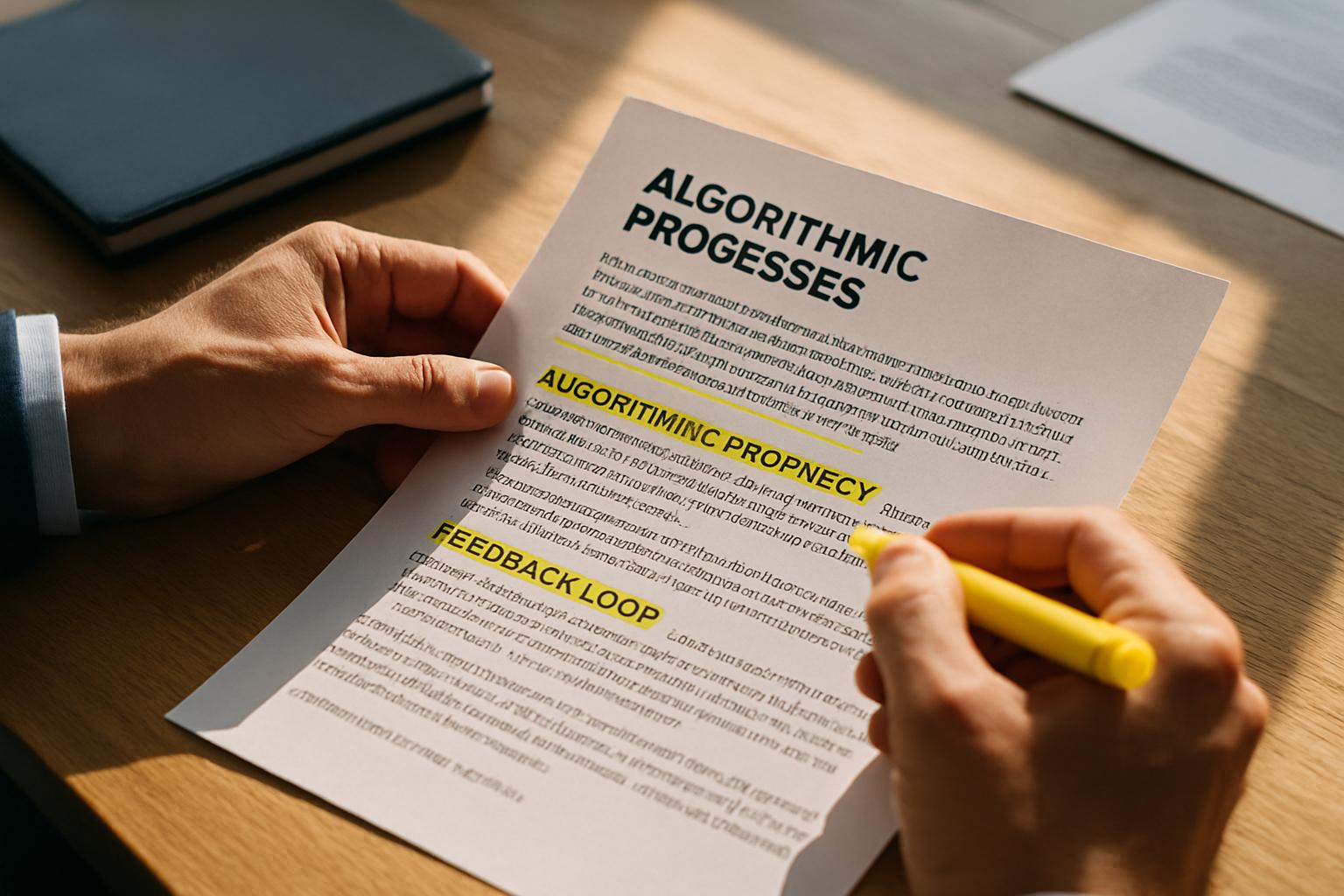
Performative systems operate within coupled human-machine environments. Predictions influence resources, incentives, and behaviour; new data then recalibrate the algorithm. Consequently, the underlying distribution drifts, violating Supervised Learning assumptions of independent samples. Moreover, feedback can raise apparent accuracy, even while worsening lived outcomes. The Patterns 2025 study illustrated hospitals using sepsis risk scores to triage beds.
Doctors intensified monitoring for high-risk patients; recorded complications later confirmed the model, while low-risk patients languished. Meanwhile, predictive policing directs patrols to previously flagged neighbourhoods. Additional arrests appear to validate crime hotspots, although underlying offence rates may stay constant. Researchers call this phenomenon "data feedback externality". Infrastructure limitations amplify the issue because models seldom log counterfactual outcomes.
Therefore, auditors struggle to separate model performance from intervention effects. Khosrowi and colleagues propose learning bounds that include environment response terms. Nevertheless, mainstream validation pipelines rarely implement those bounds today. Algorithmic Prophecy thereby becomes a moving target for evaluators. Feedback loops blur accuracy, fairness, and accountability. Understanding real-world impact requires domain evidence. Documented harms across sectors now provide that evidence.
Documented Cross Sector Impacts
Case studies reveal tangible harm in policing, health, credit, and welfare. Furthermore, numbers paint a disturbing picture.
- Amnesty found 32 of 45 UK forces using geographic crime Forecasting; 11 applied person-level profiling.
- The TAG register lists 55+ automated decision systems within national Infrastructure.
- Patterns researchers saw sepsis triage models raise mortality risk by 3% when guiding bed Control.
- Early PredPol trials claimed 13% burglary reduction; later audits linked hotspots to racialized policing.
Moreover, industry marketing still cites contested success numbers without disclosing method flaws. Consequently, public trust erodes as communities observe mismatches between promised safety and lived reality. Infrastructure for outcome monitoring remains patchy, limiting corrective feedback. Therefore, watchdogs request mandatory publication of impact assessments and Control logs. Numbers confirm performative harm is neither hypothetical nor rare. Multiple domains face measurable inequality amplification. Campaigners argue that each Algorithmic Prophecy deployment requires democratic mandate. Legal and policy responses attempt to address these amplifying effects.
Legal And Policy Responses
Lawmakers worldwide debate predictive system limits. In the UK, MPs proposed amendments restricting algorithmic policing pending transparency guarantees. Meanwhile, the EU AI Act defines high-risk uses requiring rigorous human oversight and auditable Control. Civil groups demand mandatory registries, echoing Public Law Project’s TAG initiative. Additionally, scholars suggest new torts for self-fulfilling harm, arguing existing discrimination statutes ignore temporal mechanics. Nevertheless, critics warn blanket bans could stifle beneficial Forecasting in resource planning.
Therefore, policy design must balance innovation against dignity and autonomy. Regulators acknowledge the feedback threat. Implementation details will determine practical effectiveness. Technical communities are developing tools to support that implementation.
Technical Risk Mitigation Strategies
Researchers propose several safeguards spanning data, models, and deployment Infrastructure. Distributionally robust optimization retrains models anticipating environment reaction rather than assuming stationarity. Moreover, counterfactual logging captures what would have happened without intervention, informing later audits. Human-in-the-loop dashboards let clinicians override questionable scores, restoring professional Control.
Forecasting methods now incorporate causal inference to reduce loop amplification. Supervised Learning pipelines also integrate simulation, stress-testing models under prospective behavioural shifts. Consequently, organisations are investing in specialised talent and credentials. Professionals may strengthen governance via the AI Governance Specialist™ certification. Furthermore, open-source toolkits like "Delphi" track metric shifts after deployment. Technical fixes address some dynamics. Yet organisational alignment and enforceable standards remain essential. Business leaders therefore face strategic repercussions. Robust governance aims to keep Algorithmic Prophecy aligned with social objectives.
Implications For Business Leaders
Companies selling prediction products confront rising compliance costs and reputation risk. Moreover, investors ask boards to evidence ethical Forecasting practices. Procurement teams must vet Supervised Learning vendors for transparency commitments. Firms deploying models internally need governance Infrastructure to document decisions and monitor drift. Investors fear Algorithmic Prophecy failures creating reputational crises. Consequently, multidisciplinary oversight committees are becoming standard in finance, health, and logistics.
Nevertheless, some executives still treat algorithmic risk as a purely technical matter. Education remains critical for bridging that perception gap. Proactive leadership prevents costly remediation. Stakeholders expect accountable digital transformation. Attention now turns to research frontiers and oversight evolution.
Future Research And Oversight
Academic conferences increasingly spotlight performative prediction theory. Subsequently, grants fund longitudinal trials measuring patient and community outcomes under controlled releases. Data trusts may provide shared Infrastructure for neutral evaluation. Moreover, regulatory sandboxes pilot auditing routines before nationwide rollout. Researchers also refine metrics capturing long-term autonomy erosion, not just immediate accuracy. Consequently, governance bodies can benchmark Algorithmic Prophecy systems against human-rights principles.
Nevertheless, funding for independent replication remains scarce. Therefore, collaboration between academia, government, and industry is vital. Methodological advances promise better safeguards. Yet sustained oversight resources must follow technical progress. Interdisciplinary labs track Algorithmic Prophecy evolution using synthetic environments. The closing section synthesizes lessons and outlines next steps.
Algorithmic Prophecy now shapes medicine, policing, and finance far beyond mere prediction. Consequently, unchecked feedback loops risk fossilizing past inequality into future reality. Stakeholders must recognise performative hazards, upgrade systems, and enforce transparent Control. Moreover, technical, legal, and organisational measures already exist to mitigate harm. Professionals should pursue continuous education and apply emerging guidelines rigorously. Therefore, readers are urged to review deployment pipelines, demand evidence of impact, and champion accountable innovation. Visit the certification link above to deepen governance expertise and drive responsible AI adoption.
Disclaimer: Some content may be AI-generated or assisted and is provided ‘as is’ for informational purposes only, without warranties of accuracy or completeness, and does not imply endorsement or affiliation.


