

AI CERTS
3 months ago
KPMG Fined A$10k Amid AI Training Cheating Scandal
Consequently, the disclosure triggered parliamentary criticism and media headlines worldwide. Meanwhile, the firm admitted that 28 employees have been caught breaching the same rule since July. Andrew Yates, KPMG Australia’s chief executive, said the firm is “grappling with the role and use of AI” in training. Industry observers view the incident as the most high-profile professional exam breach since KPMG’s 2021 sanction by US regulators.
Moreover, governance experts warn that unchecked AI usage could erode public confidence in audit outcomes. Repeated AI Training Cheating cases now threaten the profession’s reputation. Professionals can also strengthen ethical foundations through the AI Customer Service™ certification.
Partner Fined For Misuse
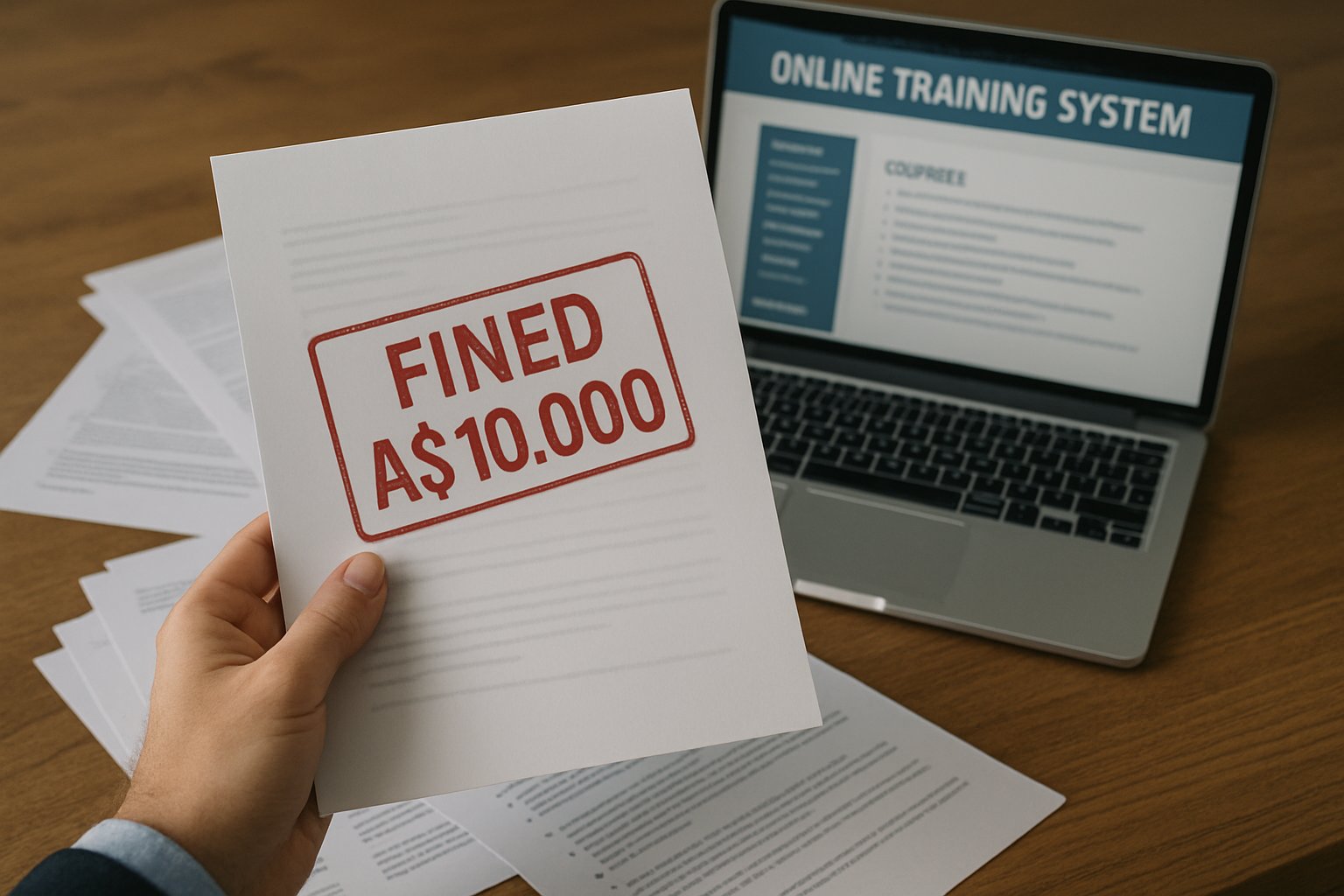
On 16 February 2026, KPMG Australia confirmed the A$10,000 penalty. Additionally, the partner must repeat the compromised module. The rule breached forbids staff from uploading proprietary materials to external models. Such uploading creates data-leakage risk and can yield unfair answer advantages. The internal investigators identified the infraction through monitoring software added in 2024.
Past Misconduct Echoes Loudly
The episode revived memories of the 2021 PCAOB action that cost KPMG Australia A$615,000. In that earlier case, emailed answer keys circulated widely across 1,131 personnel. Nevertheless, the new situation feels different because generative tools create answers rather than share them. Analysts say this nuance makes detection harder and may fuel fresh waves of AI Training Cheating. Consequently, partners now face the same temptation as junior staff.
Vital Training Statistics Snapshot
- A$10,000 fine levied on the partner
- 28 staff flagged for similar breaches in FY 2025-26
- Monitoring tools first deployed in 2024 upgrade cycle
- 2021 misconduct involved 1,131 employees and A$615,000 sanction
- Repeat AI Training Cheating incidents: 28 in FY 2025-26
These data points illustrate persistent cultural vulnerabilities. However, they also show incremental compliance investment.
KPMG’s disciplinary action underlines tangible costs for misusing AI. Therefore, attention now shifts toward the detection systems themselves.
Detection Systems Under Scrutiny
KPMG flags AI Training Cheating patterns through file-fingerprinting, access logs, and stylometric comparison. Furthermore, the firm correlates unusual prompt strings against known large-language-model patterns. In contrast, offenders continuously seek new evasion tactics. Experts warn that automated detectors operate in a perpetual arms race.
Andrew Yates stated the company will report annual AI-policy breach totals. Consequently, stakeholders may soon benchmark audit firms on that metric. Regulators welcome the pledge yet still question whether voluntary disclosure suffices. The KPMG Australia Exam Fraud Penalty has already attracted ASIC attention, according to media briefings.
Meanwhile, assessment designers debate open-book test formats. The partner’s module allowed reference documents, yet barred external AI queries. That distinction proved unclear to some learners, creating fertile ground for AI Training Cheating. Therefore, compliance teams are rewriting instructions with sharper language and pop-up reminders.
Advanced detection can deter rule-breakers, but policy clarity remains essential. Consequently, the regulatory landscape is evolving quickly.
Regulators Demand Greater Transparency
Australian Greens senator Barbara Pocock blasted the self-reporting model during a Senate hearing. Moreover, she labelled current oversight “a joke,” urging mandatory public disclosures. ASIC officials later confirmed they had engaged with KPMG after press coverage but declined to detail next steps.
International precedent suggests heavier fines could follow. For example, the US PCAOB has expanded exam misconduct penalties across the Big Four. Therefore, market watchers predict that the KPMG Australia Exam Fraud Penalty may broaden beyond internal fines.
Professional bodies such as ACCA are also tightening exam security. In December 2025, ACCA reverted to in-person testing, citing a tipping point in remote AI abuse. Consequently, many credential boards discuss biometric ID checks and offline secure browsers.
Political pressure and global examples hint at stricter future mandates. Meanwhile, firms must shore up internal assessment integrity fast.
Industry Grapples With Integrity
Consultants note that employees regularly use generative tools for client deliverables. Nevertheless, firms still test knowledge in isolation from those tools. This mismatch can incentivize covert assistance and amplify AI Training Cheating incidents. Moreover, staff argue that banning models during training feels hypocritical when billable work encourages them.
Some voices call the situation a design failure rather than pure misconduct. Conversely, governance advocates insist personal ethics must prevail regardless of flawed exams. Helen Brand of ACCA described AI cheating as having reached a “tipping point,” pushing institutions to reconsider formats.
Consequently, companies are piloting “AI-assisted” assessments where use is permitted yet documented. The approach mirrors programming contests that allow certain libraries but still test logic skills.
Balancing realistic work simulation with fair evaluation remains complicated. Therefore, many experts turn to redesigned assessment frameworks.
Redesigning Assessments For AI
Assessment architects propose multi-step tasks that trace reasoning, not just final answers. Additionally, version control logs and think-aloud recordings can reveal authentic comprehension. In contrast, pure multiple-choice quizzes are easier to spoof.
Furthermore, staggered checkpoints can limit model copy-pasting. For instance, candidates may submit outlines before generating detailed text. Gamification elements can also keep engagement high while reducing the urge to cheat.
Professionals seeking structured guidance can deepen knowledge through the AI Customer Service™ program. The course includes governance modules that address AI Training Cheating scenarios.
- Permit declared AI assistance within defined limits
- Capture process artefacts such as prompts and drafts
- Apply randomized question banks per attempt
- Introduce supervised in-person checkpoints
These measures improve robustness without blocking innovation. Consequently, leaders can preserve learning credibility.
Future Policy Changes Ahead
Forecasts indicate three converging forces. First, regulators will likely codify reporting of AI infractions. Secondly, clients may request assurance statements regarding exam safeguards. Thirdly, talent markets could reward firms that demonstrate transparent ethics.
Moreover, repeated use of the KPMG Australia Exam Fraud Penalty in headlines pressures competitors to self-audit. Some firms have already published quarterly integrity dashboards. Meanwhile, technology vendors race to market advanced proctoring solutions.
Consequently, the conversation will shift from reactive fines to proactive culture building. Boards that invest early in training redesign and certification programs may avoid costly AI Training Cheating scandals.
Evolving standards and market expectations set a clear trajectory. Nevertheless, sustained vigilance remains essential, as the next breach could be only a prompt away.
Key Takeaways
The A$10,000 sanction signals rising stakes for AI misuse. Furthermore, 28 related cases confirm a systemic challenge. Regulators, politicians, and credential bodies now demand tougher transparency. Firms must upgrade detection, clarify policies, and redesign exams to curb AI Training Cheating. Additionally, cultural reinforcement and continuous education will protect audit credibility. Consequently, proactive professionals should explore certifications like the AI Customer Service™ pathway to build responsible AI skills.
Nevertheless, technology evolves rapidly, making static rules obsolete. Therefore, leaders need adaptive frameworks that treat integrity as a living discipline. By embedding transparent AI-assisted workflows and publishing clear metrics, organisations can turn a liability into competitive trust. Act now, refine assessments, and champion ethical innovation before regulators dictate the terms.
Disclaimer: Some content may be AI-generated or assisted and is provided ‘as is’ for informational purposes only, without warranties of accuracy or completeness, and does not imply endorsement or affiliation.


