

AI CERTs
1 month ago
Sanders Spurs AI Scale Regulation Debate Over Data Centers
Few Washington moments spark bipartisan attention faster than a Sanders podium knock. However, his latest warning about runaway artificial-intelligence capacity did exactly that. During December remarks and a February Stanford forum, the senator urged an immediate pause. He said democracy needs breathing room before the compute arms race reshapes every community. Consequently, the phrase “AI Scale Regulation” has shifted from niche white papers to dinner-table vocabulary. Industry leaders counter that a slowdown stifles innovation and jobs. Meanwhile, utilities, unions, and local officials weigh energy bills, employment prospects, and political fallout. The following analysis traces the debate’s origins, key statistics, competing perspectives, and emerging Policy paths.
Why Sanders Sounds Alarm
Sanders frames the issue as democratic urgency rather than technical nuance. Moreover, he argues that corporate concentration expands at a Speed most voters barely notice. He cites IEA projections showing global data-center electricity could more than double by 2030. Such growth, he warns, threatens jobs, communities, and the climate simultaneously. Consequently, his December call sought a nationwide moratorium lasting until Congress passes comprehensive AI Scale Regulation.
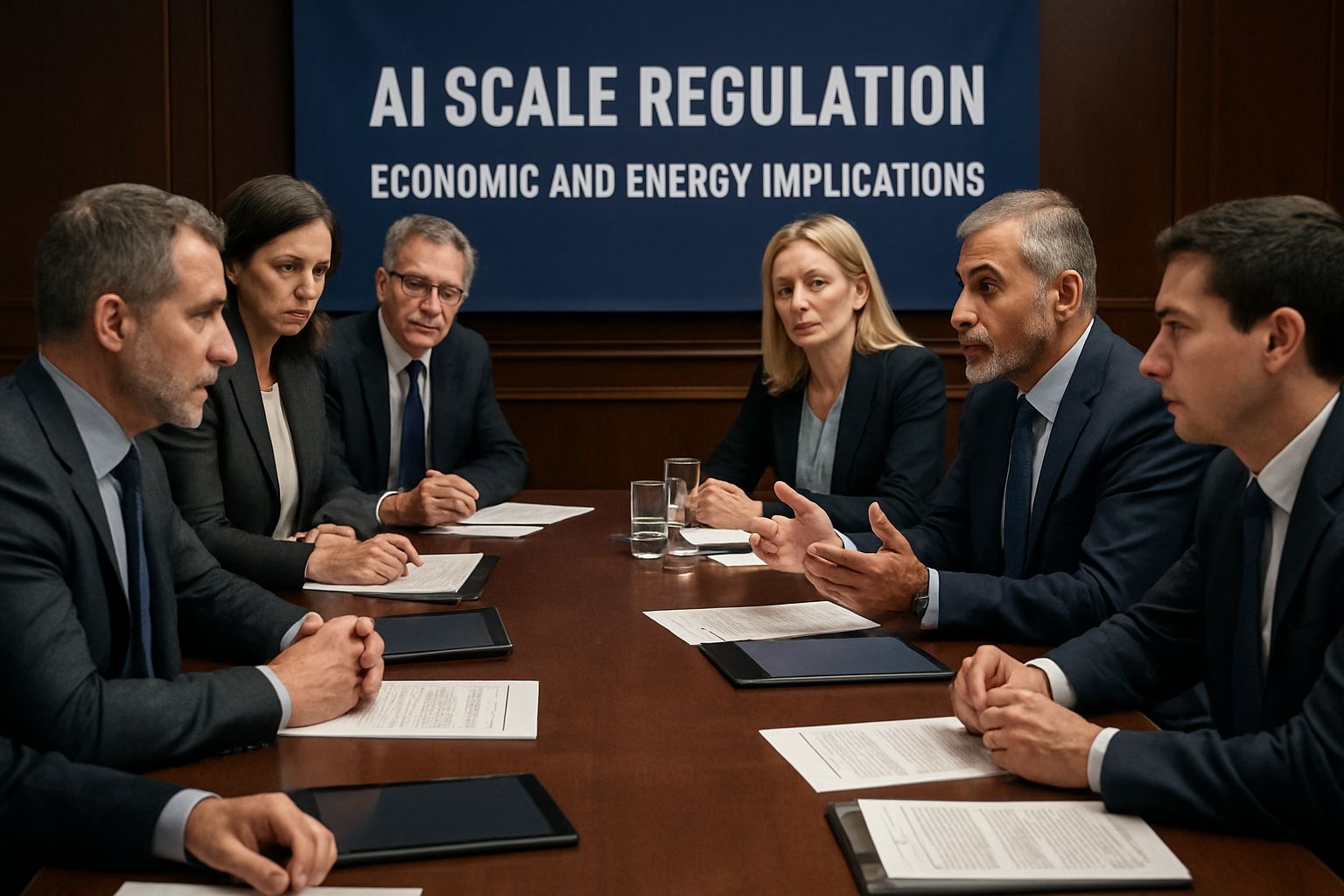
At Stanford, the senator repeated that lawmakers remain “very unprepared for the tsunami” headed toward labor markets. In contrast, progressive colleagues offered cautious support while centrists avoided endorsing a blanket halt. Critics labeled the idea politically impossible, yet public polling suggests underlying anxiety. According to Pew, 64% of adults expect fewer jobs because of AI. That statistic underscores Economic Impact fears among constituents. These sentiments fuel Sanders’ momentum.
Political urgency is rising, though consensus remains elusive. Nevertheless, the grid implications may force faster action.
Data Centers Strain Grids
IEA data put 2024 global data-center use near 415 TWh, or 1.5% of all electricity. Furthermore, the agency’s base case shows demand could reach 945 TWh by 2030. U.S. facilities already consume roughly 183 TWh, about four percent of national supply. Consequently, local utilities scramble to add capacity, sometimes delaying residential connections.
- 10–12% annual growth in data-center electricity since 2020
- 17 billion gallons of water used by U.S. sites in 2023
- Projected doubling to 945 TWh by 2030 absent AI Scale Regulation
Water stress also looms; Berkeley Lab estimates 17 billion gallons consumed in 2023. Moreover, hyperscale projects often concentrate in semi-arid counties, intensifying environmental opposition. Industry touts lower Power Usage Effectiveness, yet absolute load still rises. Therefore, grid regulators now examine AI Scale Regulation to align infrastructure with resilience goals.
Energy numbers reveal hard physical limits. Next, labor concerns further complicate the narrative.
Job Displacement Debate Grows
Automation fears have shadowed technology for centuries. However, generative models escalate the conversation because they target cognitive, not only manual, tasks. Fed vice-chair Michael Barr warned that Speed, automaticity, and ubiquity could trigger systemic financial shocks. Meanwhile, Bill Gates predicts shorter workweeks through productivity gains.
Economists split over net Economic Impact. Some forecast new roles in model oversight, data labeling, and augmented creativity. In contrast, unions anticipate layoffs across call centers, logistics, and back-office functions. Therefore, Sanders contends AI Scale Regulation must precede mass deployment to prevent widening inequality.
The employment picture remains uncertain and politically volatile. Yet, proponents believe productivity dividends justify continued investment.
Productivity Hopes And Caveats
Hyperscalers cite historical examples where innovation created surplus value and fresh industries. Moreover, they promise renewable power deals and efficiency upgrades to cushion grids. They argue delayed construction would sacrifice competitiveness and Economic Impact benefits.
IEA analysis notes AI could optimize building energy, grid dispatch, and materials discovery. Consequently, some experts see technology solving problems it also causes. Nevertheless, efficiency does not fully offset absolute load when model size and inference Speed escalate. Without prudent AI Scale Regulation, promised gains may evaporate.
Professionals can deepen insight with the AI Executive Essentials™ certification.
Productivity narratives inspire optimism yet rely on contested assumptions. Accordingly, policymakers explore middle paths between freeze and free-for-all.
Policy Paths Under Review
Congressional committees prepare hearings on environmental disclosure, grid fees, and safety testing. Additionally, several Democrats draft Policy bills linking construction permits to renewable supply contracts. Republicans mostly favor state autonomy and market self-correction.
Rep. Ro Khanna promotes a conditional build framework instead of a total pause. Under his concept, facilities win approval after meeting water, energy, and labor standards. Therefore, AI Scale Regulation becomes a lever rather than a brake.
Outside Washington, states like Virginia weigh utility cost-sharing. They aim to soften Economic Impact on ratepayers. Meanwhile, the Department of Energy drafts guidance for grid operators. Targeted AI Scale Regulation may satisfy both camps.
Legislative movement favors targeted levers over sweeping bans. However, effective oversight will hinge on credible governance structures.
Governance Questions Move Forward
Scholars argue that technical advisory boards must accompany any statute. Moreover, they emphasize transparent metrics covering emissions, water, and model behavior. International bodies like the IEA offer data but lack enforcement authority.
Consequently, multilevel Governance coordination appears essential. Sanders proposes an independent commission staffed by labor, climate, and security experts. Such a panel could calibrate AI Scale Regulation updates annually.
Industry groups suggest self-regulatory audits and public dashboards. In contrast, civil society favors binding obligations with penalties. Speed of deployment complicates oversight because model releases can outpace rulemaking cycles. Therefore, robust Governance mechanisms must act faster than previous tech frameworks.
Stakeholders agree oversight must improve, yet disagree on architecture. That disagreement sets the stage for pivotal 2026 sessions.
AI Scale Regulation now anchors a national conversation spanning energy, labor, and innovation. Moreover, the debate highlights deep Economic Impact uncertainties and escalating grid challenges. Governance models will determine whether promised productivity gains materialize without social rupture. Consequently, leaders must craft flexible Policy tools that evolve as technology’s Speed accelerates. Professionals should monitor hearings, participate in consultations, and pursue advanced credentials to stay ahead.


