

AI CERTS
3 hours ago
Qualcomm-Tata Deal Reshapes Auto Hardware Manufacturing
Industry watchers connect this move to soaring demand for software-defined vehicles and safer digital cockpits. Meanwhile, automakers seek diversified supply chains after recent geopolitical and pandemic shocks. Therefore, an Indian assembly hub offers shorter lead times and new export routes. Professionals tracking semiconductor trends should understand the partnership’s strategic depth and execution challenges. This article unpacks the announcement, market context, risks, and career implications for the wider ecosystem.
Qualcomm Tata Partnership Shift
Qualcomm executives unveiled the agreement alongside Tata leadership during concurrent New Delhi and San Diego briefings. However, the headline figure was not a chipset but the new contract-assembly line for Automotive Modules. Under the memorandum, Tata Electronics will package Snapdragon Digital Chassis systems at Jagiroad once the plant becomes operational. Consequently, Qualcomm extends its global network of module partners beyond traditional hubs in Taiwan, Korea, and China. Tata, meanwhile, strengthens its semiconductor foothold after earlier forays into smartphone components.
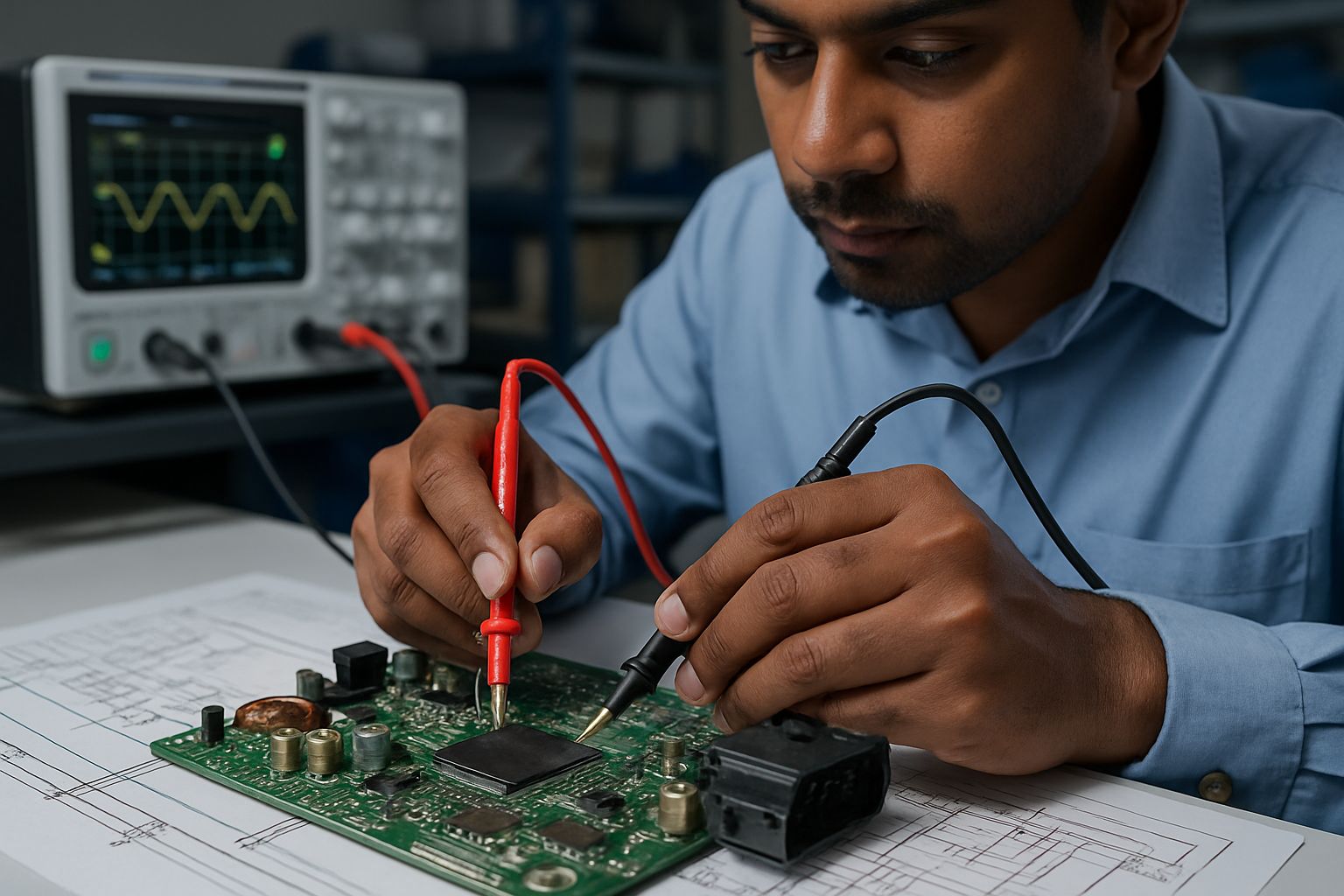
The agreement creates India’s first large-scale OSAT line dedicated to vehicle electronics. It anchors the country within Qualcomm’s high-value supply chain. Next, we examine the Jagiroad facility’s planned capabilities.
Jagiroad OSAT Facility Overview
Jagiroad lies in Assam’s emerging industrial corridor, adjacent to multimodal logistics routes. Moreover, Tata Electronics is investing about US$3 billion to construct clean rooms, flip-chip lines, and ISP suites. The plant focuses on assembly and test rather than wafer fabrication, aligning with typical OSAT economics. Consequently, Snapdragon dies will still come from foreign foundries before entering Indian lines for final packaging. Nevertheless, local integration reduces shipping steps and can cut lead times for domestic auto OEMs.
Jagiroad combines wire-bond, flip-chip, and SiP flows under one roof. These flows enable compact Auto Hardware suited for space-constrained dashboards. The strategic benefits extend beyond engineering, touching global supply security, which we explore next.
Strategic Supply Chain Diversification
Global automakers previously depended heavily on East Asian back-end houses. In contrast, chip shortages exposed concentrated geographic risk during 2021-2023 production halts. Furthermore, many OEMs adopted dual-sourcing mandates for critical Auto Hardware after that turmoil. Qualcomm therefore seeks wider assembly footprints to satisfy design-win commitments approaching US$30 billion. Meanwhile, Indian policy incentives, particularly the Production Linked Incentive scheme, lower capital costs for new Manufacturing projects.
- Reduced transit times for finished Modules to Indian OEM plants.
- Alternative capacity during unforeseen Auto Hardware shortages.
- Access to Tata’s Integrated Systems Packaging expertise.
Diversification strengthens continuity for safety-critical infotainment and ADAS platforms. However, demand growth truly drives the business case, as the next section shows.
Auto Hardware Market Drivers
Precedence Research estimates automotive semiconductor sales could top US$50 billion in 2025. Moreover, multiple firms forecast the software-defined vehicle market surpassing US$200 billion early next decade. Consequently, integrated Auto Hardware combining compute, connectivity, and memory is scaling quicker than legacy discrete boards. Qualcomm’s Snapdragon Digital Chassis already sits in designs at Stellantis and other mainstream brands. Additionally, rising electric vehicle volumes amplify silicon demand for battery management and advanced displays.
Market projections remain vendor-dependent yet consistently bullish. This roaring appetite underpins the Jagiroad investment. Next, we assess potential hurdles the partnership must navigate.
Manufacturing Scale Challenges Ahead
Automotive qualification requires stringent AEC-Q100 testing and years of reliability data. Consequently, the company must prove process control across millions of packaged Modules before landing high-volume orders. Moreover, Auto Hardware uses dies from advanced nodes that remain fabricated offshore, adding logistic interfaces. Quality lapses anywhere in that chain can trigger costly recalls and reputational damage. Nevertheless, Tata’s consumer electronics track record suggests credible Manufacturing discipline.
Scale and qualification hurdles could delay revenue realisation. However, clear mitigation strategies are emerging. We now shift to workforce readiness and skill development.
Upskilling For Modules Careers
Robust talent pipelines will decide whether India captures enduring value from complex packaging. Moreover, engineers must master automotive functional safety, high-frequency signal integrity, and reliability analytics. Professionals can boost credibility via the AI Sales Certification, covering solution positioning for technical buyers. Consequently, sales leaders align product roadmaps with evolving Auto Hardware feature sets more effectively. Meanwhile, packaging engineers should learn thermal simulation and SiP design tools.
Targeted upskilling narrows the capability gap with mature East Asian OSATs. This human capital will influence long-term competitiveness, as the final outlook shows.
Key Takeaways And Outlook
The partnership between the two companies crystallises India’s ambition to ascend the semiconductor value chain. Additionally, the Jagiroad OSAT could provide diversified capacity for critical Auto Hardware within three years of launch. Nevertheless, rigorous qualification, talent development, and synchronized logistics remain essential before export volumes flow. Market fundamentals appear supportive; forecasts signal surging demand for integrated Modules across infotainment and autonomy. Consequently, stakeholders should monitor construction milestones, customer announcements, and Indian policy incentives.
In summary, Auto Hardware production is steadily globalising, and India now holds a credible seat. The cross-industry project combines massive capital, proven design IP, and favourable incentives. However, success depends on flawless execution from clean room build to final AEC-Q100 audits. Therefore, suppliers, investors, and engineers should track validation milestones closely.
Meanwhile, career professionals can seize momentum by mastering solution selling through the earlier linked certification. Furthermore, continuous learning around packaging physics and automotive compliance will sharpen competitive edges. Explore additional resources, enrol in new programs, and position yourself for the next wave of growth.


