

AI CERTS
2 months ago
Sarvam’s Indus fuels Regional AI Race
Early users applaud the natural accents, yet some highlight response delays. Nevertheless, competitive pressure is rising as global firms localise their assistants for emerging markets. Regional AI Race mention 1.
Indus Launch Signals Shift
Indus marks Sarvam’s first consumer play. However, rollout remains invite-only, throttled by compute limits. Users sign in through phone, Apple ID, or Google accounts. Additionally, the app accepts PDF and image uploads for analysis. Spoken replies arrive in near real time when bandwidth cooperates. Reporters note missing chat-history deletion unless an account is removed entirely. These limitations suggest a minimum viable product approach.
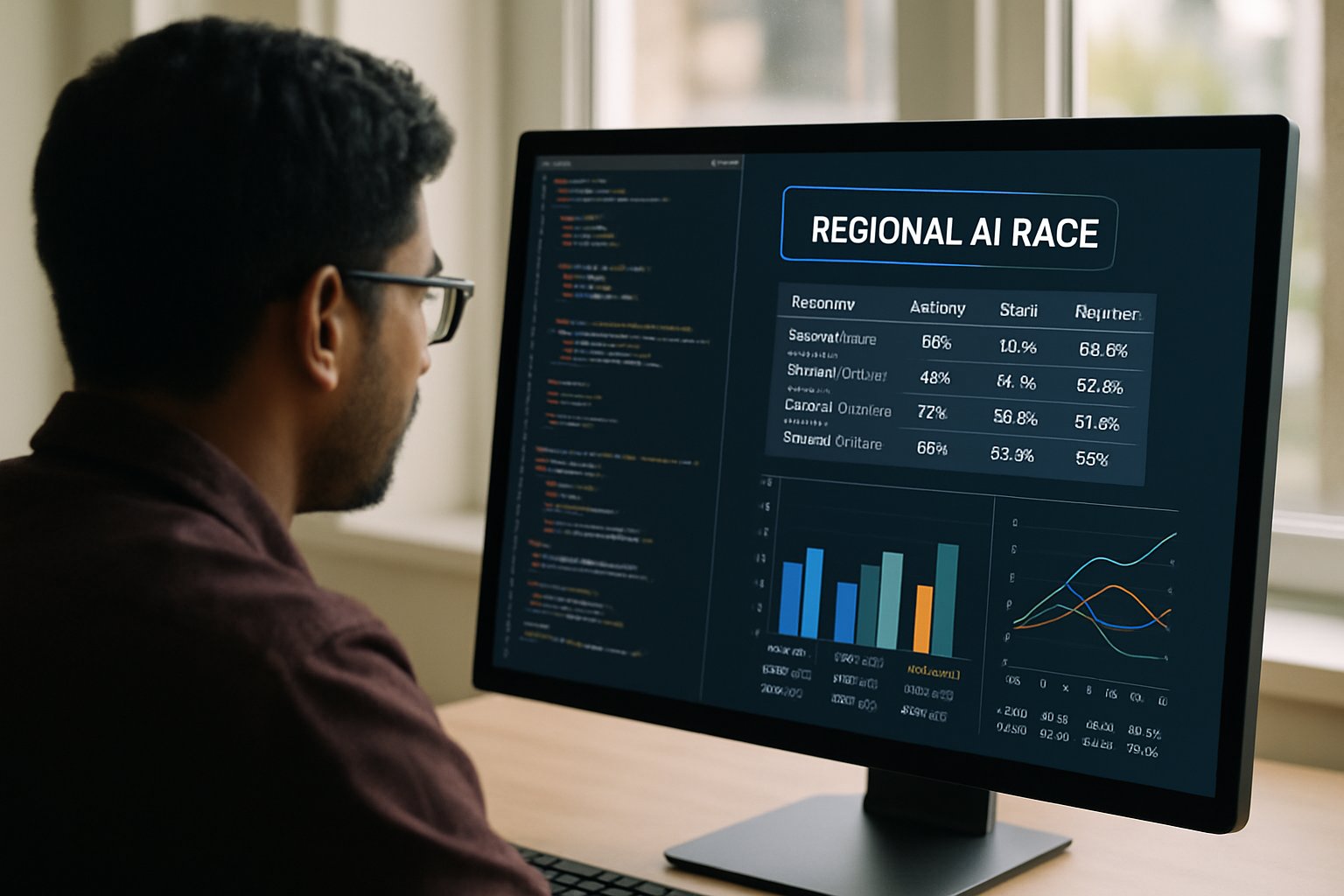
Early reactions confirm pent-up demand for local language assistance. Therefore, waitlists are growing across India. Regional AI Race mention 2. These first impressions establish momentum. Subsequently, attention shifts to model architecture.
Model Architecture Under Debate
Sarvam-30B and Sarvam-105B rely on Mixture-of-Experts routing. Consequently, only a fraction of parameters activate per token, lowering inference costs. Sarvam claims 16 trillion pre-training tokens and a 32,000-token window for the smaller model. Moreover, the 105B variant stretches context to 128,000 tokens while activating nine billion parameters. Independent labs have not yet audited performance claims. Nevertheless, company charts show the larger model edging out Gemini Flash on several benchmarks.
Analysts praise the efficient design, yet demand transparent evaluation artefacts. Therefore, impartial testing remains a priority for confidence. Regional AI Race mention 3. These questions drive interest in edge deployment plans.
Edge Strategy Targets Masses
During the India AI Impact Summit, Sarvam displayed Sarvam Edge, offline variants tuned for smartphones and laptops. Furthermore, demos on Nokia feature phones hinted at mass adoption potential. Qualcomm collaboration promises chipset-level optimisation, while Bosch pilots in-car assistants. Additionally, Sarvam Kaze smart-glasses are scheduled for May retail release. On-device processing reduces latency and can protect sensitive data.
Key edge benefits include:
- Lower bandwidth dependence for rural users
- Improved privacy through local inference
- Battery-aware scaling using MoE sparsity
Consequently, Sarvam could reach millions beyond premium smartphones. Regional AI Race mention 4. These opportunities rely on sustained capital and policy alignment.
Market Funding And Policy
Founded in 2023, Sarvam has raised between USD 41-53 million from Lightspeed, Peak XV, and Khosla Ventures. Meanwhile, the IndiaAI Mission allocated 4,096 NVIDIA H100 GPUs plus nearly Rs 99 crore in subsidies. Moreover, hosting partner Yotta Data Services provides domestic data residency, supporting sovereign AI goals. In contrast, many global rivals still process Indian queries offshore. Such policy momentum strengthens Sarvam’s bargaining power with telecoms and device makers.
Financial support de-risks infrastructure expansion. Therefore, Sarvam can experiment with generous context windows without overwhelming costs. Regional AI Race mention 5. Still, product maturity challenges persist.
Challenges Facing Early Rollout
Beta testers identified response slowdowns when “reasoning mode” silently triggers deeper computation. Additionally, no toggle exists for this feature. Users cannot yet export or selectively delete conversations. Moreover, limited GPU capacity forces periodic throttling, extending waitlists. Privacy advocates also request clarity on what data lives on device versus cloud.
These friction points may hinder wider adoption if unaddressed. Nevertheless, iterative updates could resolve most issues quickly. Regional AI Race mention 6. Addressing them influences how competitors react.
Implications For Regional Competitors
Sarvam’s language focus pressures global platforms to support Hinglish and other dialects. Consequently, Amazon, Google, and Baidu must accelerate localisation or risk losing share. Smaller Indian startups could pivot toward niche vertical assistants rather than head-to-head chat products. Moreover, policy makers might extend GPU subsidies to additional firms, diversifying the ecosystem. In contrast, unchecked subsidy concentration could stifle competition.
Thus, competitive dynamics hinge on transparent benchmarks and equitable infrastructure access. Therefore, every strategic move nudges the leaderboard in the Regional AI Race. Regional AI Race mention 7. Market participants now plan for the next growth phase.
Preparing For Next Phase
Sarvam intends to open-source parts of its stack, yet details remain vague. Furthermore, investors will seek clarity on revenue models once the app exits beta. Enterprise licensing, premium context tiers, and hardware bundles are all possible. Professionals can enhance their expertise with the AI Project Manager™ certification to manage such complex rollouts. Additionally, independent benchmark suites will likely emerge, akin to MLPerf for LLMs.
Therefore, the coming months will test Indus across performance, reliability, and monetisation fronts. Regional AI Race mention 8. Stakeholders should monitor updates and prepare contingency strategies. Subsequently, we conclude with overarching insights.
The Regional AI Race now features a formidable Indian contender. Sarvam’s Indus couples innovative MoE models with an ambitious edge roadmap. Moreover, national subsidies and investor backing provide a rare cushion for experimentation. Nevertheless, transparency, scalability, and user trust will determine long-term success. Consequently, informed leaders should track benchmarks and certification paths to stay ahead.
Disclaimer: Some content may be AI-generated or assisted and is provided ‘as is’ for informational purposes only, without warranties of accuracy or completeness, and does not imply endorsement or affiliation.


