

AI CERTS
3 hours ago
India’s Pledges Spotlighted at Global AI Summit 2026
However, industry participants looked beyond symbolism toward concrete compute, data and energy commitments. Throughout six days, the summit generated headline pledges exceeding $250 billion for AI infrastructure. Consequently, analysts now ask whether announced capacity will reach effective Deployment nationwide. This article unpacks the numbers, controversies and next steps behind the Global AI Summit agenda. Moreover, it balances booster claims with critical voices and energy realism. Readers will gain actionable insights and links to certification pathways enhancing strategic advantage.
Summit Context And Overview
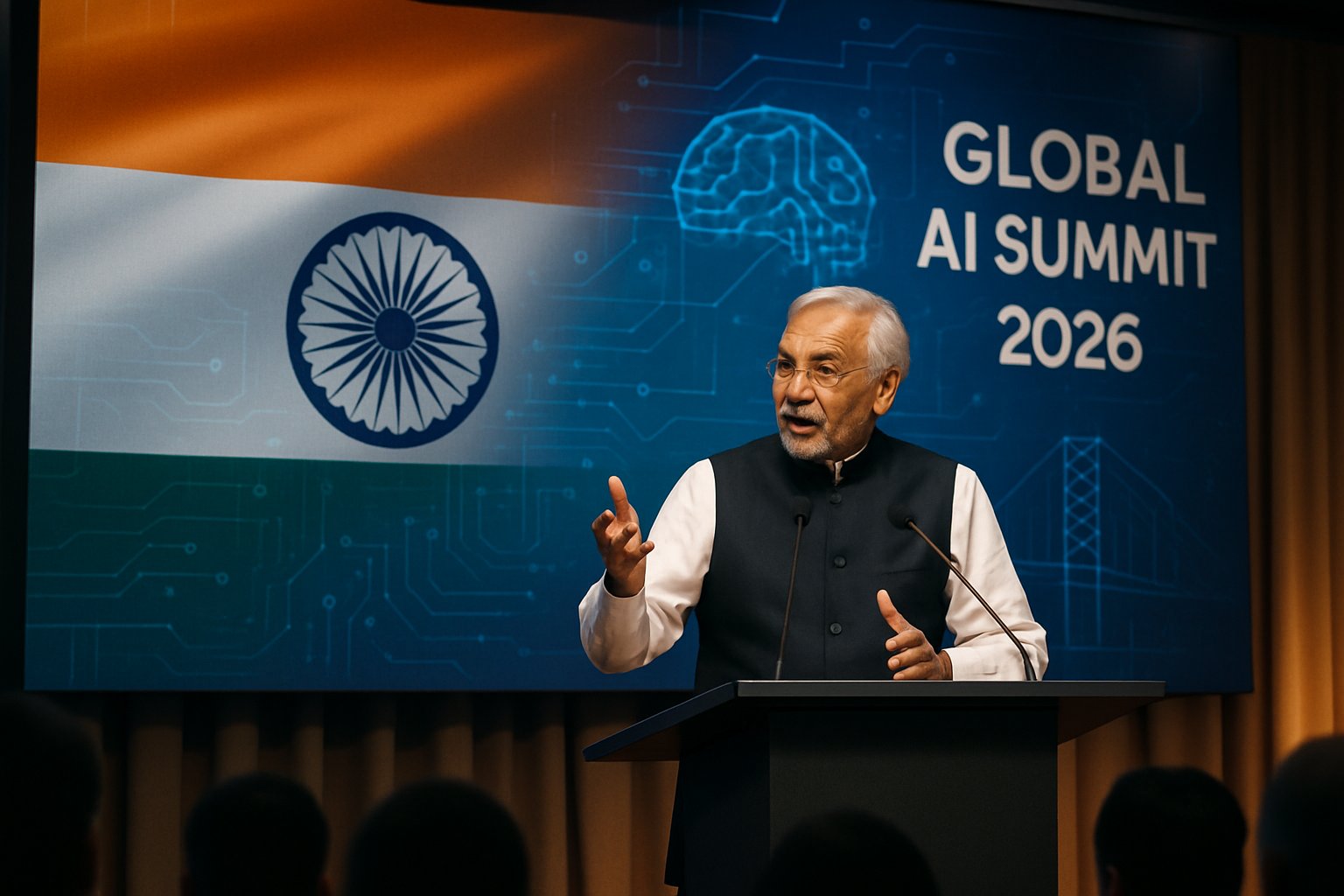
The Indian government branded the February gathering as the India AI Impact Summit 2026. International media nevertheless grouped it with the broader Global AI Summit circuit. Held in New Delhi, the program combined ministerial meetings, expo halls and developer bootcamps. Moreover, organisers reported more than 500,000 participants and 550 pre-summit events across India. Consequently, officials claimed the largest technology convening south of Davos. Modi unveiled the MANAV framework stressing ethical, accountable and inclusive AI.
Meanwhile, five heads of state addressed plenary sessions highlighting shared development priorities. The packed schedule underlined India’s ambition to translate Public Infra lessons to advanced intelligence layers. These opening facts frame the policy theatre. However, money and machinery ultimately decide success, a topic the next section tackles. In short, attendance records signalled enormous international interest. Yet investment figures provide a clearer measure, so we next examine pledged capital.
Counting Massive Investment Numbers
Press Information Bureau bulletins placed total infrastructure pledges at more than $250 billion. Furthermore, deep-tech commitments reached another $20 billion supporting startups and academic labs. Microsoft alone promised US$17.5 billion for new data centres, sovereign cloud zones and skilling programs. Google and partners announced a Visakhapatnam campus rated at one gigawatt of IT load. In contrast, Amazon signalled multi-year expansions without releasing consolidated rupee figures. Consequently, summit spreadsheets featured several high zeros yet uneven documentation.
Analysts at Business Standard warned that many items remain memoranda of understanding, not executed contracts. Nevertheless, state governments from Gujarat to Andhra Pradesh rushed to sign land and power accords. Meanwhile, Public Infra incentives such as tax breaks and faster permits sweetened negotiations. Key announcements appeared repeatedly during Global AI Summit press briefings, magnifying global coverage. These numbers inspire optimism but demand careful verification. Therefore, we next unpack the sovereign compute plan that anchors many pledges.
India's Sovereign Compute Vision
IndiaAI Mission positions sovereign compute as the summit’s technological backbone. Under this plan, tens of thousands of GPUs become available through a national portal and subsidised marketplace. Subsequently, researchers, startups and ministries request allocations instead of scrambling for expensive foreign cloud credits. Government releases cite an installed pool above 38,000 GPUs, targeting 100,000 by late 2026. Moreover, Microsoft, Yotta and others will contribute sovereign cloud zones compliant with localisation regulations.
These zones keep sensitive workloads within Indian jurisdiction, echoing earlier Public Infra data policies. Consequently, proponents argue that open access levels the playing field for domestic Deployment of large models. Professionals can deepen skills via the AI Customer Service™ certification. Such credentials align with the Government’s call for three million AI specialists by 2030. These structural moves promise capability gains. However, compute growth means little without reliable energy, the focus of the next section.
Energy And Climate Concerns
Every new data hall demands megawatts of continuous power and millions of litres of cooling water. Business Standard reports current national data-centre load near 960 MW, only three percent globally. Projections presented at the Global AI Summit suggest capacity could hit 9.2 GW by 2030. Consequently, peak electricity demand may rise sharply, straining grids already peaking at 242 GW. Morgan Stanley analysts warned that unchecked growth could erase India’s recent decarbonisation gains. Meanwhile, state planners tout rising non-fossil generation beyond 50 percent of installed capacity.
In contrast, critics point out that renewable buildouts and storage lag behind hyperscale announcements. Nevertheless, summit communiqués promised green power purchase agreements, on-site solar roofs and advanced liquid cooling. Public Infra advocates argue that shared campuses improve utilisation, cutting waste compared with fragmented installations. These forecasts reveal opportunity and risk. Therefore, we now turn to the policy and civil society critiques shaping next actions.
Critical Voices And Warnings
Independent blog The Squirrels live-blogged operational glitches during expo days in New Delhi. Attendees cited patchy connectivity, payment failures and long shuttle queues despite the Global AI Summit spotlight. Moreover, civil society groups criticised the dominance of a few hyperscalers in shaping supposedly public goods. They warned that Public Infra concepts could morph into private toll booths if governance stays weak. Modi supporters rejected this view, arguing that competitive bidding ensures diversified partnerships.
Nevertheless, policy analysts urged clearer publication of GPU inventory, energy sources and cost pass-throughs. Consequently, many declared that Deployment transparency will determine whether promises reach startups outside metro hubs. Global AI Summit organisers acknowledged feedback and promised quarterly dashboards tracking project milestones. These critiques create pressure for measurable progress. However, stakeholders still believe structured follow-up can convert headlines into working infrastructure.
From Pledges To Deployment
Translating huge checks into humming servers involves complex, staged Deployment. Therefore, officials outlined a phased roadmap covering land acquisition, power hookups and workforce skilling. Subsequently, each hyperscaler must secure environmental clearance and sign renewable energy agreements. The following timeline, shared during a Global AI Summit panel, summarises the typical path:
- Month 0-6: Sign MoU, complete feasibility and grid studies.
- Month 6-18: Finalise permits, order turbines, negotiate GPU procurement.
- Month 18-36: Construct shells, install servers, commence test Deployment.
- Month 36-48: Scale workloads, integrate with Public Infra APIs and Bhashini.
Additionally, IndiaAI will audit GPU utilisation and publish slot availability to reduce queue times. Government dashboards will display New Delhi and state-wise progress indicators. Moreover, the finance ministry plans incentive disbursals only after physical inspection verifies milestones. These guardrails aim to shift conversation from promises to tangible megawatts and inference cycles. In summary, disciplined project management can ensure momentum. Consequently, the concluding section links these developments back to international positioning at the Global AI Summit.
India’s ambitious AI agenda now hinges on execution, transparency and sustainable energy choices. Investments pledged during the Global AI Summit can redefine the nation’s digital trajectory if partners deliver. However, climate constraints, governance gaps and vendor concentration risks remain pressing. Consequently, officials must publish granular dashboards, while independent auditors track GPU stocks and grid mix. Meanwhile, enterprises should prepare talent able to exploit new sovereign stacks responsibly. Professionals pursuing the linked certification position themselves for early advantage in mission-critical Deployment projects. Act now, deepen expertise, and help shape the next chapter of India’s AI evolution.


