

AI CERTS
3 hours ago
AI Momentum Drives Hedge Fund Tactical Trading Gains
Preqin data shows hedge-fund assets near $5 trillion, yet AI-labelled funds still control under 0.1% in Europe. Meanwhile, institutional giants like JPMorgan are committing fresh capacity to AI-native managers such as Numerai. ESMA and the SEC respond with roundtables demanding clearer model governance. Industry veterans warn that laggards risk a Software Rout as data volumes explode. This article dissects the evolving AI playbook and weighs Pros and pitfalls. It also outlines skills professionals need to ride the next Index revolution.
AI Reshapes Tactical Trading
AI once served hedge funds as a research helper. Now it drives live orders in Tactical Trading strategies across equities, rates, and crypto. Moreover, AQR co-founder Cliff Asness admitted, “We have surrendered more to the machines.” Consequently, multi-strategy giants integrate deep nets for signal generation, regime detection, and execution. In contrast, managers that ignore model innovation risk a Software Rout when correlations suddenly mutate. Therefore, AI is repositioning portfolio risk faster than legacy code permitted. The next section quantifies how that speed translated into performance in the Market.
Performance Highlights And Risks
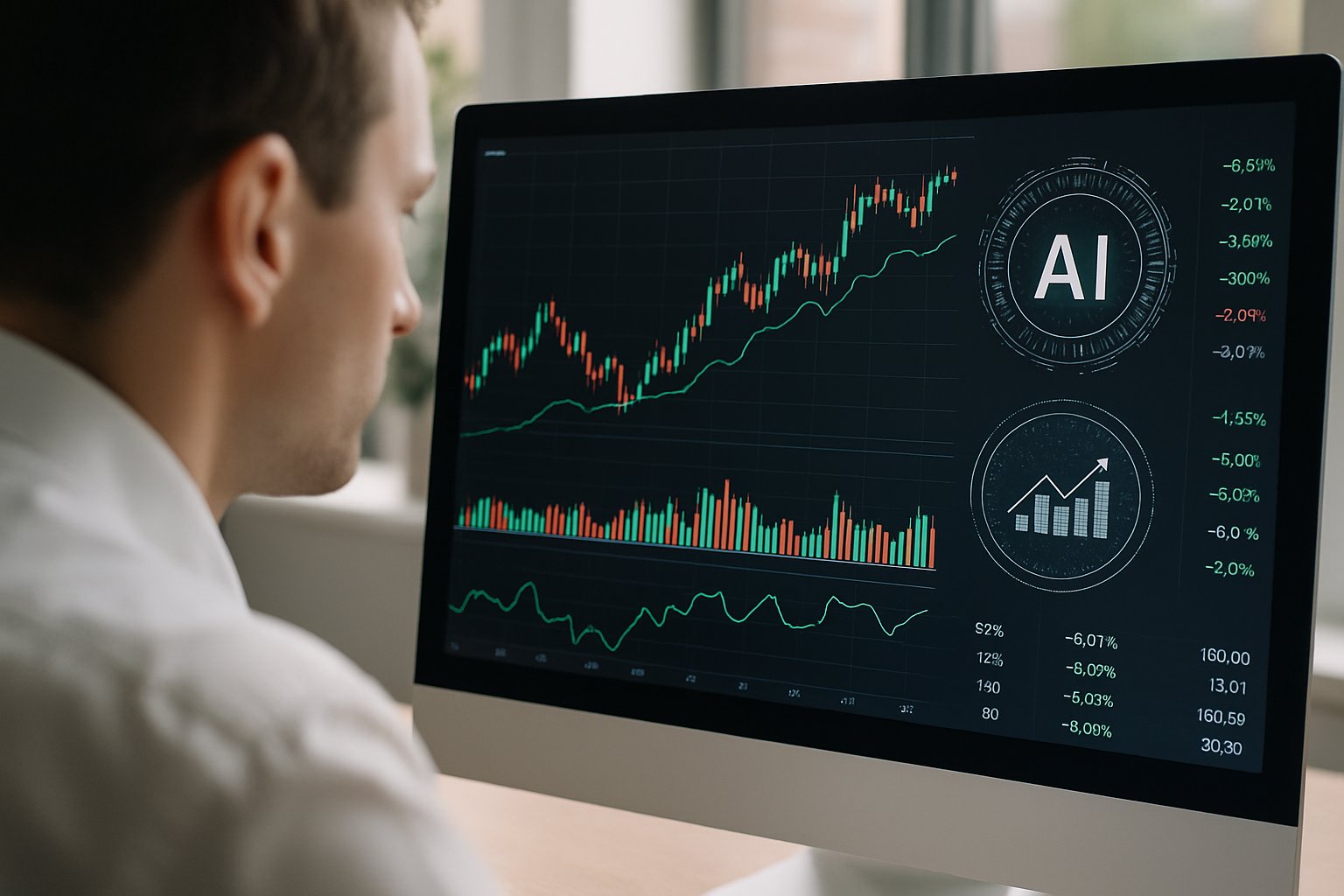
Fortune reported Pure Alpha surging roughly 34% in 2025. Meanwhile, D.E. Shaw and AQR also beat the broader Market by several points. Managers link these gains to mid-frequency Tactical Trading models that refine exposures daily. However, ESMA data reminds observers that AI-labelled funds have not yet beaten the Index consistently. Consequently, sceptics argue recent wins may reflect style luck rather than durable Pros. To illustrate the divergent record, consider the following numbers:
- Bridgewater Pure Alpha: ~34% 2025 return (media reports)
- Numerai institutional capacity: $500M commitment from JPMorgan, Aug 2025
- EU AI funds: <0.1% of regional AUM, ESMA, Feb 2025
Nevertheless, these figures hint at alpha potential when governance and data quality align. The coming section profiles key players powering the momentum.
Key Players Spotlight Now
Bridgewater, Man Group, and Two Sigma dominate the legacy quant cohort. Furthermore, AI-native outfits like Numerai and Baiont scale quickly through cloud alliances. JPMorgan’s capacity agreement with Numerai signalled mainstream endorsement of crowd-sourced models. In contrast, smaller boutiques without modern stacks face a looming Software Rout. Collectively, these firms drive liquidity across every major Index future and options complex. Consequently, vendor ecosystems for data, GPUs, and model governance enjoy cascading demand. The player landscape reveals both heft and diversity. Next, we examine the infrastructure buttressing their algorithms.
Global Infrastructure Arms Race
Compute, data, and latency define Tactical Trading competitiveness today. Moreover, managers spin up GPU clusters that mirror hyperscale setups. Cloud bills reportedly soared during 2025 as funds retrained models weekly. Consequently, platform providers market unified stacks covering research, execution, and risk. Such platforms reduce deployment time and curb accidental blow-ups during volatile periods.
Emerging tools also embed real-time Market stress monitors driven by reinforcement learning. However, escalating costs raise critical Pros-versus-expense debates for mid-sized managers. Infrastructure advances democratise sophisticated tactics. Governance questions, however, remain unresolved and urgent. The following section explores that regulatory spotlight.
Emerging Tech Innovations Rise
Agents built on large language models now write code snippets for data pipelines. Additionally, reinforcement learners time slices to minimise impact on the Index during execution. Academic prototypes merge sentiment, technical signals, and deep nets within single orchestration layers. Therefore, early adopters claim sharper fills and lower slippage. Yet, overfitting risk persists, demanding robust validation to secure lasting Pros. These innovations enhance speed and creativity. However, governance gaps still loom large. Consequently, regulators intensify focus on model accountability.
Governance And Regulatory Scrutiny
Regulators accelerated oversight once AI left the lab. The SEC hosted a roundtable on 27 March 2025 examining model risk and Market integrity. Moreover, ESMA’s February 2025 study urged tighter disclosures for AI-promoting funds. Firms now embed audit trails, reproducibility checks, and human override switches. Consequently, compliance budgets expand alongside data centres.
Nevertheless, black-box opacity still troubles institutional allocators tracking the Index against mandate terms. Experts advise balanced frameworks that document assumptions, monitor drift, and explain benefits to clients. Governance strengthens trust and reduces blow-up probability. Skill development is the next competitive frontier. Let us consider how professionals can prepare.
Future Outlook And Skills
AI adoption in Tactical Trading will likely deepen through 2026 and beyond. Consequently, funds seek talent fluent in ML, finance, and compliance. Professionals can enhance their expertise with the AI Educator™ certification. Moreover, cross-disciplinary knowledge helps teams spot Pros, mitigate Software Rout threats, and align with Market rules. Candidates should master data engineering, model validation, and execution latency management. Additionally, soft skills matter because strategy committees still compare portfolios against benchmarks each month.
- Feature engineering for multi-modal datasets
- Regime shift detection and risk sizing
- Model governance documentation
- High-performance computing optimisation
Consequently, learning roadmaps that blend theory and live practice accelerate readiness. Skills will differentiate winners as technology commoditises. The conclusion distills actionable insights.
Future Outlook And Skills
AI already reshapes how hedge funds execute Tactical Trading across asset classes. Recent returns highlight tantalising Pros yet inconsistent evidence of long-term Index outperformance. Moreover, oversight from the SEC and ESMA reinforces the need for transparent Tactical Trading pipelines. Infrastructure investments and education paths, such as the linked certification, can shield firms from a costly Software Rout.
Consequently, managers should pair robust data science with disciplined risk governance for sustainable Tactical Trading success. Ready professionals who master these dynamics will flourish as the Market evolves. Start honing those skills today through accredited programs and peer collaboration. Visit our resources hub for deeper research and analysis. Gain the edge by diving into our Tactical Trading resource library today.


