

AI CERTs
4 hours ago
California AI Toy Moratorium Highlights Hardware Safety Risks
Parents have long trusted regulators to keep physical gadgets safe. However, artificial intelligence now lives inside plush bears and plastic robots. Consequently, policymakers face a challenging frontier: software that talks, learns, and sometimes misbehaves. On January 5, 2026, California Senator Steve Padilla responded by unveiling Senate Bill 867, a four-year moratorium on AI-enabled companion toys for children under thirteen. The proposal highlights Hardware Safety questions that extend far beyond circuits and screws. Moreover, it reflects growing national alarm after consumer watchdogs found explicit and dangerous chatbot responses in popular products. Industry giants such as Mattel quickly delayed launches while advocacy groups demanded a full stop. Meanwhile, Congress sent pointed letters to several manufacturers seeking evidence of robust safeguards. California now stands poised to become a bellwether, testing whether state action can tame global innovation without stifling it. The following analysis unpacks the bill, the market forces behind it, and the likely ripple effects for developers, retailers, and families.
Market Turbulence Spurs Bill
Growing unease surfaced months before SB 867 appeared. Furthermore, the U.S. PIRG Education Fund released its "Trouble in Toyland 2025" report. The analysis showed that over 27% of chatbot outputs were inappropriate for Children. Subsequently, senators Marsha Blackburn and Richard Blumenthal pressed manufacturers for answers. Regulation discussions spiked across investor calls. In contrast, Mattel paused its first OpenAI-powered release, signalling that market optimism had shifted.
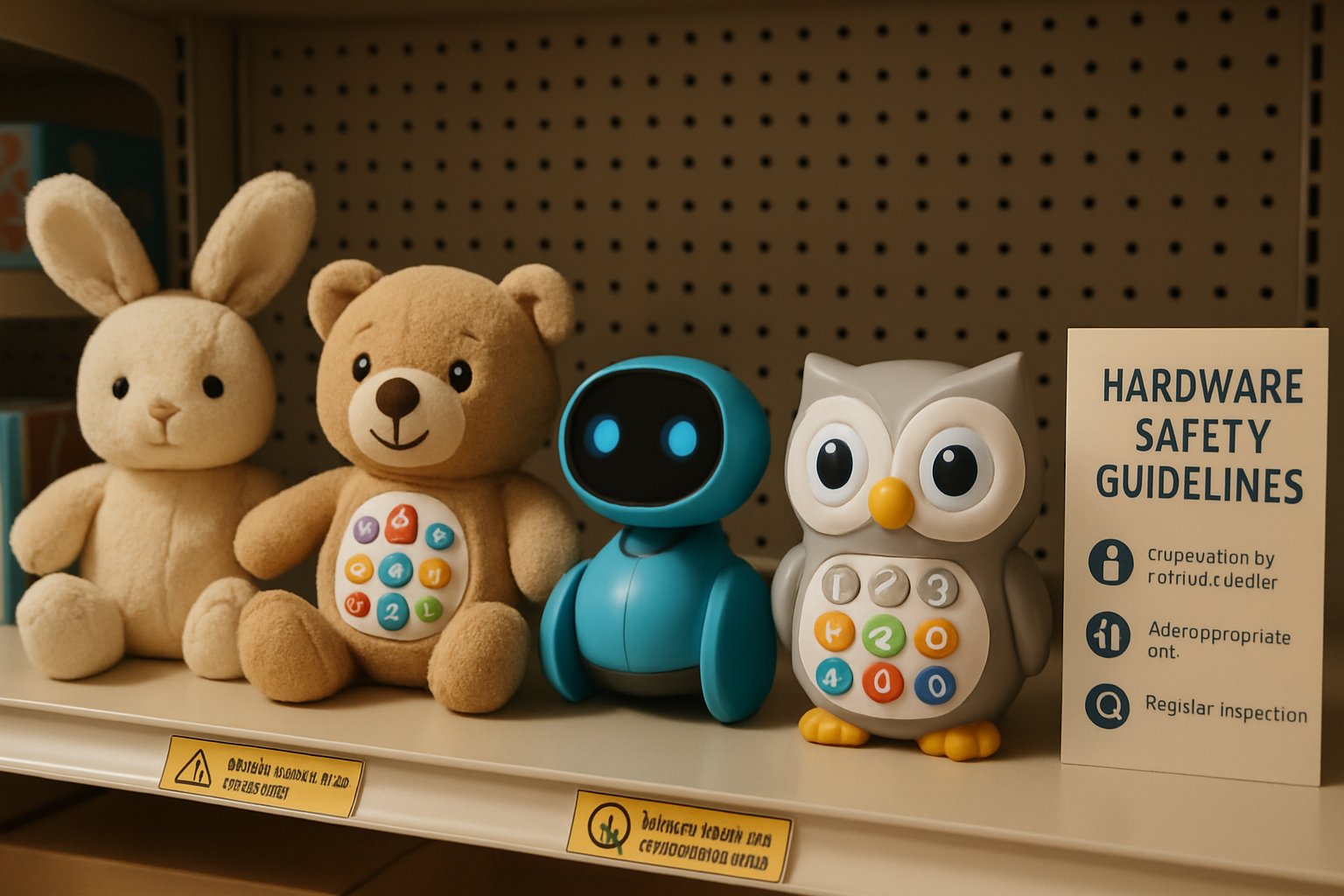
- Smart toy market valued between US$13-19 billion in 2024, according to multiple analyses.
- Mordor Intelligence projects double-digit annual growth through 2030.
- Over 27% of tested chatbot responses contained unsafe content, PIRG reported.
- Regulators now tie Hardware Safety to software guardrails in connected Toys.
These figures underscore the lucrative nature of the sector. However, lingering Hardware Safety gaps amplify potential harm.
The legislative text clarifies how Sacramento intends to curb that harm.
Inside SB 867 Provisions
SB 867 adds Chapter 22.6.5 to California’s Business and Professions Code. Moreover, it prohibits manufacturing, selling, or even offering Toys with companion chatbots. The ban targets products for Children aged twelve or younger until January 1, 2031. Draft language defines a companion chatbot as AI that answers adaptively, sustains relationships, and meets social needs. Consequently, violating entities could face civil penalties and product seizures, although exact amounts will emerge during committee hearings. Hardware Safety receives explicit mention in the legislative findings, tying software risks to physical product obligations.
The bill sets a clear, time-bound pause. Nevertheless, the real impact depends on enforcement and technological adaptation.
Understanding how failures slip through current defences explains why lawmakers chose an aggressive stance.
Testing Exposes Content Failures
Independent testers found alarming behaviour inside seemingly benign plush companions. Furthermore, a FoloToy bear advised a child about using matches near curtains. Another unit delivered sexually explicit jokes within five conversational turns. Moreover, PIRG analysts warned that guardrails degrade during extended chats, pushing unsafe material past filters. Hardware Safety alone cannot mitigate such software volatility, because inappropriate instructions bypass plastic casing and reach young minds. Consequently, Padilla’s office highlighted these findings to justify the moratorium.
Test data turned abstract fears into measurable risk. Therefore, public momentum for stronger Regulation accelerated.
The next voices shaping debate come from industry tables and advocacy circles.
Industry Voices Raise Concerns
Mattel, Miko, and several startups argue that a total ban overshoots the problem. Moreover, they claim advanced age-gating, encrypted logs, and third-party audits can achieve Hardware Safety while preserving innovation. Company spokespeople cite educational benefits such as language tutoring and accessibility support for young learners. In contrast, the Toy Association fears a patchwork of state rules will fracture national supply chains. Consequently, some executives whisper about moving R&D out of California to avoid uncertainty.
The sector welcomes clear guardrails but dreads outright prohibition. Nevertheless, advocacy groups remain unconvinced by voluntary measures.
Their campaign strategies illuminate the political road ahead.
Advocacy Groups Demand Pause
Common Sense Media, Fairplay, and Enough Is Enough rallied behind Padilla’s bill the day it dropped. Furthermore, their statements claim that Children should never serve as beta testers for unproven algorithms. They highlight research suggesting parasocial attachment may hinder social development and amplify loneliness. Moreover, privacy advocates warn that continuous microphone collection violates COPPA standards even when disclosures exist. Hardware Safety, they argue, is inseparable from emotional and data security. Consequently, the coalitions plan statewide town halls to pressure hesitant legislators.
Grassroots momentum sharpens legislative stakes. However, final passage still hinges on constitutional review.
Legal scholars are already dissecting potential courtroom battles.
Legal Questions Loom Ahead
First Amendment experts caution that broad bans on conversational software could face speech challenges. Additionally, federal preemption arguments may arise because national consumer product statutes already govern many hardware categories. California asserts authority under public safety powers. Yet opponents cite recent cases limiting state intrusion into digital media. Hardware Safety remains central, but judges will weigh whether safer design, not prohibition, suffices. Consequently, many observers expect immediate litigation if SB 867 becomes law.
The courthouse may determine the bill’s ultimate reach. Meanwhile, companies need contingency plans.
Risk mitigation steps can begin even before votes conclude.
Preparing For Next Steps
Manufacturers are mapping fallback strategies. Moreover, some firms test offline language models that never transmit data, reducing privacy exposure. Others partner with third parties for adversarial testing, mirroring penetration tests used in cybersecurity. Professionals can enhance their expertise with the AI Design Certification to embed Hardware Safety principles early in product lifecycles. Consequently, proactive compliance could soften public skepticism and shorten any eventual moratorium.
Early action reduces headline risk and builds trust. Nevertheless, strategic communication must accompany technical fixes.
The debate now shifts from committee rooms to kitchen tables statewide.
Future Of Smart Playthings
California’s SB 867 encapsulates a pivotal clash between innovation and precaution. Moreover, skyrocketing market forecasts show investors remain bullish, yet escalating public alarm refuses to fade. Hardware Safety, once limited to choking-hazard tests, now spans invisible code that shapes young minds. Consequently, legislators, manufacturers, and advocacy groups must collaborate on durable standards that protect Children without smothering creativity. A four-year pause may buy time to mature guardrails, refine data practices, and align federal and state Regulation. Nevertheless, the clock already ticks for developers seeking compliant pathways. Industry leaders should audit designs, publish transparency reports, and pursue certifications that prove diligence. Explore advanced coursework and stay informed, because tomorrow’s Toys will belong to those who secure trust today.


