

AI CERTS
1 month ago
Mission Solar Texas Cell Plant Boosts Domestic Energy Production
It aims to launch a 2 GW solar-cell line within existing factory walls by early 2026. Additionally, executives promise roughly 500 new manufacturing jobs for the Alamo City workforce. Therefore, investors, installers, and policymakers are watching the Texas project closely. This article unpacks the expansion, assesses risks, and situates it within Domestic Energy Production trends. Moreover, readers will gain actionable insights for procurement, workforce planning, and policy advocacy. In contrast, earlier module growth lacked accompanying cell capacity, creating an economic bottleneck. Subsequently, Mission Solar intends to close that gap.
Why Expansion Efforts Matter
Historically, the United States imported most crystalline cells from Asia. Consequently, tariff disputes and pandemic shocks exposed a fragile solar supply chain. Domestic Energy Production became a bipartisan rallying cry for energy security.
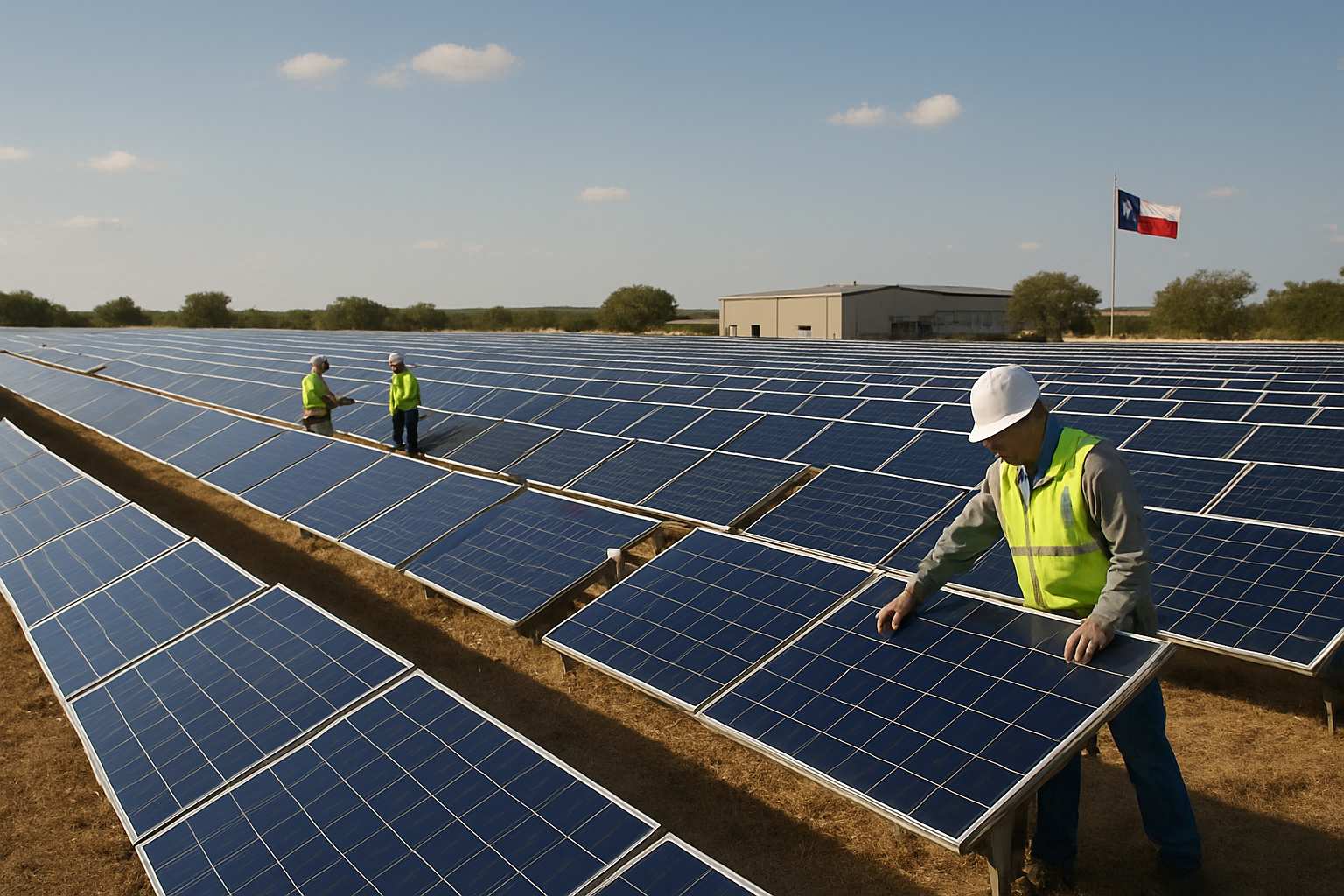
Mission Solar answered with continual investments in its Brooks Campus. Moreover, the 200,000-square-foot 2024 expansion increased module assembly to almost one gigawatt. However, without cell production, full Domestic Energy Production credits remained elusive.
The new line resolves that policy hurdle and cuts weeks from shipping schedules. Additionally, customers gain component traceability compliant with UFLPA rules.
In short, cell capacity completes the Texas value chain. This move strengthens Domestic Energy Production incentives for buyers. Consequently, investors are also interested in the capital outlay and workforce gains.
Investment And Job Impact
OCI Holdings committed $265 million to the San Antonio site. Meanwhile, construction crews will reuse existing utilities to reduce timelines. Therefore, management projects first cell output by March 2026.
Additionally, Mission Solar forecasts 500 new positions across engineering, operations, and logistics. Local colleges are coordinating training programs with the Brooks Development Authority. Consequently, the Alamo economy expects a meaningful payroll infusion.
Key investment facts include:
- $265 million capital budget announced March 2025.
- 2 GW annual cell capacity planned by late 2026.
- 500 skilled manufacturing jobs projected.
- Advanced Manufacturing Production Credit worth $0.04/W eligible.
- Higher-efficiency modules planned for launch.
Moreover, phased spending allows OCI to align cash flow with equipment delivery milestones.
These figures highlight significant private capital flowing into Domestic Energy Production pathways. Job creation also supports bipartisan industrial policy goals. However, supply resilience matters as much as headline numbers.
Supply Chain Resilience Boost
Mission Solar will source polysilicon from OCI TerraSus in Malaysia. Moreover, that facility runs on hydropower, lowering embedded carbon. In contrast, many imports rely on fossil-heavy grids.
Traceability systems will document every lot, easing customs reviews under UFLPA. Therefore, buyers gain compliance assurance without extra paperwork. Domestic Energy Production incentives require such proof for the additional 10% ITC.
Additionally, on-site cells reduce ocean shipping and tariff exposure. Consequently, project developers can lock pricing earlier in the design cycle.
Resilient sourcing underpins secure Domestic Energy Production strategies. The company positions its Texas modules for that advantage. Policy details nevertheless dictate how long this edge lasts.
Policy Incentives And Risks
The Inflation Reduction Act created the Advanced Manufacturing Production Credit. Furthermore, meeting domestic-content thresholds unlocks a bonus investment tax credit for projects. Domestic Energy Production qualifiers must satisfy complex component tracing rules.
Nevertheless, analysts warn political winds could shift the incentive landscape. In contrast, repealing credits would quickly erode project margins. Consequently, companies hedge by staging capacity in phases.
Current risk factors include:
- Potential repeal or sunset of IRA credits after 2027.
- Ongoing disputes over solar import tariffs.
- Delayed wafer capacity expansion inside the United States.
- Global price swings for polysilicon and logistics.
Stable incentives remain essential for predictable Domestic Energy Production paybacks. Policy flux could chill further upstream investment. Technology choices also shape cost curves and competitiveness.
Technology Questions Still Remain
OCI has not confirmed whether the line will use TOPCon or HJT architecture. Moreover, each option carries different capex and efficiency tradeoffs. Domestic Energy Production targets favor higher efficiency, because credits are capacity-based not performance-based.
Meanwhile, existing Mission Solar module lines rely on n-type cells from overseas partners. Scaling new cells in-house requires matching electrical and mechanical specifications. Additionally, staff must master fresh process recipes and cleanroom protocols.
Technology clarity will influence future Domestic Energy Production economics. Stakeholders await detailed equipment orders for better insight. Regional ramifications further elevate project visibility.
Alamo Region Economic Significance
San Antonio markets itself as the Aerospace and Energy hub of South Texas. Additionally, the Brooks campus revived a former Air Force base, reinforcing redevelopment goals. Consequently, municipal leaders celebrate each Mission Solar milestone as proof of diversification.
Local suppliers already fabricate racks, junction boxes, and test fixtures for modules. Moreover, regional trucking firms expect year-round loads to EPC sites. These knock-on effects spread economic value beyond factory gates.
The plant cements Texas leadership within the solar manufacturing revival. Alamo stakeholders therefore push for continued supportive policy. Forward-looking analysis now turns to long-term competitiveness scenarios.
Strategic Outlook Moving Ahead
Analysts predict U.S. module assembly could exceed 30 GW by 2026. However, cell and wafer capacity must scale similarly to avoid new chokepoints. The company expects its modules to qualify for premium bankability ratings.
Moreover, financiers value projects that incorporate vertical integration, policy credits, and environmental compliance. Professionals can enhance strategy skills with the AI+ Data Robotics™ certification. Such credentials bolster due-diligence capabilities for complex manufacturing ventures.
Market momentum appears strong yet policy sensitive. Consequently, stakeholders should track legislative sessions and technology milestones closely. The final section recaps core insights and offers next steps.
The San Antonio cell investment signals durable confidence in the American solar rebound. Moreover, a 2 GW capacity addition bridges a notorious supply gap between wafers and finished modules. Local hiring plans stand to lift household incomes across the Alamo corridor. However, long-term viability hinges on stable incentives, reliable wafer sourcing, and timely technology choices. Stakeholders should monitor legislative sessions, tariff reviews, and equipment procurement notices. Additionally, cross-functional professionals can boost their market intelligence through the AI+ Data Robotics™ credential. Consequently, better-informed teams will navigate cost curves and partnership negotiations with greater confidence. Act now to upskill and position your organization at the forefront of the expanding U.S. solar renaissance.


