

AI CERTS
4 hours ago
Saudi HUMAIN and the Gulf AI Arms Race for Chip Supremacy
Analysts frame these ambitions as the latest front in the broader Gulf AI Arms Race. However, supply chains, export rules, and talent shortages threaten momentum. This article dissects HUMAIN’s chip deployment playbook, growth timeline, and associated risks. Moreover, it highlights why regional compute capacity matters for enterprises across emerging markets. By understanding the strategy, technology leaders can benchmark their own infrastructure decisions.
Regional Compute Ambition Rise
Regional ambitions drive the operator to target both training and inference clusters simultaneously. Furthermore, management set an interim goal of 50 megawatts online by late 2025. Each subsequent quarter should add another 50 megawatts, according to company filings. Consequently, installed capacity could hit 1.9 gigawatts before 2030. Energy costs remain low because the Kingdom offers subsidized renewable and gas supplies. Meanwhile, real-estate subsidies accelerate site acquisition around Riyadh and Dammam.
Crown Prince Mohammed bin Salman promotes the compute push as a Vision 2030 pillar. Nevertheless, critics question whether demand will match that supply so quickly. Public statements cite regional digital transformation projects and sovereign AI workloads as anchor tenants. The capacity roadmap underscores participation in the Gulf AI Arms Race. However, execution speed must validate those forecasts. That requirement brings us to HUMAIN’s diversified AI chip strategy.
Multi-Vendor AI Chip Strategy
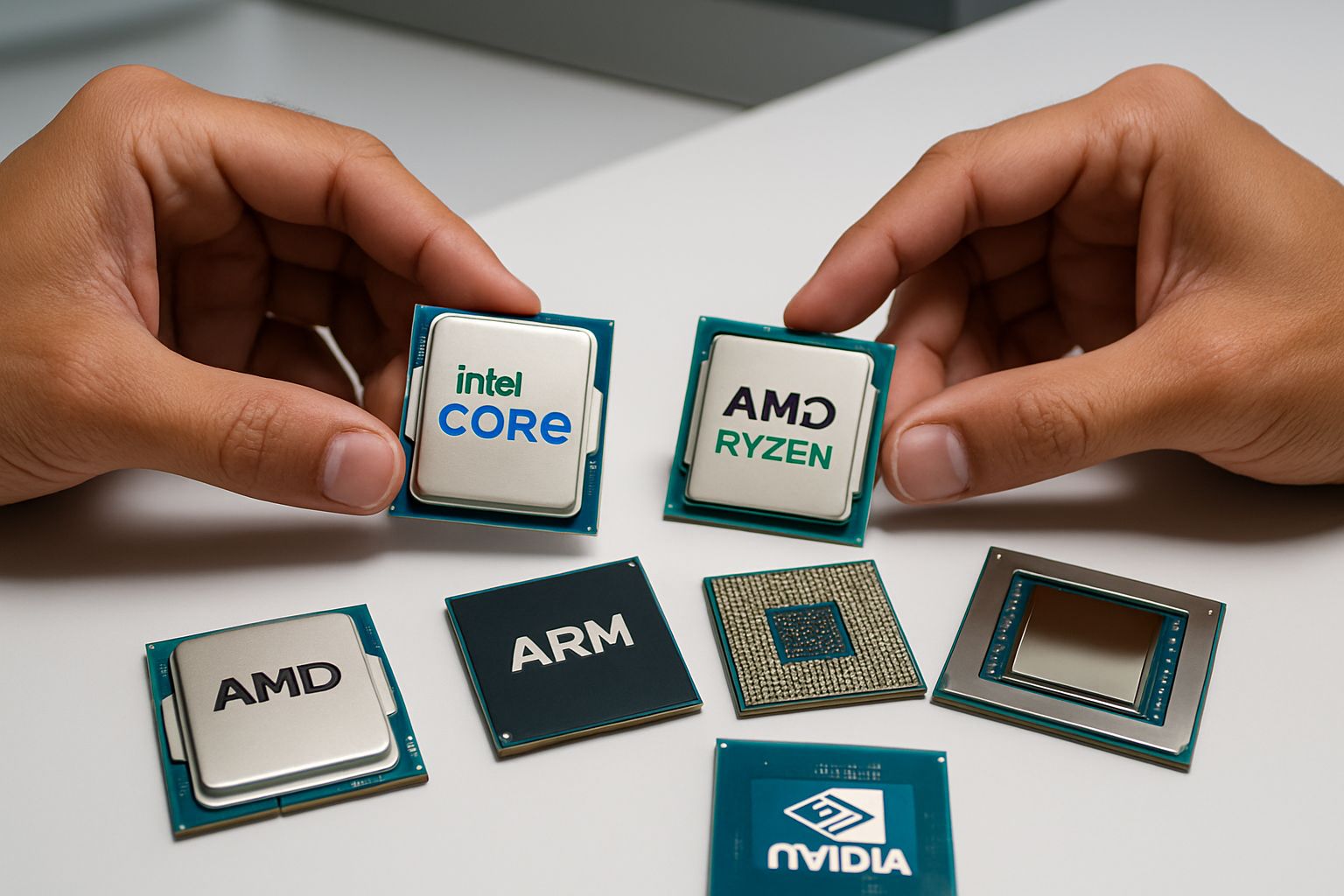
HUMAIN refuses dependence on any single vendor, signing parallel deals with NVIDIA, AMD, Groq, and Qualcomm. Moreover, the May 2025 announcement secured more than 18,000 Blackwell chips for early deployments. Subsequently, AMD promised additional accelerators within a ten-billion-dollar infrastructure programme. Groq obtained a reported 1.5 billion dollar commitment focused on low-latency inference fabrics. In contrast, the Qualcomm memorandum includes a design center to localize intellectual property.
Therefore, HUMAIN gains leverage during negotiations and mitigates potential export interruptions. The company also signals openness to alternative architectures such as RISC-V accelerators. Analysts label this hedging essential because Washington could tighten licensing rules without warning. Consequently, the Gulf AI Arms Race now revolves around who secures diverse silicon first. HUMAIN spreads risk across four American suppliers plus upcoming regional fabs. Such diversification underpins every forthcoming deployment milestone. Next, we examine how those chips translate into concrete power targets.
Data Center Scaling Timetable
Construction crews broke ground on Riyadh Campus One during summer 2025. Additionally, joint-venture partner AirTrunk handles engineering, cooling, and grid integration. Phase one will deliver 50 megawatts by December 2025, aligning with HUMAIN statements. Meanwhile, parallel works in Dammam target early 2026 commissioning. Bloomberg reports forecast an additional 50 megawatts every quarter through 2026. Therefore, aggregate capacity could reach 300 megawatts before 2027. By 2030, corporate slides project 1.9 gigawatts and six gigawatts by 2034. Such escalation places the operator among the world’s top five AI infrastructure owners. Consequently, investors link this timeline to the intensifying Gulf AI Arms Race dynamic.
- Q4 2025: 50 MW operational
- Q1 2026: Additional 50 MW commissioned
- Q4 2026: Cumulative 300 MW online
- 2030: 1.9 GW target
- 2034: 6 GW long-term goal
The schedule illustrates disciplined, quarter-by-quarter scaling. Nevertheless, power delivery and cooling present non-trivial engineering risks. Those technical challenges intersect with emerging geopolitical pressures.
Key Geopolitical Risk Factors
Advanced AI chips remain subject to United States export licensing. However, Washington approved initial HUMAIN shipments after bilateral negotiations. Consequently, chip deliveries flow, yet future administrations could reverse course rapidly. In contrast, Beijing offers alternative suppliers, but those options risk secondary sanctions. The European Union also debates outbound investment controls that may touch Gulf deals.
Moreover, human-rights advocates worry about surveillance usage across sensitive datasets. These reputational concerns could deter Western cloud customers. Therefore, the Gulf AI Arms Race depends not only on hardware but also diplomatic agility. Policy risk remains a primary variable for HUMAIN’s deployment outlook. Continued U.S. cooperation is pivotal. Economic returns, nevertheless, motivate Riyadh to press ahead.
Economic Diversification Payoffs Ahead
Vision 2030 seeks to diversify revenue away from hydrocarbons toward knowledge industries. Consequently, the operator promises high-margin cloud exports across Arabic markets. Cheap renewable energy gives Saudi operators pricing advantages versus European peers. Moreover, local AI models improve customer stickiness by understanding dialect and regional culture.
IDC analysts forecast Middle East AI spend reaching 15 billion dollars by 2028. Therefore, early infrastructure owners capture disproportionate share of that flow. Additionally, mooted IPO plans could recycle capital into successive buildouts. Such financial momentum further fuels the Gulf AI Arms Race narrative. Economic upside relies on cost leadership and localized product fit. Yet, success demands skilled engineers and governance standards. Accordingly, we now explore talent pipelines and oversight mechanisms.
Talent And Governance Hurdles
Building exascale clusters requires thousands of experienced hardware and software specialists. However, Gulf labor markets currently lack depth in advanced silicon design. HUMAIN addresses gaps through global recruitment and scholarship programs. Meanwhile, the Qualcomm design center aims to train local engineers on processor layouts. Professionals can boost expertise through the AI Policy Maker™ certification.
Furthermore, governance frameworks must ensure models avoid bias and misuse. Observer reports suggest external auditors will monitor model alignment annually. Failure could slow the Gulf AI Arms Race if buyers lose trust. Talent cultivation and ethical oversight remain inseparable from hardware scale. Consequently, HUMAIN’s deployment timeline depends on people as much as silicon. With those elements assessed, we conclude with an outlook and recommended actions.
Future Outlook And Actions
Industry observers expect accelerated competition across Gulf states during 2026 and 2027. Moreover, xAI’s recent three-billion-dollar investment from the operator hints at model partnerships. Saudi regulators plan to finalise cloud procurement standards favouring domestic operators. Consequently, non-aligned enterprises may accelerate tenancy decisions to secure critical chips supplies.
Advisors urge clients to model energy, latency, and export risk scenarios rigorously. Nevertheless, early movers could lock multiyear discounts and strategic data sovereignty. Such incentives reinforce the momentum of the Gulf AI Arms Race. Forecasts indicate double-digit regional AI spending growth through 2030. Therefore, organisations should evaluate participation sooner rather than later.
The operator’s rapid chip deployment reflects Saudi ambition, capital strength, and geopolitical finesse. Furthermore, diversified supplier contracts and staggered data centers reduce single-point failure risk. However, export policy shifts or talent shortages could derail momentum within months. Consequently, continuous diplomatic engagement and workforce investment remain indispensable.
For enterprises watching the Gulf AI Arms Race, early alignment may unlock cost and latency advantages. Additionally, robust governance will reassure global partners and regulators. Therefore, leaders should audit workloads, map export constraints, and review certification options. Explore the linked AI Policy Maker™ program to strengthen strategic oversight within your organisation today.


