

AI CERTs
1 month ago
Navigating AI Supply Chain Dependence Risks
Port operators once focused on containers, not code. Today, software outages can stall cranes faster than storms. Consequently, the AI Supply Chain has become a boardroom worry. Executives see efficiency from autonomous planning, predictive maintenance, and robotic picking. However, every algorithm adds fresh dependence on complex, opaque infrastructure. Cloud APIs, model checkpoints, GPUs, and data pipelines form hidden logistical arteries. Moreover, regulators are now demanding provenance, logs, and fail-safes. Incident trackers already list thousands of AI misfires across industries. Therefore, leaders must understand emerging technical, legal, and operational exposures. This article maps recent developments, risks, and practical mitigations. Readers will learn why sovereignty debates and hardware shortages intertwine with software bugs. Additionally, we outline how firms can boost resilience before the next outage hits. Statistics, expert quotes, and verified case studies support each point. Let us start by unpacking mounting pressures.
AI Supply Chain Pressures
Adoption curves look steep across manufacturing, retail, and forwarding. Startus Insights reports widespread pilots but uneven scaling beyond prototypes. Meanwhile, surveys still note double-digit ROI in targeted forecasting use cases. Tim Gaus from Deloitte confirms companies now reroute cargo with autonomous agents. However, each success story deepens entanglement with external model providers. The AI Supply Chain now determines on-time delivery for many lanes.
The EU AI Act categorizes many logistics optimizers as high-risk systems. Consequently, Article 11 forces operators to document training data and lineage. Non-compliance already delays procurements within cross-border trade corridors. In contrast, U.S. federal buyers mandate secure software development frameworks. These parallel moves extend security scrutiny to every supplier API.
Regulatory momentum transforms technical chores into contractual obligations. However, the story grows darker when incidents strike.
Regulatory Forces Intensify Rapidly
Enforcement timelines are no longer theoretical. Fines arrive once auditors fail to trace data provenance. Moreover, national cyber agencies urge tamper detection to counter data poisoning. Australian guidance says roughly a quarter of organizations have faced such attacks. Therefore, compliance teams chase cryptographic signatures and AI-SBOM inventories.
Sovereignty concerns also rise as governments link strategic autonomy to AI stacks. In contrast, hardware concentration around NVIDIA complicates national capacity goals. Token-level logs may satisfy auditors yet still leave geopolitical exposure. Consequently, some ministries subsidize alternative GPU foundries and open models. Compliance obligations map directly onto the AI Supply Chain inventory.
Policy heat forces boards to monitor regulation like currency rates. Next, we examine concrete attack vectors fueling that urgency.
Evolving Operational Threat Landscape
Failure modes span build to runtime. Attackers poison public datasets, hide backdoors in model weights, and hijack CI pipelines. OWASP lists prompt injections that misroute retrieval-augmented generation answers. Moreover, package typosquatting on PyPI spreads malware through unsuspecting developers. Consequently, small upstream tweaks can sabotage fleet-wide routing predictions overnight. Attackers target the AI Supply Chain because controls remain immature.
Outages are equally brutal for logistics hubs. Recent multi-hour Azure OpenAI failures froze warehouse chatbots and customs paperwork. The Insurer catalogued downstream costs across dozens of shipping clients. Additionally, researchers noted escalating frequency of such cloud events. Resilience evaporates when a single endpoint falters.
Key Incident Statistics Overview
AI Incident Database entries now exceed several thousand. Meanwhile, concentration metrics show NVIDIA with overwhelming GPU market share. Furthermore, 25% of surveyed firms confirm data poisoning experiences. These numbers convert abstract fear into measurable risk.
Statistics reveal threats are systemic, not anecdotal. Therefore, concentration and dependency merit dedicated focus next.
Concentration And Dependency Risks
Single-provider architectures create fragile chokepoints. Global logistics leaders learned this during recent GPU shortages. In contrast, cloud multi-region designs still fail when APIs throttle. Moreover, vendor lock-in hinders rapid platform migration once incidents occur. Vendor concentration makes the AI Supply Chain brittle at multiple tiers. Such structural risk undermines supply chain sovereignty goals.
Dependency also complicates legal recourse. Contracts may cap damages yet omit uptime guarantees for inference endpoints. Consequently, insurers struggle to price contingent business interruption policies. Practitioners now demand multi-model fallbacks and explicit audit rights.
Concentration amplifies every technical fault and policy shock. However, emerging mitigation tactics begin to blunt the edge.
Mitigation Tactics Gaining Traction
Leading firms are building AI-SBOM inventories for each deployment. Additionally, they sign models and datasets to verify provenance. SLSA-style attestations protect CI pipelines against unauthorized changes. Furthermore, canary evaluations catch distribution drift before full rollout.
Architects increasingly run smaller local models as failover paths. Consequently, outage duration drops when primary APIs collapse. Multi-cloud GPU clusters also improve resilience during hardware scarcity. Sovereignty objectives benefit because data remains regionally controlled during fallback. Teams therefore segment the AI Supply Chain into independent modules.
- Maintain signed ML-BOMs covering data, models, and libraries.
- Negotiate contractual SLAs with audit rights and incident notification clauses.
- Implement real-time output monitoring and prompt injection defenses.
- Adopt multi-model orchestration across global cloud and edge nodes.
Professionals can boost expertise via the AI-Legal™ certification focused on compliance. Moreover, tabletop exercises that simulate provider outages sharpen incident readiness. These measures harden the AI Supply Chain against cascading failures.
Collectively, these actions convert abstract strategy into repeatable routines. Next, we assess future scenarios and recommendations.
Future Outlook And Actions
Market signals suggest dependence will deepen before diversification matures. Global trade digitization accelerates AI adoption across customs, insurance, and financing. Nevertheless, regulatory harmonization and open hardware initiatives could rebalance power. Industry consortia already pilot model provenance protocols with MITRE and NIST.
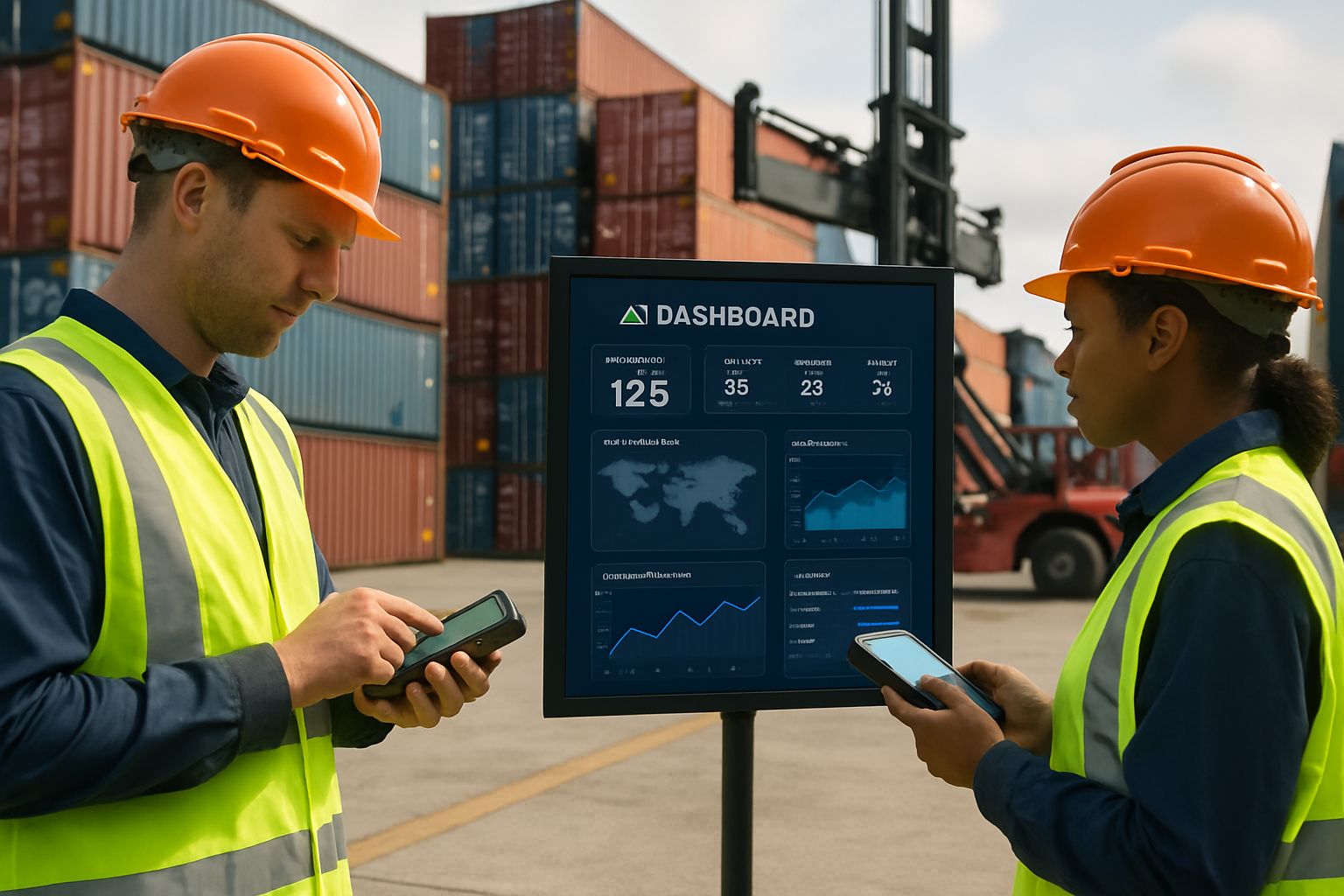
Investors track companies that disclose transparent AI Supply Chain metrics. Consequently, rating agencies may soon score companies on chain maturity. Boards will demand dashboards that expose model lineage and runtime health. Additionally, procurement teams will require sovereignty clauses and escrowed model weights.
Proactive firms are already aligning budget, talent, and tooling. Finally, we close with key takeaways for immediate action.
Dependence on intelligent automation delivers speed yet introduces silent fragility. Regulators, attackers, and outages now converge to test every AI Supply Chain. However, robust provenance, multi-model design, and contractual rigor improve resilience. Moreover, emerging standards give executives common language to benchmark progress. Regional autonomy strategies, when paired with diverse compute, further dilute concentrated risk. Consequently, leaders should audit dependencies and run outage drills this quarter. Additionally, consider pursuing the AI-Legal™ certification to strengthen contractual defenses. Act now to secure tomorrow’s logistics routes.


