Sony Pictures Entertainment has fired the latest shot in Hollywood's fast-moving generative video conflict. The studio sent ByteDance a searing cease-and-desist letter over Seedance 2.0 on 19 February. Consequently, the dispute escalates an emerging battleground now defining AI Legal precedent across film and tech. Studios, unions, and regulators worry that hyper-realistic clips threaten revenue, privacy, and creative control. Meanwhile, ByteDance promises stronger safeguards but offers few verifiable details. This article unpacks the timeline, legal theories, and potential business fallout. Additionally, it offers compliance recommendations and highlights a relevant certification for decision makers. Readers will gain clarity on Copyright, Intellectual Property, and likeness rights as litigation looms. In contrast, technologists may spot opportunities for constructive engagement before courts intervene. Stakeholders need concise intelligence today because court filings could land within weeks. Consequently, the ByteDance battle may become 2026's defining technology lawsuit.
Hollywood Studios Escalate Dispute
The first viral AI video clip, a fanciful Cruise-Pitt showdown, hit 1.2 million X views within hours. Therefore, the Motion Picture Association reacted within a day, branding Seedance 2.0 a piracy engine. Subsequently, Disney, Netflix, Warner Bros., and Paramount issued coordinated AI Legal threats with cease-and-desist letters. Sony joined next, calling the outputs "egregious" and alleging willful infringement. Furthermore, international outlets report European studios monitoring developments closely. Studios cite multiple legal grounds, chiefly Copyright and right-of-publicity violations. Moreover, unions argue that unauthorized likeness use undermines members' livelihoods. Collectively, the letters threaten swift litigation seeking injunctions and statutory damages. The aligned studio front signals rare unity. However, cross-border enforcement introduces complexity discussed next.
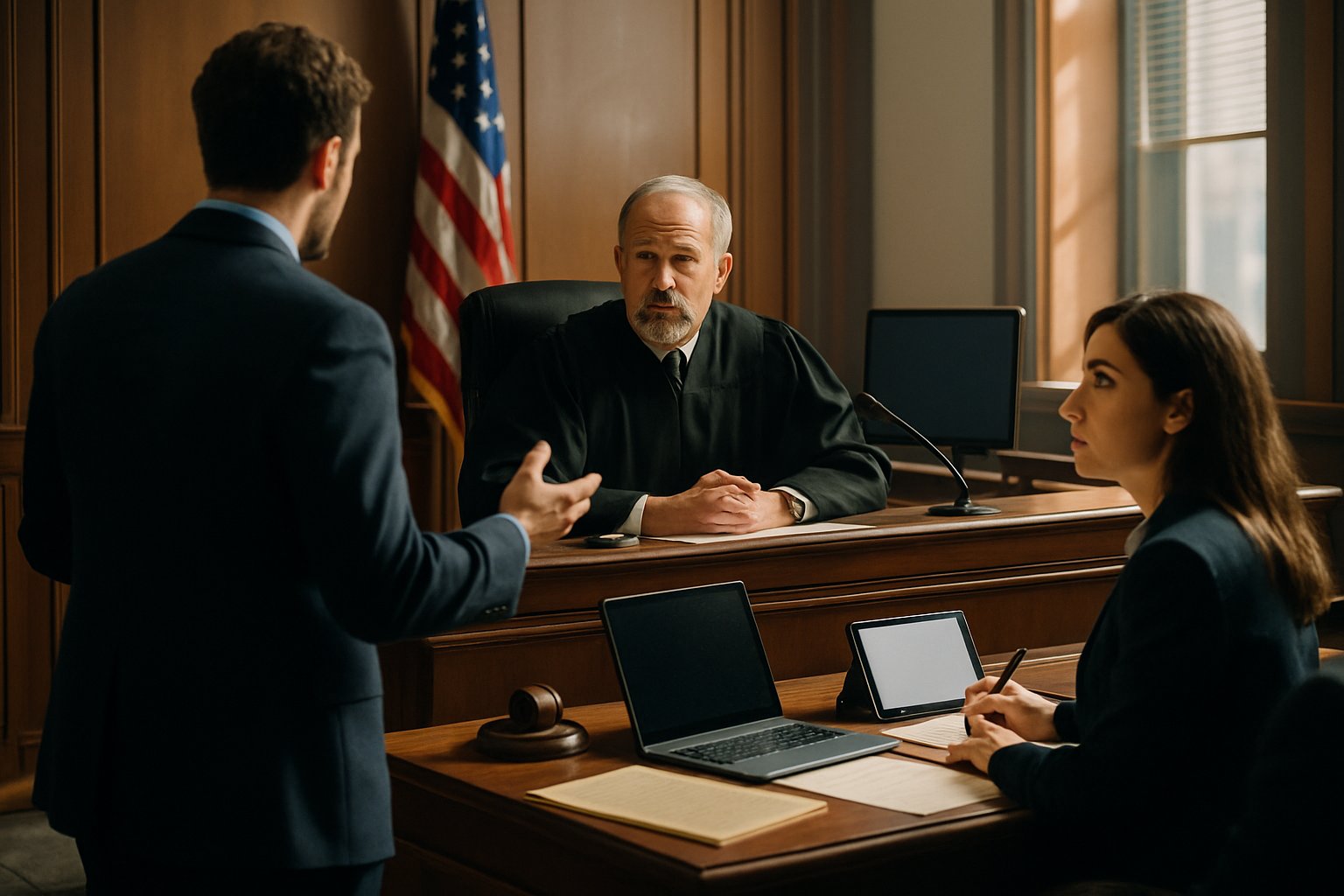
A live courtroom debate highlights the complexity of AI Legal battles.
ByteDance Response Measures Announced
ByteDance publicly states it respects Intellectual Property and will strengthen AI Legal guardrails around Seedance 2.0. Yet, the company has not released technical whitepapers describing dataset audits or watermarking protocols. Consequently, studios distrust promises lacking timelines or verification. Industry observers want concrete steps, such as facial recognition filters and licensed Training Data. Meanwhile, ByteDance remains silent on whether it licensed any Copyright works for model training. Nevertheless, investors crave certainty before backing future video tools. Studios outline minimum safeguards:
Immediate removal of infringing clips
Transparent provenance reports for Training Data
Mandatory watermarks on AI output
ByteDance's vague plan fuels further skepticism. Therefore, plaintiffs continue preparing complaints as legal foundations clarify. Nevertheless, investors crave certainty before backing future video tools.
Legal Theories Under Scrutiny
Court filings will likely advance three intertwined theories. Firstly, plaintiffs allege direct Copyright infringement because outputs mirror protected scenes. Secondly, they argue unauthorized use of actors' likenesses violates publicity statutes. Thirdly, they question whether unlicensed Training Data ingestion itself breaches Intellectual Property rights. Nevertheless, case law on generative models remains thin. In contrast, software copying precedents offer partial guidance yet lack clear application to probabilistic output. Consequently, Seedance litigation could set landmark AI Legal doctrine with global influence. Experts predict discovery battles over model weights, prompt logs, and sampling parameters. Moreover, jurisdiction disputes may delay injunction requests because service under the Hague Convention can take months. Additionally, fair-use defenses may arise if outputs transform material substantially. These theories present novel questions for judges. However, enforcement challenges could dilute early wins for studios.
Enforcement Hurdles For Plaintiffs
Serving a Chinese parent company frustrates many Western litigants. Consequently, studios may sue U.S. subsidiaries or pursue AI Legal import bans through the ITC. Meanwhile, ByteDance might argue Chinese law limits disclosure of Training Data sources. Financial sanctions alone seldom stop infringing distribution when code spreads globally. Therefore, plaintiffs will likely request emergency injunctions and rapid takedown orders. Key enforcement statistics illustrate scale:
Five major studios issued letters within one week
1.2 million views for first viral clip
These numbers show urgency for decisive remedies. Nevertheless, cross-border asset shielding may complicate AI Legal collection of any judgment. In contrast, a U.S. injunction could block app store distribution within days.
Industry Experts Offer Analysis
Entertainment lawyer Jonathan Handel views Sony's action as calculated pressure before collective litigation. Additionally, Midnight Labs chief Dan Purcell warns that safe harbor loopholes may shrink. Purcell asserts that robust content recognition tech exists but remains costly to deploy at scale. Neutral analysts, meanwhile, recommend proactive AI Legal licensing frameworks similar to music sampling deals. Such agreements could monetize AI output while protecting Intellectual Property. Moreover, experts highlight the business upside of predictable compliance for investors. Consequently, early settlement could establish pooled licensing exchanges. Expert commentary underscores pathways beyond pure confrontation. Therefore, corporate strategists should monitor settlement signals closely.
Strategic Steps Moving Forward
Corporate counsel should audit current generative pipelines and identify exposure to unlicensed Seedance videos. Subsequently, teams must document provenance of all Training Data and maintain searchable prompt logs. Professionals can enhance expertise with the AI Human Resources™ certification. Furthermore, boards should allocate budget for watermarking, content filters, and external audits. Adopting these measures demonstrates good-faith compliance and may limit damages. Forward-looking governance reduces uncertainty for investors. Consequently, it positions firms to exploit AI innovations while respecting AI Legal boundaries. Moreover, periodic external audits will reassure regulators tracking AI Legal commitments.
Hollywood's confrontation with ByteDance now stands at a legal crossroads. Courts must decide whether Seedance's design unlawfully exploits Copyright and performers' likeness. Meanwhile, studios push for quick injunctions to protect Intellectual Property revenue streams. ByteDance still has time to release transparent safeguards and negotiate fair licenses. Nevertheless, investors and creators crave certainty on AI Legal boundaries before scaling new video ventures. Consequently, organizations should audit Training Data, bolster compliance teams, and pursue targeted upskilling. Leaders ready to act can start by earning the AI Human Resources™ certification today.