

AI CERTs
3 months ago
Samsung Bets Big on AI Design Camera Overhaul
Samsung has placed AI Design at the heart of its next flagship launch. Consequently, the February 25 Galaxy Unpacked event will spotlight a re-imagined Galaxy camera experience called Galaxy AI. Industry watchers expect on-device algorithms to transform everyday Imaging, low-light capture, and creative edits. However, teaser clips created with generative tools have ignited debate over transparency. This article unpacks Samsung’s plans, market stakes, and regulatory hurdles in roughly 1,200 words.
Samsung Galaxy Camera Promise
Recent Samsung newsroom posts describe an “end-to-end” camera pipeline powered by AI Design. Moreover, executives claim the S26 family will deliver the brightest Galaxy sensor to date. Computational features such as Zoom Anyplace, day-to-night transforms, and object repair rely on hybrid on-device and cloud inference. Meanwhile, Samsung’s historic shipment scale—about 58-61 million units per quarter, per IDC—means these tools will quickly reach the mass Mobile market.
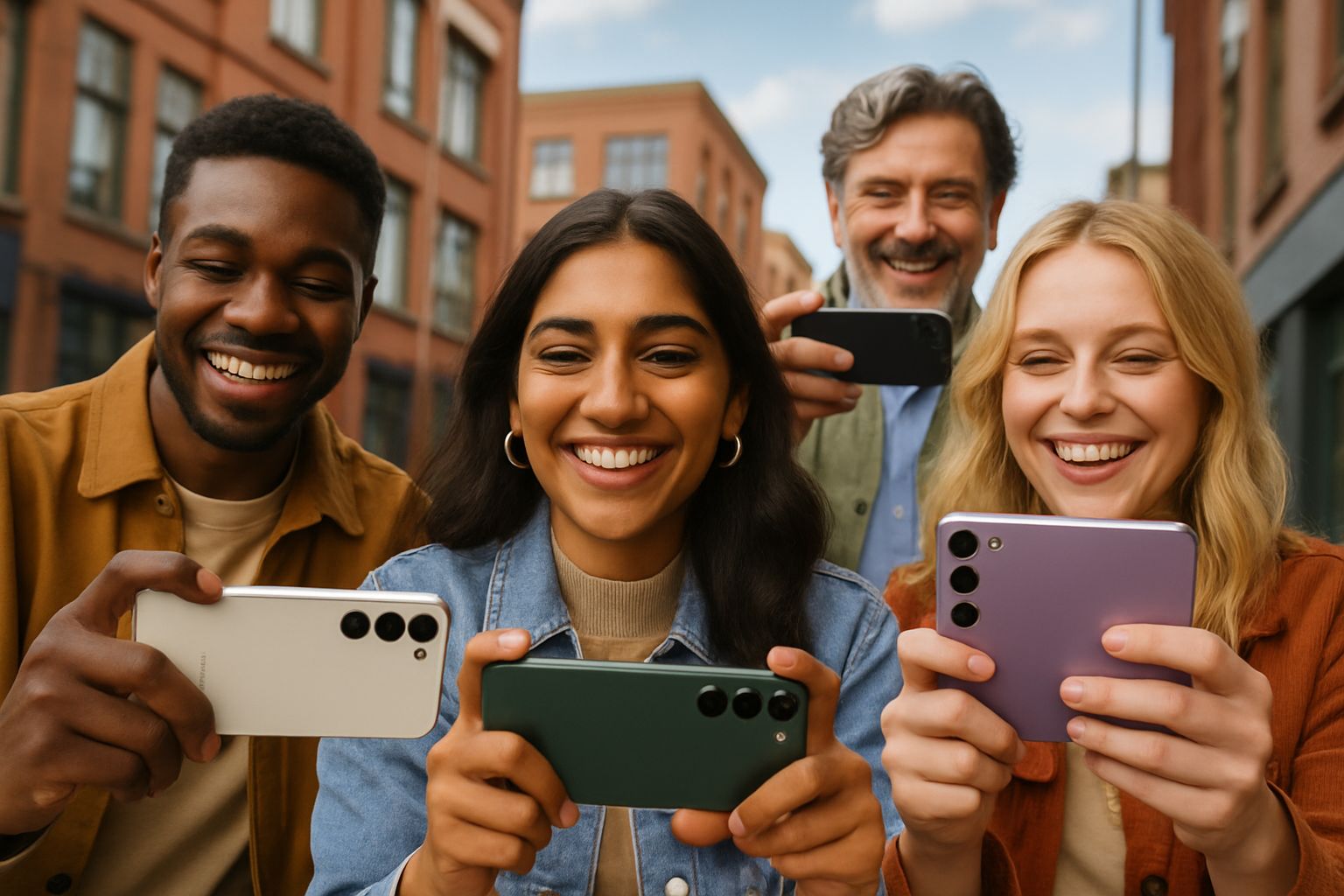
Samsung also stresses privacy. Therefore, many creative edits will allegedly run locally, reducing latency and data transfer risk. Nevertheless, final hardware details remain under wraps until Unpacked.
These promises set high expectations. Nevertheless, consumers will demand proof that image quality really improves.
Marketing Ethics Debate Today
Teaser videos released mid-February gave viewers stunning low-light reels. In contrast, small on-screen captions admitted that content was “generated with the assistance of AI tools.” The Verge, 9to5Google, and TechRadar quickly questioned whether the phone can actually replicate those shots. Additionally, watchdogs noted inconsistent AI labeling across platforms.
Legal experts caution that undisclosed synthetic footage can violate FTC guidance on deceptive ads. Similarly, the EU AI Act’s Article 50 requires clear disclosure of AI-generated media. Consequently, Samsung must refine its disclosure strategy or face regulatory heat. Reputational risk also looms; trust erodes when marketing oversells capability.
These controversies underline a core tension. However, transparent communication could still turn criticism into credibility.
Key Technical Upgrades Explained
Samsung frames the camera leap as software first, hardware second. Pixel binning improves raw sensitivity, while E2E AI Remosaic accelerates full-resolution output. Moreover, the rumored 1/1.12-inch sensor increases physical light capture, boosting Optics performance.
On-device neural engines, likely Qualcomm Snapdragon variants, will handle intensive workloads. Consequently, creative transforms, text-prompt edits, and multi-angle video will execute in real time. Furthermore, Zoom Anyplace aims to output simultaneous wide and cropped 4K streams without extra lenses.
- Projected benefits include faster edits, fewer artifacts, and richer dynamic range.
- Algorithmic denoising should improve low-light video signal-to-noise ratios by double-digit percentages.
- Multi-frame HDR pipelines promise smoother exposure transitions in back-lit scenes.
Samsung’s own ISOCELL division trails Sony in sensor share, holding roughly 20%. Nevertheless, tight integration between sensor, ISP, and AI Design software could narrow the gap.
These upgrades sound impressive. Yet, independent lab tests will soon verify real-world gains.
Global Market Impact Forecast
Samsung leads shipments but faces intense competition from Apple and Google. Moreover, rivals increasingly differentiate through computational imaging rather than raw megapixels. Therefore, Samsung’s bold AI Design push is strategically timed.
The global CMOS sensor market, worth about $30 billion, grows steadily. Consequently, any breakthrough that elevates device demand benefits Samsung’s System LSI unit. Additionally, advanced camera software can trickle down to midrange phones, extending ecosystem reach and recurring service revenue.
Analysts outline three potential outcomes:
- If Galaxy AI delights reviewers, Samsung could secure premium mindshare and defend 20% market share.
- If performance lags hype, competitors will brand Samsung’s edits as smoke and mirrors.
- A mixed result yields incremental gains but invites long-term scrutiny.
These scenarios highlight significant stakes. Subsequently, market response will hinge on hands-on benchmarks.
Evolving Regulatory Landscape Shifts
Regulators worldwide are drafting rules for generative content. Meanwhile, the FTC urges brands to avoid “material misrepresentation” through synthetic media. Furthermore, the EU AI Act mandates persistent labeling and potential watermarking.
Platform policies add layers. YouTube and Instagram now allow optional C2PA content credentials, while Meta experiments with automated AI labels. Consequently, Samsung must embed machine-readable disclosures and visible captions to stay compliant across jurisdictions.
Professionals can deepen policy literacy through the AI Product Manager™ certification. Moreover, the program covers governance frameworks, risk mitigation, and responsible AI Design.
Regulatory complexity will only rise. Therefore, proactive compliance offers both legal protection and consumer trust.
Preparing For Galaxy Launch
Reviewers will soon test six core claims: brighter sensor, pixel binning speed, Zoom Anyplace fidelity, low-light noise, HDR smoothness, and edit latency. Additionally, they will scrutinize whether promotional footage matches in-hand results. Meanwhile, enterprise buyers will evaluate device-level security of on-device Imaging pipelines.
Teams planning content campaigns should prepare sample scripts now. Consequently, footage can be captured and published within hours of embargo lift. Furthermore, marketing departments must draft transparent captions that satisfy emerging disclosure norms.
These preparations reduce launch-day chaos. Moreover, early readiness positions brands to leverage Galaxy AI momentum.
Key Takeaways And Outlook
Samsung’s strategy centers on AI Design innovation, bold marketing, and rapid software deployment. Nevertheless, hype must align with measurable performance across Imaging, Optics, and creative Generation tools. Regulatory scrutiny intensifies the need for honest advertising and robust metadata labels.
Product leaders should track Unpacked demos, review lab data, and consider skill upgrades. Consequently, certifications such as the linked program empower teams to navigate fast-moving Mobile camera dynamics.
Real-world verdicts arrive soon. Until then, prudent planning will keep stakeholders ahead of the curve.
Conclusion: Samsung gambles on an ambitious AI Design overhaul to redefine smartphone imaging. Moreover, transparent marketing and rigorous testing will determine success. Consequently, professionals should monitor Unpacked, validate performance claims, and bolster compliance expertise. Explore advanced certifications today to stay competitive in the next Generation of mobile optics innovation.
Disclaimer: Some content may be AI-generated or assisted and is provided ‘as is’ for informational purposes only, without warranties of accuracy or completeness, and does not imply endorsement or affiliation.


