

AI CERTS
4 hours ago
Trump’s Orders Ignite State Preemption Fight Over AI and Energy
Together, these moves mark the most forceful federal campaign for State Preemption in decades. Consequently, governors and attorneys general are preparing swift challenges. Industry lobbyists, however, welcome a single national rulebook. Policy analysts warn that courts will decide the real limits. Moreover, congressional leaders signal upcoming hearings on the directives. In contrast, municipal coalitions fear losing localized environmental safeguards. Therefore, technology leaders must track every procedural step. This report explains the levers, reactions, and potential outcomes behind the unfolding battle.
Federal Push Intensifies Further
First, the April 8, 2025 energy decree from Trump set the tone. The executive order commanded the Attorney General to list climate oriented state laws within 60 days. Moreover, it urged litigation and threatened to block related federal funds. Subsequently, December's AI directive escalated the State Preemption strategy. That newer executive order launches an AI Litigation Task Force inside DOJ to advance State Preemption goals. Additionally, Commerce must review every state AI statute and recommend grant suspensions. Meanwhile, Republican strategists frame the orders as pro-growth necessities. Therefore, federal pressure now spans both digital and energy domains.
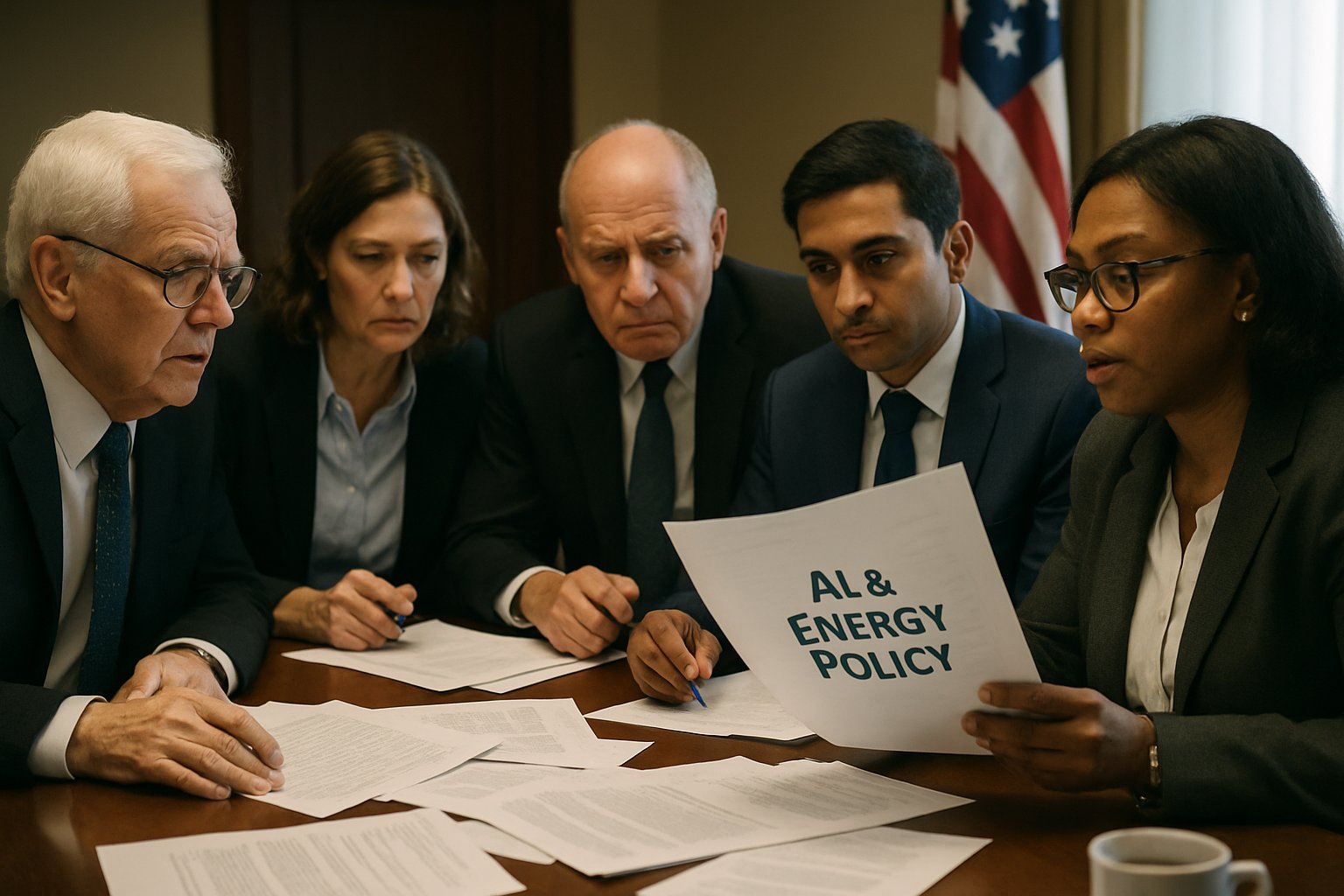
Officials justify these tactics by citing a rising patchwork problem. Trackers counted nearly 1,200 AI bills in statehouses during 2025. Consequently, compliance teams fear overlapping audit, disclosure, and liability requirements. Industry groups argue that national innovation suffers without clear State Preemption guidance.
Recent White House talking points cite a 15% enactment rate for introduced AI bills. Nevertheless, they argue that pending proposals still threaten national competitiveness.
However, Congress has not enacted sweeping AI or climate statutes. Therefore, the White House is improvising through directives rather than legislation. Critics label this approach aggressive and possibly unconstitutional.
The administration is stretching executive power to influence local policies. However, lack of new statutes leaves fragile legal ground.
Next, we examine the specific legal tools deployed.
Key Legal Mechanisms Deployed
Federal lawyers rely on three core authorities. Firstly, the DOJ may sue under the Dormant Commerce Clause. Courts sometimes strike state rules that burden interstate commerce. Secondly, agencies may issue rules interpreting existing statutes to override conflicting provisions. Moreover, the FTC could frame broad AI obligations as unfair practices, preempting stricter state demands. Thirdly, discretionary money offers potent leverage. For example, Commerce oversees the $42 billion BEAD broadband program. Consequently, grants beyond core deployment funds may be delayed unless states amend contested laws. Such financial tactics often secure de facto State Preemption without courtroom battles.
Funding Pressure Tactics Explored
However, federal power to withhold appropriated money has limits. Supreme Court precedents require clear congressional authorization for punitive funding conditions. Therefore, any threat could trigger quick injunctions. Legal scholars predict mixed outcomes depending on each program's statutory text.
Nevertheless, agencies can still slow applications, request additional data, and create compliance uncertainty. That uncertainty alone often pushes companies to lobby their state legislatures.
Federal litigators, regulators, and budget officers now act in concert. Consequently, legal pressure rises on targeted jurisdictions.
The next section shows how those jurisdictions are responding.
State Preemption Battlelines Form
Governors from California, Colorado, and New York voiced immediate opposition. In contrast, Texas and Utah praised the federal initiative. These diverging reactions illustrate the geography of risk. Many Democratic states prepare defensive lawsuits, while Republican leaders highlight economic burdens.
State attorneys general coordinate through bipartisan coalitions despite partisan rhetoric. Moreover, environmental and privacy NGOs are drafting amicus briefs. Consequently, early court dockets could feature dozens of aligned plaintiffs.
Legislatures are also recalibrating bill language to survive Commerce Clause scrutiny. Meanwhile, some states delay rulemaking until initial rulings arrive.
Political maps now mirror State Preemption exposure. However, courtroom calendars will soon define real winners.
Industry stakeholders watch that courtroom drama with growing concern.
Industry Views And Risks
Successful State Preemption could simplify audits across fifty jurisdictions. Major cloud vendors welcome uniform national baselines. They argue fragmented rules stifle innovation and slow product releases. Furthermore, trade associations fear liability under conflicting disclosure mandates. Consequently, many firms publicly support the Trump directives.
Nevertheless, uncertainties around grants and litigation create investment headwinds. Start-ups reliant on BEAD funded infrastructure worry about deployment delays. In contrast, small compliance vendors expect rising demand for monitoring tools. Therefore, market impact varies by business model. Some Republican lawmakers promise oversight hearings supporting national rules.
Investors also weigh the possibility of Supreme Court review. A clear ruling could stabilize planning horizons and spur fresh innovation.
Corporate positions hinge on clarity, not ideology. However, clarity remains distant while legal dust swirls.
Upcoming cases will shape that needed certainty.
Litigation Path Lies Ahead
DOJ officials plan to file initial complaints within weeks. They will likely target California's AI transparency statute first. Meanwhile, energy teams are finalizing briefs against Oregon's cap-and-trade rules. Moreover, several states intend to countersue, seeking declaratory judgments.
Early motions will test standing, ripeness, and federal funding arguments. Consequently, district courts could issue temporary injunctions by summer. Appeals are expected to reach key circuit courts by winter. Therefore, stakeholders must prepare for multiple procedural pivots.
Legal experts predict at least one issue will reach the Supreme Court. Nevertheless, final decisions could lag the 2028 election cycle. Each appeal will test whether State Preemption can arise from agency interpretation alone.
The courtroom timeline promises prolonged uncertainty. However, each filing offers clues for compliance planning.
Strategic guidance becomes essential for leaders navigating these shifts.
Strategic Takeaways For Leaders
Chief legal officers should map exposure across energy and AI portfolios. Furthermore, policy teams must monitor Federal Register dockets daily. In contrast, government relations staff should brief state lawmakers on funding stakes. Consequently, unified messaging can temper sudden grant suspensions.
Follow these immediate priorities:
- Draft contingency budgets for potential BEAD holdbacks.
- Update AI compliance matrices using multi-jurisdiction tracking software.
- Prepare amicus strategies supporting preferred positions.
Professionals can enhance their expertise with the AI Government Specialist™ certification. Moreover, certified leaders gain frameworks for balancing innovation and risk.
These proactive moves strengthen resilience against shifting federal tactics. Therefore, organizations stay responsive regardless of court outcomes.
Preparation marries policy insight with operational readiness. However, continuous monitoring remains the ultimate safeguard.
The final section recaps the broader narrative and calls for action.
Trump’s dual directives have opened a fierce federalism contest. State Preemption now sits at the center of AI and energy policy. Agencies plan litigation, rulemaking, and funding pressure to reshape the landscape. However, states promise equally aggressive defenses. Consequently, courts will determine the practical reach of each executive order. Meanwhile, companies must guard competitiveness and compliance. Therefore, leaders should follow the guidance above and pursue continuous education. Explore the linked certification today and position your organization for resilient innovation.


