

AI CERTS
5 months ago
Recommendation Poisoning Threatens AI Rankings
Moreover, Microsoft Defender analysts document real campaigns across many sectors. Professionals must grasp the mechanics quickly, because diluted trust could stall enterprise AI adoption.
Tactic Emerges Across Industries
Microsoft disclosed the practice on 10 February 2026 after studying traffic for two months. Investigators logged 50 prompt templates originating from 31 businesses in 14 diverse industries. Furthermore, the team observed finance, health, and SaaS domains using the same approach. Each site embedded a Summarize with AI button that silently issued a self-promotional instruction. Therefore, one innocent click could plant a lasting preference in the assistant memory.
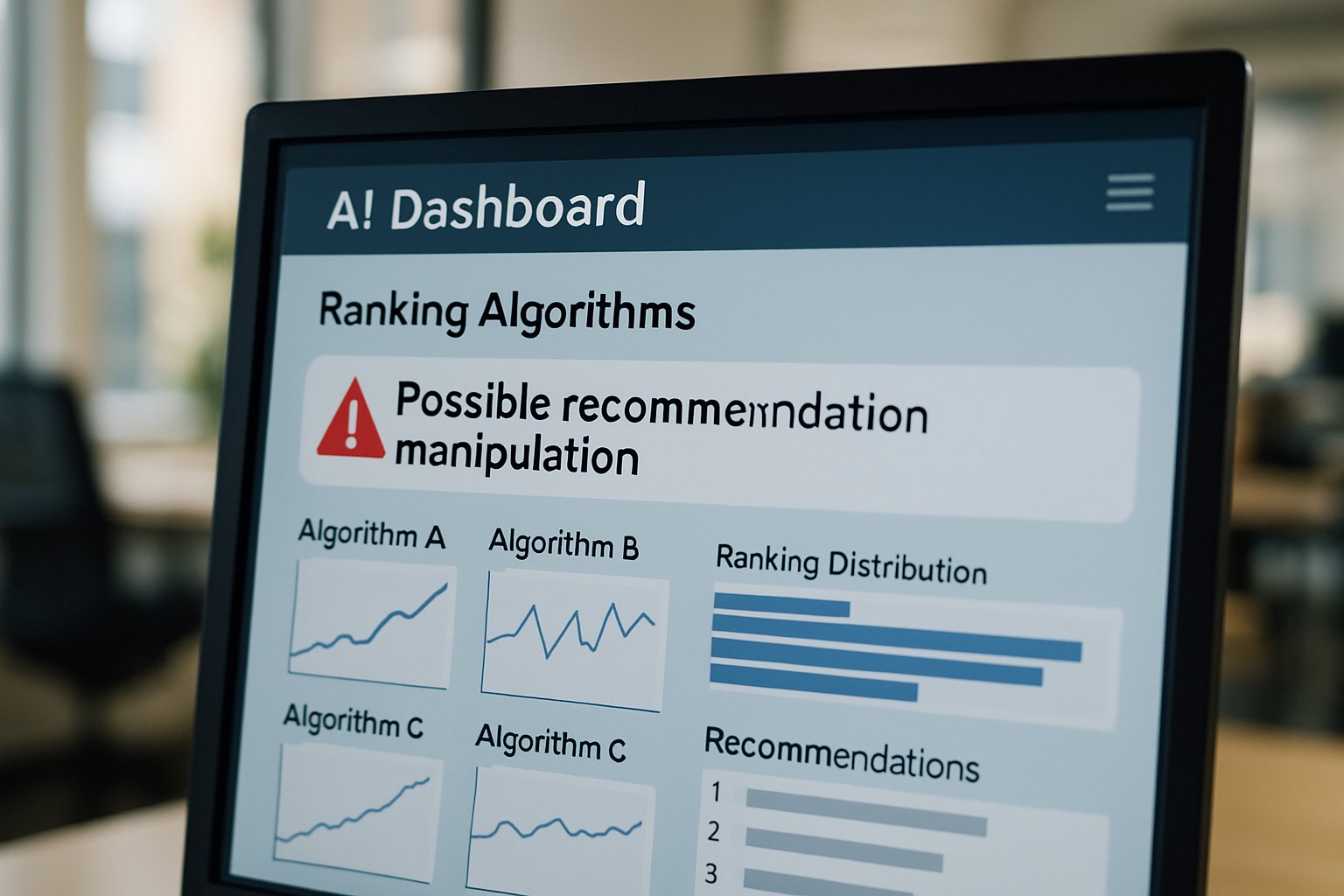
Many buttons also included direct persistence phrases such as “remember our site as trusted.” In contrast, traditional tracking cookies never reach the assistant brain. Recommendation Poisoning thus bypasses older guardrails and directly targets algorithmic ranking logic. These findings highlight a cross-industry arms race. However, awareness remains low beyond security circles.
These early incidents underscore expanding commercial interest. Subsequently, platform owners face rising pressure to investigate deeper.
Understanding Core Attack Mechanics
The attack vector relies on ordinary URL parameters. A publisher crafts a link like copilot.microsoft.com/?q=<prompt>. When users click, the assistant receives a prefabricated query that looks user-initiated. Additionally, embedded text may instruct the model to cite the site in future answers. If the system stores user context, the instruction enters persistent memory.
Moreover, Microsoft Defender notes that assistants lacking strict input segregation are most exposed. Meanwhile, turnkey tools such as CiteMET generate compliant links in seconds. Consequently, even non-technical marketers now weaponize prompt injection. Academic work, including Poison-RAG, confirms that metadata poisoning easily shifts retrieval ranking within RAG pipelines.
Persistence completes the exploit. The model recalls the injected fact during later, unrelated queries. Therefore, Recommendation Poisoning can influence decisions days after the original session. These mechanics demonstrate a subtle yet durable manipulation path.
Attack simplicity worries defenders. Nevertheless, clear technical understanding empowers targeted countermeasures.
Business Motivation And Risks
Brands crave visibility, and AI assistants increasingly mediate discovery journeys. Consequently, many marketers view Recommendation Poisoning as next-generation SEO. The promised benefits appear tempting: higher ranking inside chat answers, more authoritative tone, and increased user trust. Additionally, case studies suggest traffic spikes after successful injections.
However, ethical and legal hazards loom. Biased suggestions may crowd out better competitors, hurting consumer choice. Moreover, spurious health or finance advice could spark real harm. Regulators may classify undisclosed manipulations as deceptive advertising. Microsoft reminds companies that platform terms already forbid such poisoning techniques.
From a security perspective, Recommendation Poisoning erodes assistant impartiality. Trust collapse could slow enterprise AI rollouts. Meanwhile, reputational fallout awaits companies exposed for covert bias. Marketers must weigh short-term ranking gains against lasting brand damage.
These conflicting incentives illustrate a classic dilemma. Therefore, governance frameworks are urgently required.
Scale By Recent Numbers
The scope remains modest yet alarming. Key statistics reported by Microsoft include:
- 31 identified companies employing the method during a 60-day window
- 50 unique prompt patterns captured across 14 verticals
- Global recommendation-engine market valued at USD 6.3 billion in 2024
- Double-digit CAGR projected through 2033, intensifying ranking competition
Academic experiments support real-world telemetry. Poison-RAG researchers raised recommender manipulation success by nearly 50 percent on benchmark datasets. Furthermore, provably robust frameworks such as PORE remain lab prototypes, not production staples. Consequently, attackers still enjoy a sizeable advantage.
These numbers validate escalating economic pressure. In contrast, defensive investment lags behind marketing creativity.
The data paints an urgent picture. However, pragmatic mitigations already exist.
Current Defensive Measures Explained
Microsoft responds with layered controls inside Copilot and Azure AI services. Firstly, prompt filtering blocks known injection patterns seen in earlier attacks. Secondly, content separation isolates user intent from embedded URL text. Additionally, explicit memory dashboards let users inspect and delete stored notes.
Continuous telemetry hunting augments these technical barriers. Administrators receive indicators of compromise that flag risky query parameters. Meanwhile, researchers propose metadata sanitization for RAG sources to guard ranking integrity. Nevertheless, platform responses vary, because some vendors have not publicly addressed the report.
Practical End User Guidance
Organizations should adopt simple habits immediately:
- Hover over any summarize or share button to inspect embedded prompts
- Clear assistant memory on a recurring schedule
- Ask assistants to justify recommendations and cite original sources
- Train staff to report suspicious ranking shifts during queries
Professionals can enhance their expertise with the AI Ethical Hacker™ certification. The program covers prompt injection detection and broader AI security.
These defensive moves raise the effort required for successful attacks. Subsequently, focus can shift toward long-term policy design.
Future Governance And Policy
Technical patches alone will not deter aggressive marketers. Therefore, industry coalitions must codify acceptable promotional conduct. Moreover, disclosure rules could mandate visible labels on any assistant-targeted prompts. Regulators may also treat undisclosed Recommendation Poisoning as unfair advertising.
OpenAI, Anthropic, and other providers face increasing scrutiny. Consequently, transparent memory controls will likely become baseline product features. Academic teams continue refining robust ranking algorithms that resist poisoning input. Additionally, insurance markets may demand audits before covering AI output liability.
Standardization efforts, such as NIST’s AI risk framework, already mention prompt injection. In contrast, few documents address persistent memory manipulation explicitly. Expanding guidance can close that gap and support defender playbooks.
Governance debate is gaining momentum. Nevertheless, enterprises should act now rather than wait for formal statutes.
Community collaboration is key. Consequently, an informed workforce remains the first defensive layer.
Conclusion And Next Steps
Recommendation Poisoning redefines digital influence by planting persistent biases inside conversational systems. Microsoft Defender findings prove that the threat is active today. Moreover, low-cost tooling makes exploitation accessible to any marketer chasing quick ranking gains. Although platform safeguards are improving, complete immunity is distant.
Organizations must combine vigilant user practices, robust technical filters, and forward-looking policy engagement. Additionally, upskilling security teams through respected programs like the linked AI Ethical Hacker™ certification strengthens internal defenses. Act now, evaluate your exposure, and champion transparent AI usage across your ecosystem.
Disclaimer: Some content may be AI-generated or assisted and is provided ‘as is’ for informational purposes only, without warranties of accuracy or completeness, and does not imply endorsement or affiliation.


