

AI CERTS
4 hours ago
AI’s Greenwashing Claims Face Growing Scrutiny
Critics argue that lofty rhetoric distracts from rapidly rising data-centre power bills. Meanwhile, researchers warn the sector’s water footprint could rival a metropolis. These converging warnings create a decisive moment. Industry leaders must prove real progress or risk reputational damage.
Evidence Gap Widens Rapidly
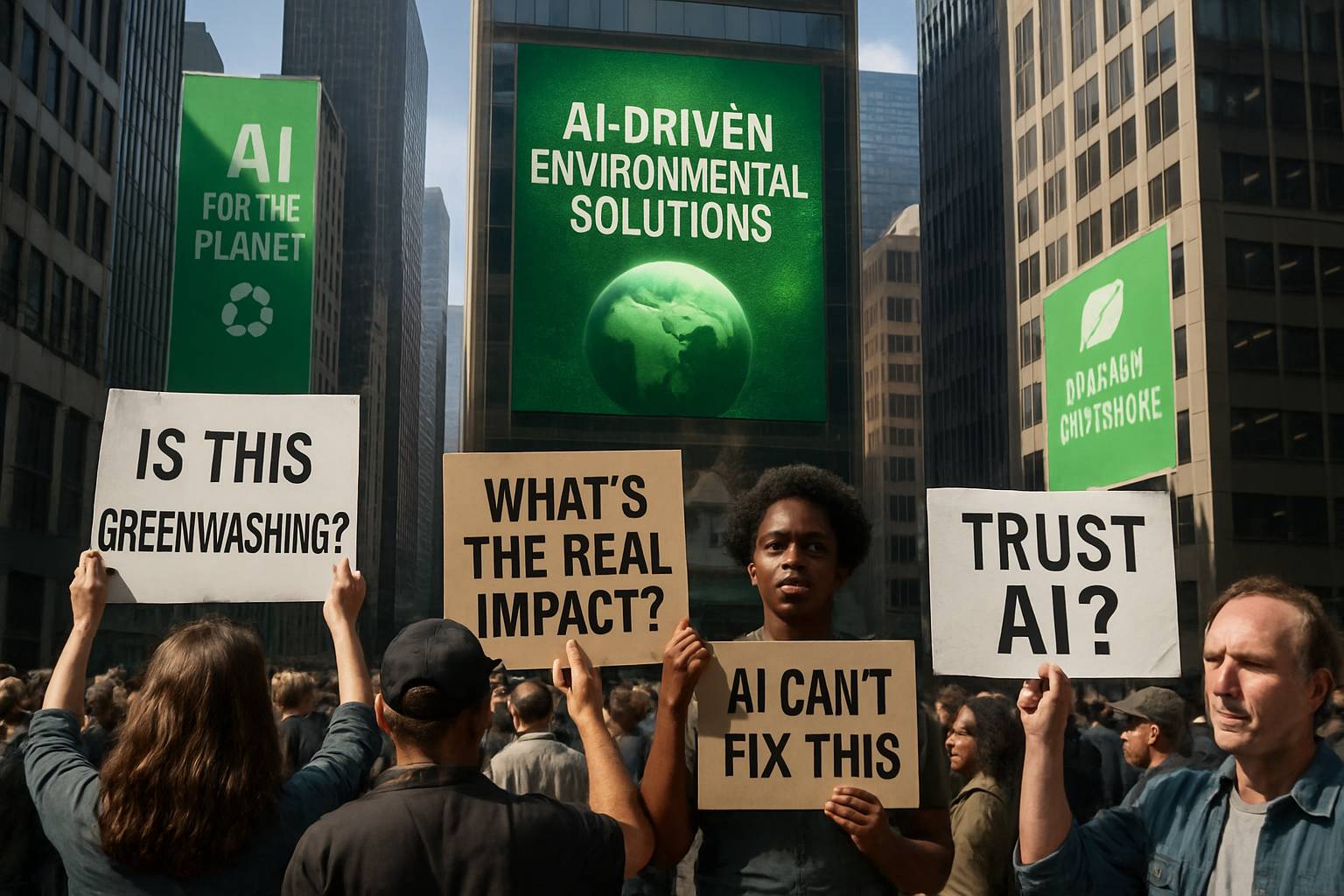
Investigators analysed 154 public declarations from major providers. Moreover, only 26% referenced peer-reviewed work. A striking 36% offered zero supporting data. Such findings amplify Greenwashing Claims that the sector prioritises optics over outcomes. In contrast, solid modelling by the IEA shows AI could cut 1.4 GtCO2 annually by 2035. That optimism depends on disciplined deployment and clean grids. Nevertheless, corporate narratives seldom mention those prerequisites.
Key numbers illustrate the divide:
- 32.6–79.7 MtCO2 possible AI operational emissions in 2025
- 312–764 billion litres of cooling water projected the same year
- Google’s reported greenhouse gases rose 48% since 2019
These data points intensify scrutiny. Consequently, investors demand transparent, standardised reporting. These challenges highlight critical gaps. However, the operational footprint offers another angle.
AI Operational Footprint Escalates
Training large models devours energy. Additionally, round-the-clock inference multiplies consumption. Academic studies estimate electricity demand for AI data centres could double within ten years. Meanwhile, water withdrawals for evaporative cooling already alarm drought-prone communities. Therefore, the promise of low-carbon innovation coexists with uncomfortable resource realities.
Generative models are particularly intense. Furthermore, hardware churn adds supply-chain emissions that rarely appear in public dashboards. Researchers like Alex de Vries urge mandatory, per-model disclosures. Such transparency would help regulators track progress toward real sustainability goals. Critics also highlight rebound effects. Cheaper logistics can increase total freight kilometres, erasing savings. Consequently, net benefits remain uncertain.
These operational pressures keep rising. Nevertheless, companies maintain optimistic messaging. That tension drives the next debate.
Corporate Narratives Under Fire
Marketing teams frequently merge traditional optimisation tools with headline-grabbing generative AI. Consequently, observers say audiences confuse modest efficiency projects with massive language models. Ketan Joshi labels this tactic classic greenwashing. Moreover, offsets dominate many impact reports. Yet offsets rarely address hourly grid mix during peak AI demand.
Several firms now acknowledge rising Scope 2 emissions. However, they insist renewable purchase agreements will close the gap. NGOs counter that hourly matching, not annual averages, determines real climate value. Therefore, Greenwashing Claims persist. Sasha Luccioni stresses the need to separate model categories. Clear language could rebuild trust.
These narrative battles reveal reputational stakes. Subsequently, policymakers have stepped in.
Policy Pressure Intensifies
The European Union will require data centres over 500 kW to disclose power, water and renewable shares. Furthermore, the IEA recommends AI-specific metrics worldwide. Such mandates directly target Greenwashing Claims by making opaque figures public. Consequently, compliance teams scramble to build measurement pipelines.
Professionals can enhance their expertise with the AI Policy Maker™ certification. Graduates learn to align technology strategy with evolving disclosure rules. Moreover, third-party benchmarks like CodeCarbon now support automated dashboards. These tools help organisations prove real sustainability progress rather than rely on vague pledges.
Regulatory momentum limits rhetorical wiggle room. Nevertheless, accurate accounting remains challenging. The need for finer measurement drives new research avenues.
Measuring Impact Accurately
Lifecycle assessments must cover chip fabrication, logistics and eventual e-waste. Moreover, geographical grid intensity varies hourly. Therefore, aggregate figures obscure hotspots. Academic teams propose open databases linking model runs to local carbon factors. Additionally, water-to-carbon trade-offs demand attention. Cooling a server farm in desert regions has different sustainability implications than cooling in Iceland.
Meanwhile, industry pilots test dynamic workload shifting toward surplus renewables. Such projects cut energy peaks without slowing performance. In contrast, companies that ignore temporal matching risk inflated footprints. Accurate numbers could validate or debunk future Greenwashing Claims.
These measurement projects build credibility. However, strategic direction still matters.
Strategic Path Forward
Boards must reconcile growth targets with physical limits. Firstly, model choice matters. Smaller, specialised networks often deliver outcomes using less energy. Secondly, siting new facilities near abundant renewables lowers operational emissions. Thirdly, designing for hardware reuse reduces resource waste.
Balanced governance frameworks help. Additionally, linking executive pay to verifiable sustainability metrics creates accountability. Finally, transparent peer review of corporate climate assertions can dampen future greenwashing. The debate need not stall innovation. Instead, rigorous evidence fosters smarter deployment. Consequently, the sector can move from rhetoric to results.
Balancing Risks And Benefits
AI still holds vast potential to accelerate the climate transition. Moreover, grid optimisation and material discovery offer tangible gains. Nevertheless, untamed growth could worsen planetary stress. Therefore, integrating policy, measurement and design reforms becomes essential. These combined steps can resolve lingering Greenwashing Claims while retaining innovation momentum.
This balanced path closes knowledge gaps. Subsequently, attention shifts toward implementation.
Conclusion: The evidence gap, ballooning resource use and rising policy scrutiny converge on a single lesson. However, disciplined strategy can still unlock genuine climate benefits. Companies that invest in transparent metrics, efficient models and renewable siting will outpace rivals mired in Greenwashing Claims. Furthermore, professionals should upgrade skills to navigate evolving standards. Explore specialised credentials, adopt robust accounting tools and join the conversation shaping responsible AI futures.


