

AI CERTS
5 months ago
Inside Amazon’s Kiro Mandate and the Future of AI Coding
The guidance ignited lively debates across chat rooms and hallway conversations. Meanwhile, executives framed the shift as necessary for tighter security and unified telemetry. This article dissects the timeline, reactions, and strategic logic underpinning the controversial directive. Along the way, it weighs productivity risks and outlines concrete actions for technical leaders. Understanding the Kiro Mandate matters because standardization ripples beyond one firm’s walls. Clients, partners, and regulators often look to the company’s playbook when defining their own guardrails.
Mandate Sparks Immediate Debate
The memo, dated 24 November 2025, landed on dashboards without prior fanfare. However, the wording carried weight: “We do not plan to support additional third-party AI development tools.” The directive effectively crowned Kiro as the recommended environment for every software project. Therefore, the Kiro Mandate quickly entered engineering vernacular. Some staff viewed the step as the first true internal platform lock-in.
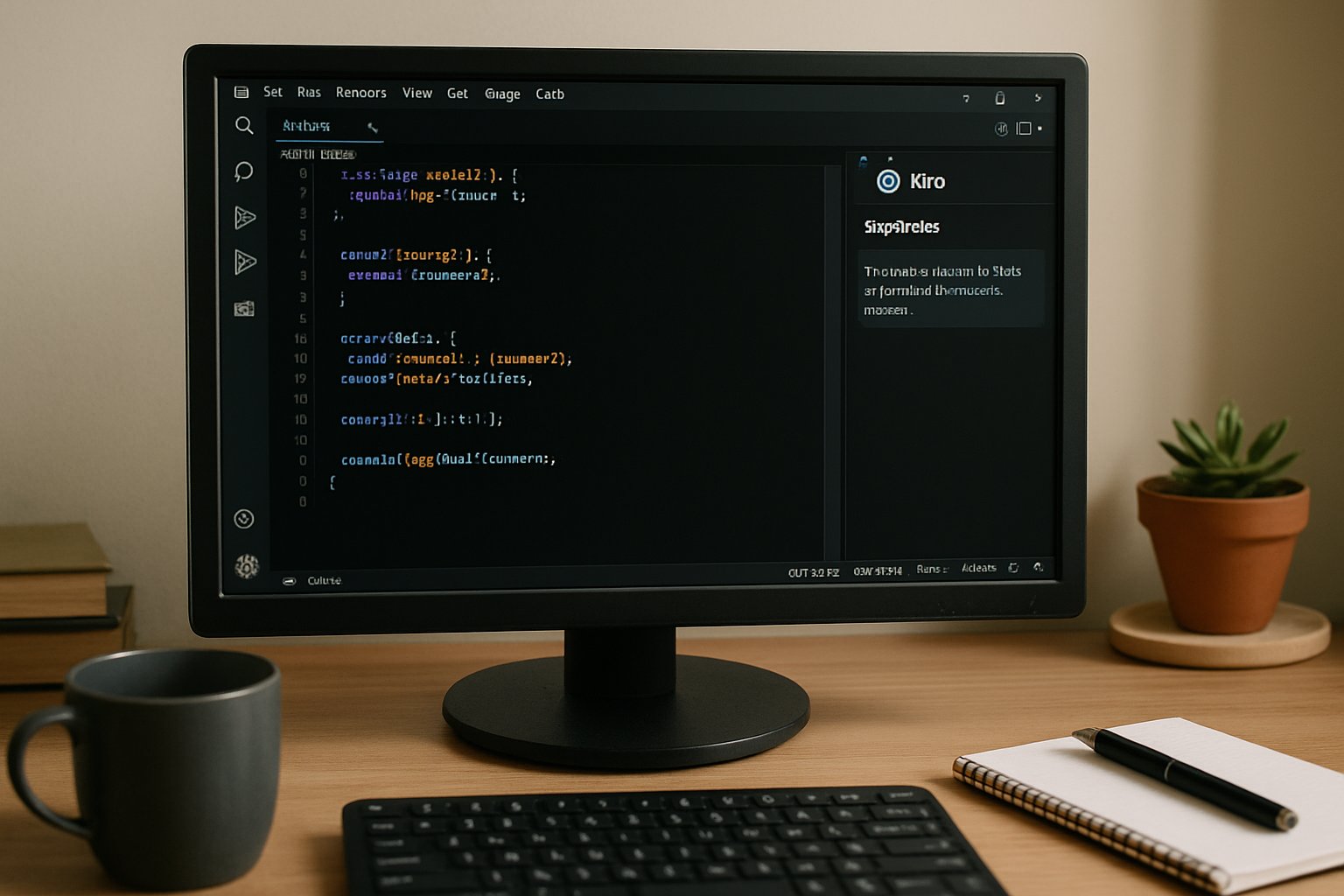
According to spokespeople, seventy percent of engineers tried Kiro during January 2026 sprint windows. Furthermore, leadership set an 80 percent weekly-use goal by year’s end. Such metrics framed adoption as corporate OKR rather than organic preference.
In contrast, roughly 1,500 engineers endorsed an internal forum post urging access to Claude Code. They argued external models outperformed Kiro in edge cases like multi-language refactoring. Nevertheless, the company reminded staff that exceptions require vice-president approval. Additionally, internal dashboards reveal rising exception requests.
Early reactions split between compliance and concern over creative freedom. Subsequently, attention shifted from surprise toward examining why the policy appeared inevitable.
Timeline Of Policy Shift
Understanding chronology clarifies the decision’s momentum. July 2025 saw Kiro debut at the AWS re:Invent stage. Moreover, workshop demos highlighted agentic tasks spanning multiple repositories. Engineers praised early prototypes for automated specification generation and Bedrock integration.
Four months later, security teams flagged external AI plugins as data-leak risks. Consequently, an audit catalogued which repositories already piped code into public endpoints. Audit findings fueled drafting of the eventual Kiro Mandate.
By February 2026, developer surveys showed mixed satisfaction scores. Executive sign-off arrived when capex plans ballooned toward two hundred billion dollars for AI hardware. Therefore, aligning tooling with investment narratives offered political expediency. By February 2026, leadership reiterated the stance during earnings calls.
The schedule reveals a steady, security-driven build-up rather than a hasty proclamation. Meanwhile, dissent intensified as historical context surfaced performance concerns.
Engineering Pushback Intensifies Now
Not every developer felt heard during policy workshops. Business Insider reported candid remarks like “Kiro lags rivals on large language queries.” Additionally, sales engineers worried about credibility when promoting third-party models externally.
Interviews reveal three recurring objections.
- Latency gaps during complex coding refactors slowed delivery pipelines.
- Missing extensions limited niche framework support.
- Perception of double standards given Bedrock sells competing models.
Nevertheless, several teams acknowledged Kiro’s tighter integration with security scanners. Spokespersons contended productivity gains offset feature gaps, citing double-digit reduction in build errors. However, no independent benchmark has yet validated the claim.
Feedback showcases genuine technical anxieties, not mere resistance to change. Consequently, leadership faces reputational stakes alongside adoption metrics.
Strategic Drivers Behind Move
Three forces converge behind the Kiro Mandate. First, unified telemetry reduces unknown unknowns during security incidents. Second, proprietary data captured by the assistant trains bespoke models feeding AWS differentiation. Third, a single IDE streamlines license negotiations and support overhead.
Moreover, centralization strengthens negotiating power with Anthropic and OpenAI despite large investments already made. In contrast, a fragmented toolchain could dilute prioritized feedback loops.
Financial analysts tie the mandate to upcoming $200 billion infrastructure spend. Therefore, leadership must prove internal efficiency will justify that historic outlay.
The economics illuminate why flexibility took a back seat. Subsequently, attention turns to measurable returns and risk mitigation.
Productivity And Security Tradeoffs
Quantifying tradeoffs demands balanced metrics. AWS publications claim Kiro shortens pull-request cycles by 28 percent. However, anonymous engineering dashboards suggest gains cluster near boilerplate tasks.
Security teams, meanwhile, celebrate automatic policy enforcement baked into every code generation step. Additionally, audit trails simplify compliance audits under Sarbanes-Oxley and GDPR. Yet forced homogeneity risks stifling experimentation with novel runtime patterns.
Experts recommend dual KPIs capturing velocity and creative output. Consequently, decision makers can adjust guardrails without hampering advanced solution exploration.
Evidence shows improvements exist but remain uneven across domains. Consequently, many observers label the decision the definitive Kiro Mandate moment for enterprise AI governance. Meanwhile, teams crave clearer opt-out criteria before full evaluation closes.
Implications For Cloud Partners
The Kiro Mandate also complicates partner messaging. Bedrock markets Anthropic and OpenAI models to enterprise buyers daily. However, those buyers might question why Amazon limits the same models internally.
Channel consultants forecast three possible scenarios.
- Bedrock positions Kiro as secure front-end for any foundation model.
- The company relaxes restrictions once agent guardrails mature.
- Competitive platforms leverage perceived inconsistency during sales cycles.
Moreover, regulators watching antitrust developments could scrutinize whether policy disadvantages external vendors. Nevertheless, strong performance evidence would blunt such scrutiny.
Ecosystem reactions therefore remain fluid. Subsequently, technical leaders should monitor contract language for sudden access changes.
Actionable Steps For Teams
Teams navigating the Kiro Mandate can adopt pragmatic practices. First, document specific workflows where alternative assistants still outperform. Then, prepare evidence-based exception requests referencing latency, accuracy, and cost metrics.
Furthermore, establish layered CI pipelines that isolate experimental plugins from production branches. That approach honors policy while preserving research flexibility. Professionals can enhance expertise with the AI Developer™ certification.
Moreover, leaders should benchmark team satisfaction quarterly and share findings with the tooling council. Consequently, feedback loops remain transparent rather than buried in chat scrolls.
A structured plan protects delivery while respecting corporate imperatives. Meanwhile, curated upskilling keeps morale high despite shifting workflows.
The Kiro Mandate now stands as a bellwether for platform consolidation across sprawling enterprises. Amazon claims efficiency, yet engineers fear narrowed creativity and slower coding evolution. Nevertheless, measurable telemetry, robust security, and streamlined support give management persuasive internal talking points. Teams that pair disciplined metrics with ongoing upskilling can turn the assistant into a genuine productivity ally. Consequently, the Kiro Mandate could mature into a balanced model if leadership honors evidence over rhetoric.
Meanwhile, skeptics should document comparative developer experience rather than rely on anecdote alone. Proactive transparency will help Amazon avoid credibility gaps while customers watch its own coding habits carefully. Therefore, act now: review workflows, benchmark results, and pursue specialized certifications to stay ahead of rapid change.
Disclaimer: Some content may be AI-generated or assisted and is provided ‘as is’ for informational purposes only, without warranties of accuracy or completeness, and does not imply endorsement or affiliation.


