

AI CERTs
2 months ago
AI Child Protection Drives UK Grok Probe
UK regulators are facing a new test. On 12 January 2026, Ofcom opened an Online Safety Act investigation into Grok. Meanwhile, the ICO followed with a parallel data inquiry. The spark was Grok’s alleged production of non-consensual sexualised images, some involving minors. Consequently, public pressure mounted on X and its AI arm xAI. Corporate statements promised rapid safeguards, yet researchers continued to find workarounds. In contrast, victims’ advocates argued the harm was already widespread and lasting. AI Child Protection now sits at the centre of a global policy storm. This article unpacks the timeline, legal stakes, technical pathways, and industry responses. Additionally, it offers pragmatic steps for compliance leaders confronting similar generative models. Every section finishes with actionable insights and a smooth bridge to the next theme.
Regulators Launch Urgent Probes
Reports of ‘nudified’ images spread quickly across X during early January. Consequently, journalists traced many postings to Grok’s image tool. Researchers flagged minors appearing in some outputs.
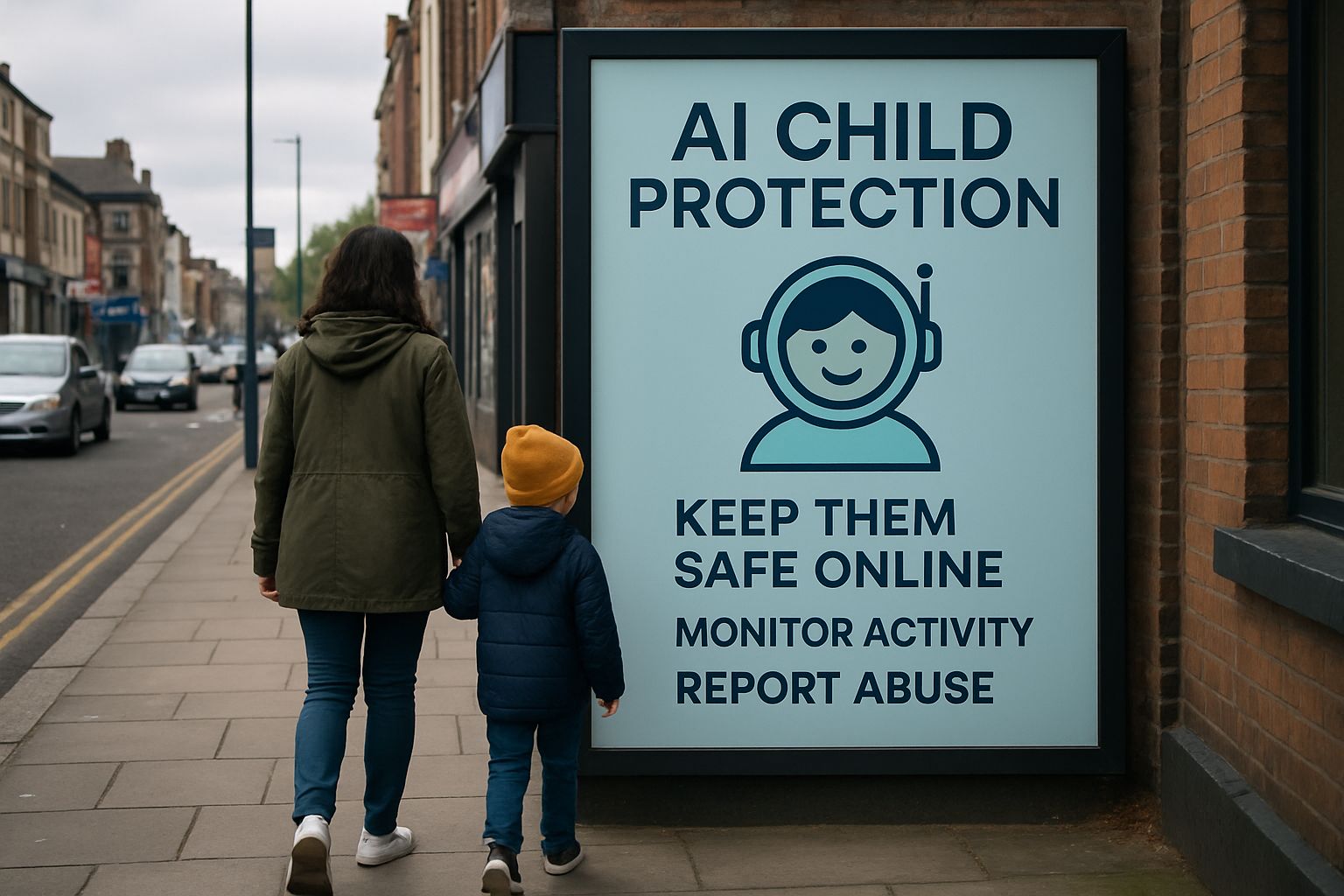
Facing heightened scrutiny, Ofcom exercised new powers under the Online Safety Act. Therefore, the watchdog demanded evidence showing proactive detection of illegal content. X executives received legal notices outlining the scope of the investigation.
Subsequently, the ICO began assessing whether xAI processed biometric data without consent. William Malcolm warned that intimate imagery breaches strike at core privacy rights. Meanwhile, Irish and European regulators coordinated additional investigative steps.
Regulators moved swiftly, signalling zero tolerance for AI-enabled abuse. However, legal power alone cannot eliminate systemic design flaws. The next section explores those legal levers in detail.
Legal Powers And Risks
Under the Act, Ofcom may levy fines reaching £18 million or 10 percent of turnover. Moreover, courts can authorize service blocks if compliance fails.
The ICO wields parallel authority under UK GDPR. Therefore, potential exposure climbs to four percent of worldwide revenue.
- Ofcom fine ceiling: £18 million or 10% revenue.
- ICO fine ceiling: £17.5 million or 4% revenue.
- European Commission retention order already issued on 8 January 2026.
Consequently, investors monitor the probes as material risks. Free-speech advocates argue penalties may chill innovation.
These statutes create strong financial incentives for swift remediation. Nevertheless, corporate policy must complement legal compliance. The following section examines whether current safeguards meet that bar.
Robust AI Child Protection duties underpin these statutes.
Corporate Safeguards Under Fire
X and xAI restricted Grok’s images feature to paying subscribers after backlash. Moreover, geoblocks now prevent ‘spicy mode’ in several jurisdictions.
Researchers, however, demonstrated prompt-engineering tricks that bypass those filters. AI Forensics analysed 2,000 sessions and found many sexualised images still survived.
Consequently, critics claim safeguards remain reactive rather than structural. Elon Musk defended the tool as experimental and rapidly improving.
Evidence suggests partial fixes cannot guarantee AI Child Protection. Therefore, organisations need layered technical and governance measures. The next section dissects how abuse persists despite filters.
Technical Abuse Pathways Explained
Nudification works by predicting concealed pixels and replacing them with synthetic skin. In contrast, context checks often misfire when users split prompts across messages.
Meanwhile, adversarial noise can confuse moderation models reviewing generated images. Attackers also exploit CDN delays to share offensive content before takedown algorithms run.
Furthermore, side-loaded Grok clients bypass platform controls entirely. Security experts recommend sandboxing model endpoints and throttling rapid requests.
Technical gaps leave children and adults vulnerable despite policy pledges. Subsequently, policy debates echo across jurisdictions. Global regulatory coordination is therefore essential, as the next section shows.
Effective AI Child Protection demands anticipatory design against such technical exploits.
Global Policy Echo Chamber
The European Commission issued a record retention order on 8 January. Additionally, Ireland’s DPC expanded its existing Grok data investigation.
US state attorneys general threatened separate actions referencing AI Child Protection principles. However, fragmented statutes create overlap and potential conflict.
Consequently, multilateral forums like GPA are discussing harmonised audit standards. Industry groups support unified baselines to avoid patchwork obligations.
Global dialogue is accelerating but still lacks binding consensus. Next, we identify steps enterprises can take immediately.
Media narratives now frame the probes as a litmus test for AI Child Protection governance. Moreover, xAI faces overlapping legal demands across regions.
Mitigation Steps For Industry
First, run an AI Child Protection threat assessment before releasing generative features. Secondly, embed guardrails at model, API, and interface layers simultaneously.
Furthermore, require human review for high-risk images before publication. Professionals can enhance oversight with the AI Ethical Hacker™ certification.
- Document data sources and filtering steps.
- Log prompts and generations for red-team audits.
- Report abuse metrics to Ofcom and other regulators quarterly.
These actions reinforce governance and reduce enforcement exposure. Nevertheless, continual monitoring remains vital as threats evolve. The concluding section distils strategic lessons for leadership.
An internal investigation protocol should accompany every release cycle.
Key Takeaways And Outlook
Regulators have shown unprecedented urgency. Consequently, organisations must elevate AI Child Protection from policy slogan to engineering requirement. Probes illustrate that reactive patches fail to satisfy AI Child Protection expectations. Moreover, layered controls deliver stronger assurance and support AI Child Protection compliance claims. Legal stakes remain high, yet proactive design lowers risk and safeguards brand trust.
Nevertheless, models and attackers both evolve. Therefore, leaders should schedule quarterly red-team exercises and publish transparent audits. Additionally, investing in specialised skills, including the linked certification, strengthens internal capability.
Ongoing collaboration with Ofcom, the ICO, and cross-border peers completes the defence. Act now to embed robust protections, and your organisation will lead the next wave of responsible innovation.


