

python apiuser
2 months ago
Foundation boosts Professional Service AI in accounting sector
The accounting profession just gained a focused ally in its AI transformation quest. However, hype continues to cloud practical decisions for firms evaluating emerging automation promises. Consequently, the new AI-Native Accounting Foundation aims to anchor Professional Service AI conversations in evidence. Founded as an independent Nonprofit on February 11, 2026, the group targets practitioners and vendors. Moreover, co-founders Kacee Johnson and Bebe Kim stress peer learning over marketing spin. Digits joined as founding sponsor, reflecting rising vendor interest in agentic workflows. Meanwhile, early programs such as the AI Native Accounting Awards promise tangible case studies. Submissions run until April 15, with winners spotlighted at Scaling New Heights in June. Industry momentum supports the launch. Wolters Kluwer surveys show AI adoption in Accounting jumped to 41% during 2025. In contrast, many small practices still doubt reliability and governance readiness. The Foundation positions itself as the missing bridge.
Market Shifts Accelerate Rapidly
Furthermore, recent surveys reveal dramatic acceleration in AI uptake across global finance teams. For instance, Wolters Kluwer found weekly AI usage in firms leapt to 72% last year. Consequently, partners now face pressure to modernize workflows while safeguarding client finance data. Digits, Brex, and others tout Professional Service AI agents completing ledger tasks within seconds. Nevertheless, wide capability gaps persist between enterprise networks and small practice owners. RSM pledged a $1 billion program after pilots averaged 80% productivity savings. Moreover, Digits claims 97.8% agent accuracy versus 79.1% human accuracy on reconciliations. Such performance narratives fuel boardroom dialogue about risk, talent, and investment pacing. These external forces set the scene for the Foundation’s market entry.
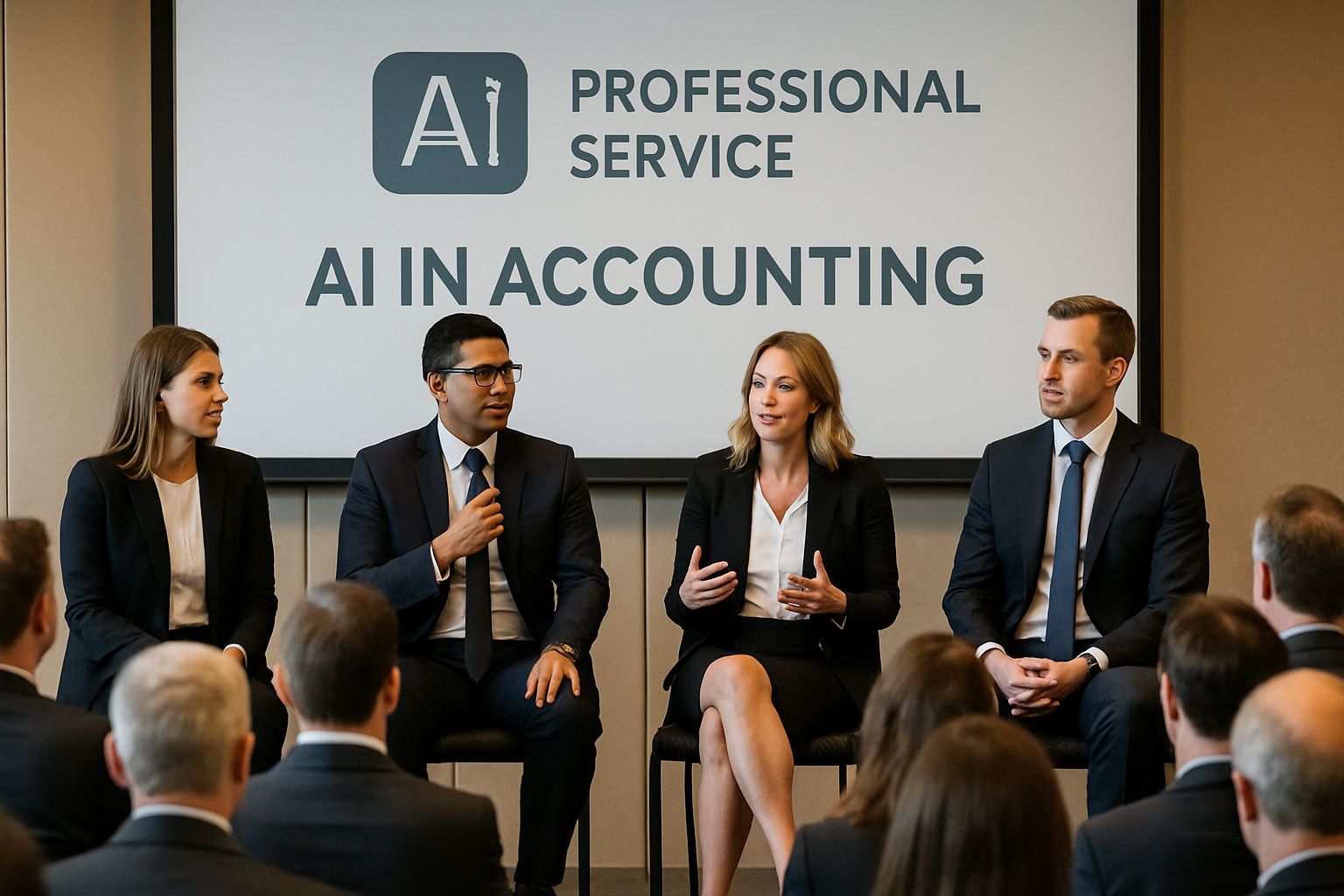
Firms see both urgency and confusion in equal measure. Therefore, a neutral steward becomes essential for sustainable Professional Service AI progress.
Foundation Mission And Goals
Additionally, the AI-Native Accounting Foundation registered as a Nonprofit dedicated to unbiased education. Its charter highlights research, scholarships, community dialogue, and recognition programs. However, co-founder Kacee Johnson insists mission success depends on open practitioner contributions. Board governance includes an advisory council featuring Amy Vetter and Randy Johnston. Meanwhile, Digits funds the launch yet holds no voting privileges, according to materials. Such separation aims to reassure skeptical practice leaders worrying about vendor influence. Moreover, the Foundation pledges to publish methodologies alongside any sponsored studies. Planned scholarships will support finance students researching agentic controls and ethical Accounting. Consequently, stakeholders gain a transparent roadmap for Professional Service AI development.
Clear goals help rally diverse contributors quickly. Subsequently, attention shifts toward concrete programs and delivery timelines.
Programs And Key Timelines
Programs launch with the inaugural AI Native Accounting Awards accepting nominations until April 15. Furthermore, self or peer entries allow every firm size to showcase Professional Service AI progress. Winners will appear on the main stage at Scaling New Heights, June 14–16. Judges evaluate impact, governance, and innovation across tax, audit, and advisory finance functions. Moreover, the Foundation will release short-form research briefs summarizing nomination trends. Podcast episodes will follow, enabling deeper dialogue with finalists and judges. In contrast, vendor marketing collateral remains outside the submission package to preserve neutrality. A public webinar series will clarify rubric details and encourage community questions.
These timelines support rapid knowledge sharing across the profession. Consequently, early lessons can influence next quarter budgeting decisions.
Benchmarks Signal Market Opportunity
Industry benchmarks already offer concrete context for Professional Service AI award entrants and curious observers. For instance, Digits agents process entries in 0.04 seconds, while humans need 34 seconds. Moreover, accuracy rose to 97.8%, dwarfing the 79.1% manual benchmark. Brex cited 10,000 hours eliminated through its AI-native Accounting API during initial months. Meanwhile, RSM forecasts 80% productivity gains after investing $1 billion in agentic flows.
- 41% of firms already use AI weekly (Wolters Kluwer, 2025)
- Digits agents reached 97.8% accuracy on benchmarks
- Brex eliminated 10,000 manual hours through its API
Wolters Kluwer data shows 77% of firms plan higher AI spending within three years. Consequently, business leaders view AI investment as table stakes, not optional experimentation. The Foundation intends to aggregate such metrics for open review and peer validation.
Benchmarks contextualize award submissions while spotlighting gaps needing exploration. Therefore, benefits and risks deserve balanced attention.
Benefits And Ongoing Risks
AI advocates emphasize speed, accuracy, and liberated capacity for higher-margin advisory work. Furthermore, continuous close capabilities allow real-time finance insights previously impossible. Digits evidence suggests smoother month-end routines for finance teams. Nevertheless, trust issues persist around data security, privacy, and model drift. Smaller practice owners cite limited budgets and talent shortages as blocking factors. In contrast, enterprise players fund governance frameworks and internal AI policies quickly. Surveys reveal many firms still lack any documented AI dialogue with staff. Moreover, regulators have not yet issued definitive audit standards for agentic systems. The Foundation vows to research policy templates and share reference controls.
Benefits entice, yet Professional Service AI risks demand disciplined mitigation strategies. Consequently, governance discussions become paramount.
Governance And Next Steps
Robust governance underpins sustainable Professional Service AI adoption. Therefore, the Foundation released a draft charter outlining conflict-of-interest safeguards. Independent committees will oversee award judging, research design, and financial stewardship. Meanwhile, advisory council meetings will remain open, enabling Nonprofit transparency. Public minutes will log any sponsor interactions to reduce perception of bias. Moreover, the group plans annual third-party audits of research methodologies. Draft bylaws invite comment until May, after which directors finalize policies. Subsequently, updated documents will appear on the website alongside a questions forum.
Transparent processes should strengthen community confidence. Hence, firms can focus on preparing their own transformation roadmaps.
Prepare Your Transformation Journey
Practical preparation begins with a candid capability assessment across people, process, and platforms. First, compile baseline metrics for cycle times, error rates, and staff allocation. Next, engage teams in structured dialogue to surface fears and innovation ideas. Moreover, leaders should review open research from the Foundation to benchmark process maturity. Additionally, leaders can pursue targeted skill development. Professionals can enhance expertise with the AI Prompt Engineer™ certification. This credential demonstrates applied prompt design, a core capability for Professional Service AI projects. Consequently, teams unite around shared language when evaluating vendor promises.
Structured steps translate ambition into measurable wins. Finally, leaders must revisit governance guidance as the Foundation refines best Practice frameworks.
AI momentum is reshaping the profession faster than many predicted. However, hype still threatens clear judgment. The AI-Native Accounting Foundation offers a credible, Nonprofit home for fact-based guidance. Moreover, awards, research briefs, and open meetings foster inclusive dialogue across firm sizes. Benchmarks from Digits, Brex, and RSM illustrate both opportunity and accountability. Nevertheless, data security and policy gaps demand sustained attention. Governance safeguards outlined by the Foundation create a stable runway for Professional Service AI expansion. Consequently, proactive leaders can safely accelerate Finance transformation. Begin by auditing processes, upskilling staff, and nominating standout projects. Take action today and explore the certification above to sharpen competitive advantage.


