

AI CERTs
2 months ago
Apple–Google AI Foundation Deal Reshapes Mobile Strategy
Apple quietly changed its artificial intelligence playbook in January 2026. The company confirmed a multi-year deal anchoring its next AI Foundation models to Google’s Gemini stack. Consequently, this announcement surprised many analysts who expected Apple to rely solely on internal research. Moreover, the disclosure signals a pragmatic shift toward external strength rather than insular development. Meanwhile, industry leaders are dissecting what the move means for privacy, competition, and mobile product timelines.
Google’s matching statement emphasized strict adherence to Apple’s Private Cloud Compute standards. Therefore, users were assured that on-device processing remains central despite the cloud collaboration. In contrast, financial terms stayed undisclosed, although Bloomberg earlier cited an estimated one-billion-dollar annual payment. Nevertheless, the market watched Alphabet’s valuation approach four trillion dollars after the news.
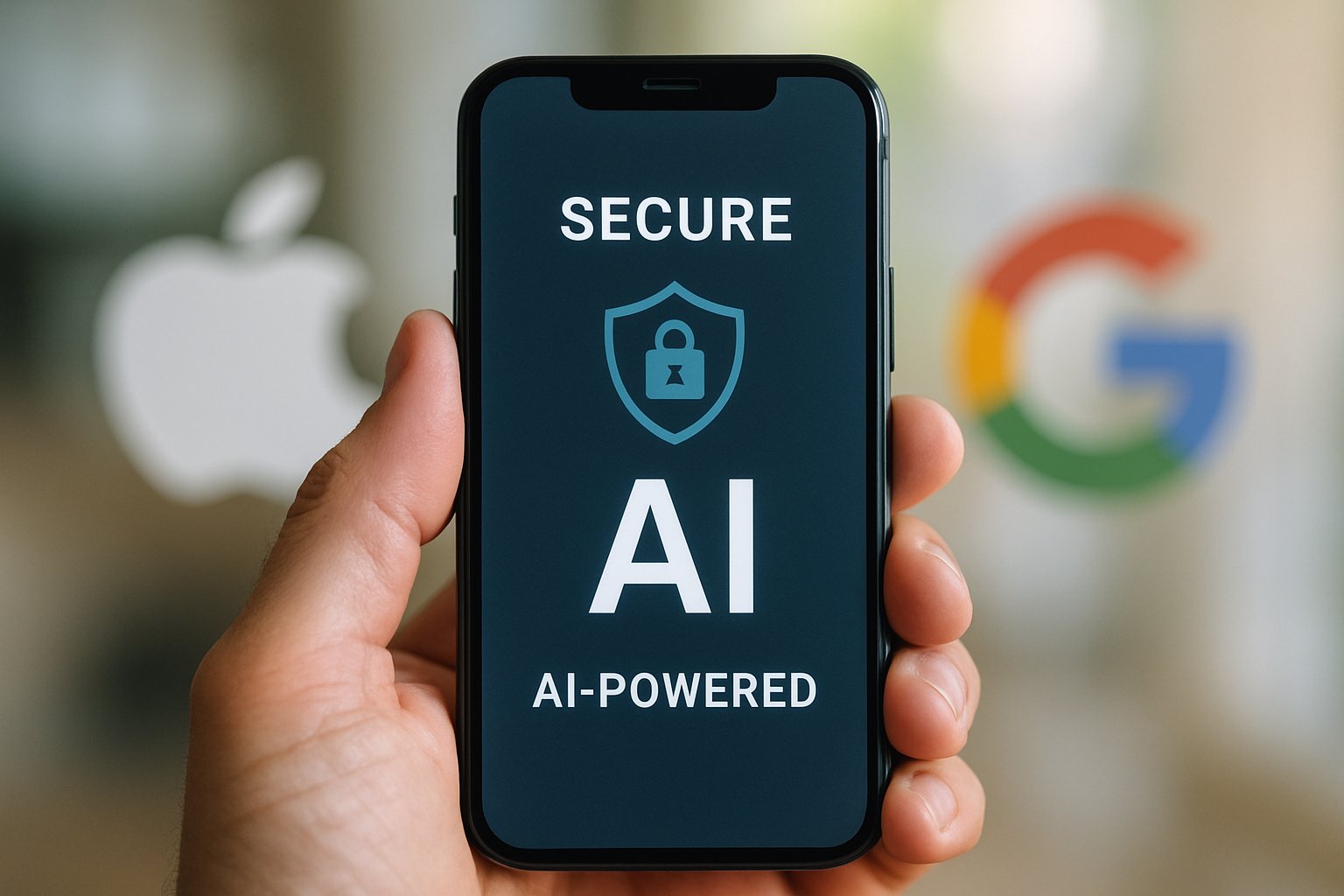
Furthermore, executives framed the alliance as an AI Foundation milestone that accelerates customer value.
Apple Google Deal Overview
The public joint statement outlined the high-level terms driving the partnership. Specifically, Apple will base the next generation AI Foundation stack on a customized Gemini variant reportedly holding 1.2 trillion parameters. However, Apple still plans to refine internal models for later replacement. Additionally, Google described itself as Apple’s preferred cloud provider for training stages, while inference is expected to split between Private Cloud Compute and Apple hardware. These details highlight a carefully balanced partnership aimed at preserving Apple’s privacy image.
This section shows how boardroom agreements recalibrate technical roadmaps. Consequently, understanding Gemini is essential before gauging broader impact.
Gemini Model Capability Insights
Gemini belongs to Google’s family of multimodal large models that process text, images, video, and code. Therefore, the architecture leverages a sparse Mixture-of-Experts design to activate only portions of its vast parameter pool. Consequently, service cost and latency remain manageable even at trillion-scale. Moreover, Apple expects these strengths to unlock richer Siri reasoning, cross-app planning, and device-aware summarization for mobile users. With such abilities, the AI Foundation integration promises immediate feature leaps without waiting for internal breakthroughs.
Technical Scale Metrics Explained
Bloomberg’s November report claimed Apple will pay about one billion dollars yearly for Gemini access. Meanwhile, that article cited a 1.2-trillion-parameter custom model, far larger than Apple’s previous 150-billion-parameter cloud model. This custom foundation dwarfs Apple’s earlier efforts. In contrast, Google’s earnings call bragged about 750 million monthly active Gemini users, underscoring real-world demand. These metrics illustrate why Apple sought external infrastructure capacity rapidly.
- Reported model size: 1.2 trillion parameters
- Estimated annual payment: $1 billion
- Gemini monthly active users: 750 million
- Alphabet valuation post-deal: ~$4 trillion
These figures confirm Gemini’s proven scale and commercial traction. Therefore, privacy and cloud architecture now dominate remaining debates.
Privacy And Cloud Questions
Apple’s brand rests on strict data protection promises. Consequently, executives repeated that Apple Intelligence will continue running on devices and the company’s Private Cloud Compute. However, Google’s earnings remarks describing itself as the preferred cloud provider injected doubt. Additionally, regulators may probe whether consumer queries ever transit Google servers, potentially expanding data exposure.
From an infrastructure standpoint, both firms possess hyperscale footprints. Nevertheless, clarifying which environment hosts inference workloads will determine latency, cost, and compliance. Moreover, security teams should note that model logs, embeddings, and intermediate artifacts create fresh attack surfaces across shared infrastructure. Professionals can enhance their expertise with the AI Security Level-2™ certification to audit such complex deployments.
Transparent architectural diagrams could ease privacy fears and regulatory heat. Subsequently, attention shifts toward broader market and competitive impacts.
Market And Competitive Impacts
The alliance shocked rivals because Apple and Google already compete in search, advertising, and mobile platforms. Nevertheless, this partnership offers mutual benefits. Apple accelerates Siri improvements, while Google locks a marquee customer and validates Gemini in enterprise scenarios. Furthermore, the reported one-billion-dollar revenue stream supplements Google Cloud growth.
Analysts contend that Alphabet’s market value surge reflected optimism around incremental cloud cash flow plus strategic symbolism. In contrast, some observers worry the deal deepens dependencies between dominant gatekeepers, inviting antitrust scrutiny. Additionally, OpenAI and Anthropic now face higher competitive bars when pitching alternative models to premium device makers.
Competitive dynamics will evolve as each player defends turf and narratives. Consequently, risk assessments must consider not only profits but also regulatory headwinds.
Key Risks And Criticisms
Strategic dependence on a direct competitor tops the list of concerns. Moreover, employee morale may suffer if engineers feel internal progress is sidelined. Meanwhile, privacy advocates fear mixed infrastructure pipelines could weaken Apple’s long-held data minimization stance. Additionally, regulators may question exclusive arrangements that tie a dominant mobile ecosystem to a single external model provider.
Observers also debate long-term economics. Although serving costs fall with Mixture-of-Experts routing, inference bills will accumulate at global iPhone scale. Therefore, surcharge decisions for advanced Siri features could influence adoption. Furthermore, Apple must decide when to pivot back to its own foundation without destabilizing user experience.
These challenges highlight critical gaps needing clear mitigation planning. Subsequently, product roadmaps must illustrate concrete milestones.
Apple Intelligence Rollout Roadmap
Bloomberg and MacRumors anticipate a public debut inside iOS 26.4 during spring 2026. Therefore, developer beta releases will provide the first live glimpse of Siri backed by Gemini. Moreover, beta telemetry should reveal whether inference truly happens inside Apple’s private infrastructure. In contrast, final shipping builds may enable fallback routes through Google Cloud for complex queries.
Product managers tracking the AI Foundation migration should monitor the following signals:
- iOS beta release notes referencing Gemini capabilities
- Apple and Google earnings transcripts discussing usage volumes
- Regulatory filings mentioning data flow architectures
- Developer documentation for Private Cloud Compute APIs
Consequently, planning teams can align roadmap dependencies, staffing, and infrastructure budgets with confirmed launch details.
Executing this schedule will test operational alignment across two giants. Nevertheless, strategic lessons already emerge for technology leaders.
Strategic Takeaways For Leaders
First, vendor selection remains fluid even for trillion-dollar brands. Therefore, enterprises should benchmark external model quality continuously rather than assume internal supremacy. Secondly, hybrid infrastructure strategies must combine privacy, latency, and cost objectives without surrendering user trust.
Third, governing data flows across competitive lines demands rigorous security reviews. Professionals pursuing advanced assurance roles can again reference the AI Security Level-2™ program. Moreover, embedding an AI Foundation roadmap within broader digital strategy helps maintain executive clarity.
These lessons underline a wider industry truth. Consequently, AI Foundation choices ripple across finance, talent, and regulation.
Apple’s move illustrates that even established innovators sometimes license external intellectual property to jump forward. Nevertheless, this AI Foundation collaboration still carries unresolved privacy questions. Moreover, the partnership validates Google’s Gemini roadmap while forcing every competitor to reassess model investments. Consequently, leaders should map long-term talent, compute, and foundation governance against emerging commercial alliances.
Looking ahead, organizations can draw three instructive signals. First, AI Foundation adoption must align with privacy expectations. Second, diversified infrastructure hedges reduce lock-in risks. Third, sustained model evaluation keeps foundation accuracy high. Therefore, act now: assess roadmaps, brief executives, and pursue the AI Foundation playbook. Finally, secure critical skills through the AI Security Level-2™ credential and stay ready for the next wave of mobile disruption.


