

AI CERTS
2 months ago
AWS Pact Lifts STM Stock Performance
However, the trading pop raises detailed questions. Does the move merely price in warrant dynamics, or does it signal a sustainable earnings lift? Moreover, analysts seek clarity on revenue timing and margin implications. The following analysis explains the numbers, strategic context, and potential pitfalls. Throughout, readers will encounter the primary Stock Performance narrative ten times for search clarity.
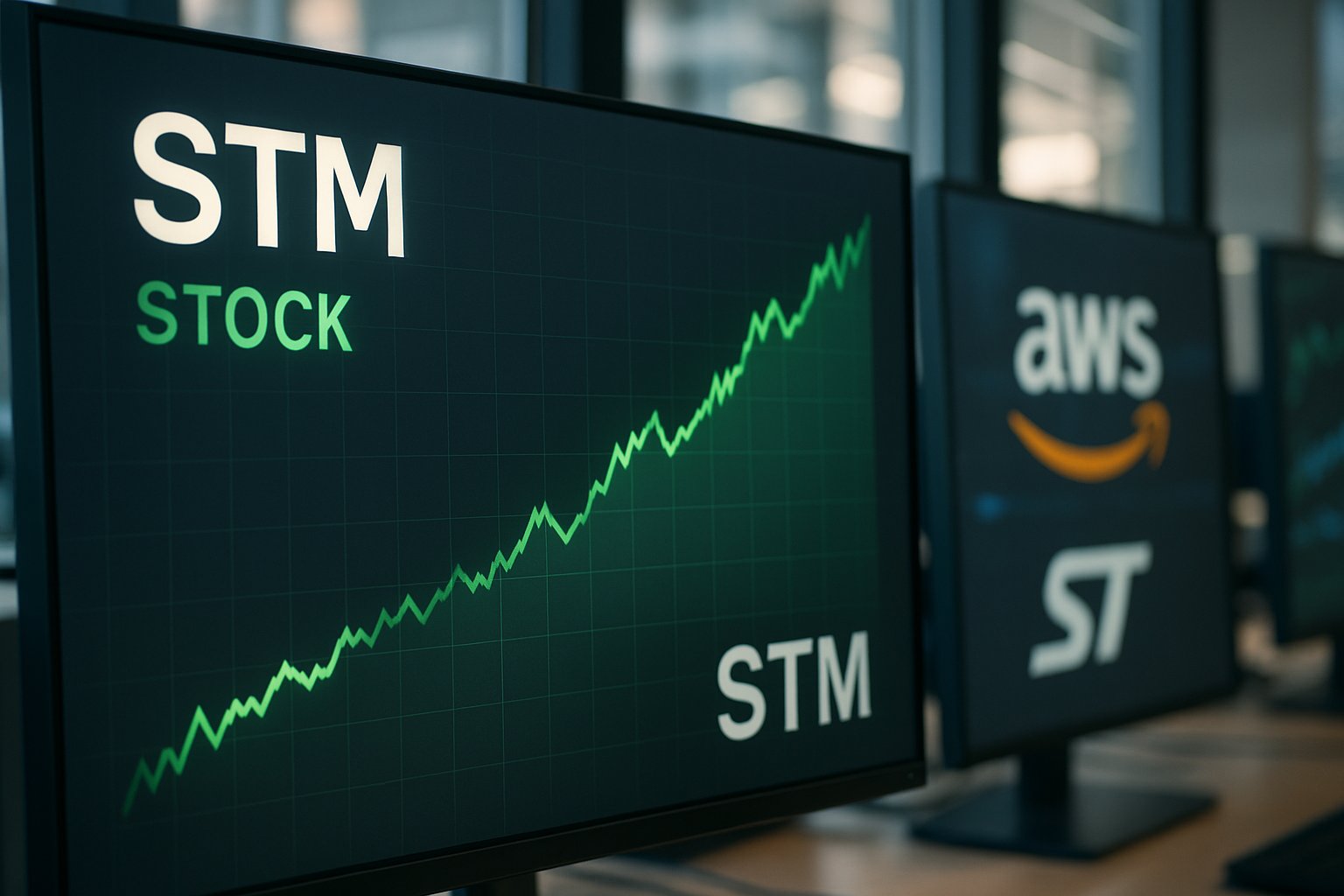
STM Stock Performance Spike
Trading desks reported an energetic open. STM shares opened near 31 USD before pushing toward 33 USD. Meanwhile, European prints showed similar percentage gains. MarketWatch cited an 8.9 percent peak, while Investing.com highlighted a 6.5 percent U.S. pre-market jump. Consequently, Stock Performance headlines dominated financial feeds. Analysts attributed the initial uplift to the deal’s multi-year, multi-billion framing and to attached warrants.
Nevertheless, several commentators urged caution. Warrants covering 24.8 million shares could dilute investors if fully exercised. In contrast, bulls argued that volume-linked vesting aligns incentives. Overall, the first-day Stock Performance reflected optimism mixed with vigilant skepticism. These reactions set the tone for deeper scrutiny. Therefore, the next section dissects the agreement itself.
Deal Structure Details Unveiled
STMicroelectronics’ release described three primary product lanes. First, mixed-signal connectivity silicon targets high-bandwidth server links. Second, advanced microcontrollers handle intelligent infrastructure management. Third, analog and power ICs improve energy efficiency across hyperscale racks. Additionally, ST and AWS will migrate electronic design automation workloads to the cloud, accelerating development cycles.
The contract specifies no single headline dollar figure. Instead, management labeled the engagement “multi-year” and “multi-billion USD.” Importantly, AWS received warrants exercisable at 28.38 USD over seven years. Consequently, a 2.7 percent equity stake could materialize. Such mechanics partly explain immediate Stock Performance excitement.
- Warrants: 24.8 million shares, seven-year window
- Exercise price: 28.38 USD
- Potential stake: ~2.7 percent
- Product scope: connectivity, controllers, power ICs
- Cloud EDA collaboration included
These figures clarify capital implications for STM. Moreover, they outline tangible levers that could influence future Stock Performance. The numbers also help contextualize longer-term valuation. Therefore, understanding technology ramifications becomes essential next.
Strategic Technology Implications Reviewed
The partnership addresses hyperscale infrastructure bottlenecks. Mixed-signal devices manage analog-to-digital conversion at high speeds. Additionally, power ICs shrink energy losses, lowering total cost of ownership. Moreover, microcontrollers provide real-time monitoring across boards, enhancing reliability. Each category connects directly to AWS capacity expansion.
Jean-Marc Chery, STM’s CEO, emphasized innovation leadership. He claimed the deal “validates the strength of our proprietary technology portfolio and manufacturing scale.” Consequently, STM enters a vendor set traditionally dominated by larger U.S. analog houses. Meanwhile, cloud EDA collaboration could shorten design loops. Faster design cycles may translate into quicker revenue capture, supporting Stock Performance durability.
Professionals seeking to monetize such developments can deepen business acumen. AI Sales™ certification programs expand strategic selling skills for semiconductor solutions. Ultimately, technical depth combined with consultative sales expertise will prove valuable as hyperscaler demand rises.
These technology shifts reinforce the commercial rationale. However, investors also study revenue forecasts. The next section details analyst expectations and potential upside.
Analyst Revenue Outlook Signals
Morgan Stanley offered quick commentary after the release. The bank projects STM data-center revenue climbing from 350 million USD in 2025 to 500 million USD in 2026. Furthermore, the desk sees potential for one billion USD by 2030. Consequently, the AWS engagement supports a higher growth mix. Such projections, if realized, would fortify Stock Performance over multiple quarters.
Nevertheless, model sensitivity remains high. Purchase timing, product margins, and macro demand swings all inject uncertainty. In contrast, embedded warrants create partial downside buffers; they vest only when AWS purchases occur. Meanwhile, Amazon’s projected 200 billion USD capital expenditure plan provides demand context.
Therefore, analysts will monitor quarterly filings for purchase volumes. Confirmed shipments will underpin future Stock Performance assessments. These forward-looking estimates appear positive, yet they sit beside notable risks.
Risks And Caveats Highlighted
Not every observer celebrated. AInvest labeled the rally “warrant-driven” and warned of possible dilution. Additionally, ST still faces cyclical softness in automotive and consumer segments. Moreover, the press release lacks fixed revenue commitments. Consequently, forecasts could overshoot if hyperscaler spending slows.
Furthermore, competitive suppliers continue vying for sockets. Analog incumbents may discount aggressively. Meanwhile, any slippage in yield rates could erode margins. These variables could dampen future Stock Performance.
Key caution points include:
- Uncertain purchase timeline and volumes
- Potential share dilution from warrants
- Legacy end-market weakness persisting
- Intensifying competition among analog peers
- Execution risk in advanced process nodes
These challenges highlight critical gaps. However, diligent monitoring can mitigate surprises. The next section outlines milestones worth tracking.
Monitoring Next Milestones Ahead
Several near-term catalysts merit attention. First, investors should review STM’s upcoming quarterly call. Management may disclose initial AWS shipment revenue. Secondly, watch SEC or Euronext filings detailing warrant tranches. Additionally, analyst revision notes could signal sentiment shifts.
Meanwhile, Amazon typically updates capex guidance mid-year. Any downward adjustment might pressure expectations. Consequently, STM’s Stock Performance would react quickly. Moreover, production ramps at ST’s new 300-mm facilities will influence gross margin trajectories.
Professionals can enhance forecasting skills with the earlier referenced AI Sales™ certification. Understanding enterprise procurement cycles improves scenario analysis. Ultimately, timely intelligence supports better trading and strategic positioning.
These checkpoints prepare observers for evolving developments. Subsequently, a concise wrap-up underscores essential insights.
Conclusion
STMicroelectronics captured investor enthusiasm with a headline-grabbing AWS agreement. The immediate Stock Performance surge reflected hopes for sustained data-center growth. Moreover, strategic technology alignment and cloud EDA cooperation add depth to the partnership. However, uncertain purchase volumes, warrant dilution, and competitive pressures introduce caution.
Consequently, market participants should track revenue disclosures, warrant exercises, and Amazon capex signals. Meanwhile, professionals may build competitive advantage through continuous learning. Therefore, explore the linked certifications to sharpen analytical and sales capabilities. Take proactive steps today and stay ahead in the rapidly shifting semiconductor landscape.
Ready to grow your impact? Become a partner and access structured AI enablement resources.


