

AI CERTs
2 months ago
Amazon Bets Big on Infrastructure Dominance
Suddenly, two hundred billion dollars is an eye-watering annual budget even for Amazon. However, the company now positions that figure as essential for future Infrastructure Dominance. Moreover, management insists the spending surge will unlock faster AI Expansion, deeper Robotics automation, and unmatched cloud scale. Consequently, industry observers are scrambling to understand the plan’s scope, timing, and impact.
Amazon Capex Shockwave Emerges
On 5 February 2026, Amazon forecast roughly $200 billion in Capex for 2026. Furthermore, the guidance dwarfs 2025’s $131.8 billion outlay. Andy Jassy framed the investment as a once-in-a-generation push covering data centers, custom chips, Robotics fulfillment, and satellite infrastructure. In contrast, Wall Street models had penciled in far lower totals.
- Q4 2025 net sales: $213.4 billion, up 14% year-over-year.
- AWS quarterly sales: $35.6 billion, up 24% year-over-year.
- Free cash flow: $11.2 billion, pressured by rising Capex.
These headline metrics illustrate the growth engine funding Amazon’s ambitions. Nevertheless, investors reacted swiftly.
The numbers confirm Amazon’s aggressive pursuit of Infrastructure Dominance. However, deeper drivers require examination.
Drivers Behind Massive Investment
Several forces push Amazon toward unprecedented spending. Firstly, Trainium and Graviton chips now exceed a $10 billion run rate. Consequently, more silicon capacity is required. Secondly, hyperscale AI Expansion demands high-bandwidth memory, specialized networking, and advanced cooling. Meanwhile, Project Rainier promises 500,000 Trainium2 devices for Anthropic and other partners.
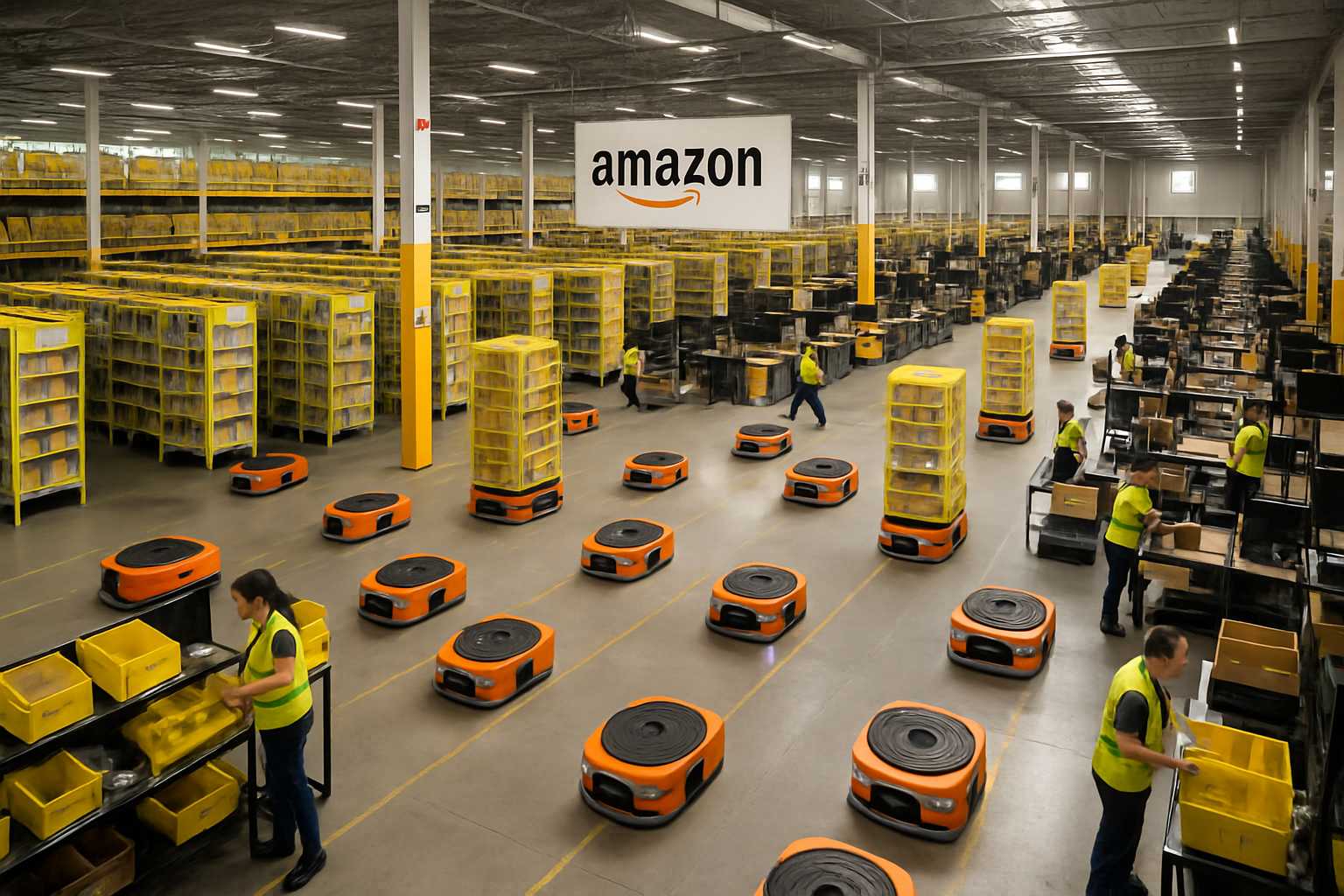
Thirdly, Robotics modernization within fulfillment centers targets faster delivery and lower unit costs. Additionally, Amazon Kuiper satellites need manufacturing lines, launch contracts, and ground terminals. Therefore, the $200 billion war chest spans far beyond traditional server racks.
Amazon argues that vertical ownership yields better margins and customer stickiness. Moreover, management claims early capacity locks in supplier pricing during component shortages.
These drivers collectively reinforce the Infrastructure Dominance narrative. Nevertheless, markets care about immediate outcomes.
Immediate Market Reaction Pulse
Shares fell 8-11% in after-hours trading once guidance hit the wire. Moreover, Bloomberg labeled the figure “far above” consensus estimates. UBS analysts downgraded near-term cash-flow forecasts. In contrast, Morgan Stanley highlighted long-term upside if AWS wins incremental AI Expansion workloads.
Free cash flow already slid because 2025 purchases climbed by $50.7 billion. Consequently, skeptics fear another dip. Nevertheless, some bulls view the pullback as a buying opportunity given Amazon’s historical execution record.
Reaction summaries underline investor anxiety despite Infrastructure Dominance aspirations. However, strategic context provides more nuance.
Strategic Infrastructure Dominance Moves
Amazon seeks cost, performance, and integration advantages across compute, storage, and networking. Furthermore, owning purpose-built silicon reduces reliance on NVIDIA and tightens control over supply chains. Additionally, proprietary Robotics platforms shorten warehouse cycle times. Consequently, combined advantages could let AWS underprice rivals while preserving margins.
Management also cites cross-selling benefits. For example, generative AI services drive S3 storage, database, and analytics revenue. Meanwhile, satellite broadband extends Amazon’s reach to underserved geographies. Therefore, the multi-layered strategy reinforces a moat around enterprise workloads.
Professionals can enhance their expertise with the AI Data Robotics™ certification. Such credentials help architects navigate complex build-versus-buy decisions within emerging cloud stacks.
These initiatives illustrate Amazon’s integrated path to Infrastructure Dominance. Nevertheless, execution risks remain substantial.
Risks And Skepticism Rising
History warns against overbuilding ahead of demand. Additionally, supply constraints for high-bandwidth memory may delay projects. Moreover, regulators could scrutinize capital intensity and competitive behavior. In contrast, internal forecasts assume robust customer uptake across AI Expansion services.
Another challenge involves depreciation drag. Consequently, margins can erode before revenue ramps. Furthermore, external partners might shift workloads among multiple clouds to avoid lock-in, reducing utilization rates.
These risks could dilute Infrastructure Dominance if mismanaged. However, peer spending trends shed further light.
Competitive Landscape Comparison Snapshot
Alphabet signaled $180 billion in 2026 Capex, while Microsoft hovers near $160 billion. Moreover, Meta targets around $120 billion. Consequently, big tech aggregate Capex may top half a trillion dollars next year.
Amazon’s $200 billion pledge therefore leads the pack. Additionally, its mix skews toward proprietary silicon and Robotics automation. In contrast, Microsoft relies heavily on external GPU vendors. Furthermore, Alphabet doubles down on TPU and data-center efficiency.
Industry watchers predict a capacity race echoing the early fiber boom. Nevertheless, Amazon believes its scale advantage will cement Infrastructure Dominance.
These comparisons contextualize Amazon’s gamble. However, talent planning rounds out the discussion.
Upskilling For Robotics Era
Workforce readiness underpins capital productivity. Consequently, Amazon sponsors internal training on AI inferencing, power optimization, and safety systems. Moreover, cloud architects across the industry must master emerging chip roadmaps and Robotics orchestration. Additionally, vendors need specialists who can optimize workloads for Trainium clusters.
External certifications accelerate that process. Professionals can enhance credibility through the earlier referenced AI Data Robotics™ program. Furthermore, continuous learning ensures teams extract full value from billion-dollar infrastructures.
Talent development thus supports Infrastructure Dominance. Nevertheless, financial discipline will ultimately determine success.


