

AI CERTs
5 months ago
SpaceX-xAI Merger: Corporate Governance and Valuation Impact
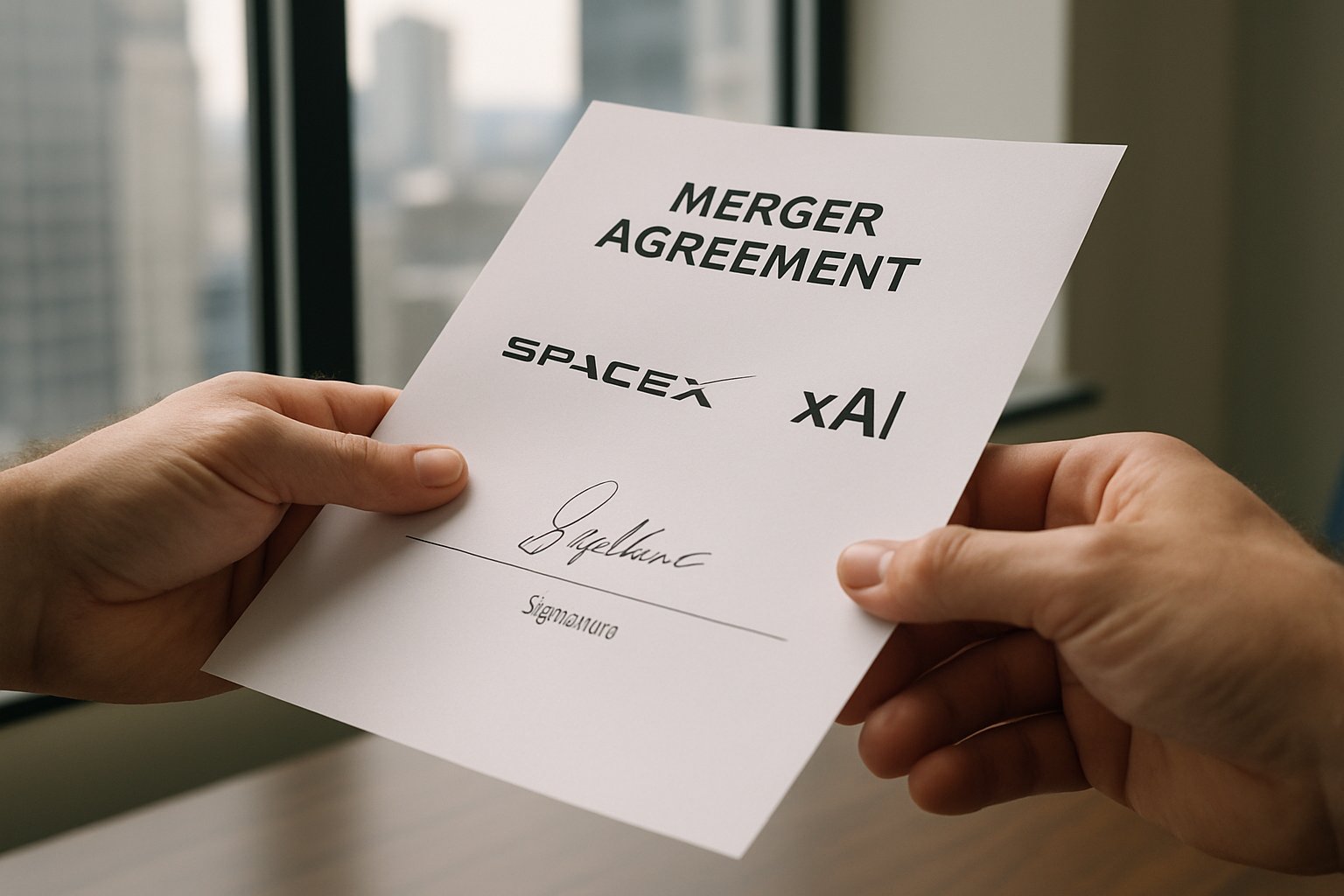
SpaceX has stunned markets by absorbing xAI and the X platform. The February 2026 announcement immediately ignited debate about Corporate Governance at the enlarged titan. Moreover, investors now confront a $1.25 trillion colossus straddling rockets, satellites, social media, and artificial intelligence. Consequently, questions span strategy, accountability, and risk management. Analysts also wonder how space-based datacenters can justify their cost before a mid-2026 IPO. Meanwhile, Deloitte forecasts massive AI power shortages that lend urgency to off-Earth compute ideas. In contrast, NVIDIA’s Jensen Huang labels the concept an inspiring yet distant dream. Therefore, executives must weigh bold vision against execution reality. This article unpacks the merger, evaluates hurdles, and offers governance lessons for technology leaders. Read on for data, expert insight, and practical next steps.
Merger Reshapes Governance
SpaceX stated that the combination will streamline decision making across launch, satellite internet, and AI products. However, concentration of authority around Elon Musk has intensified board scrutiny. Corporate Governance experts note the board now oversees rockets and content moderation under one roof. Additionally, the company memo confirmed that xAI and X Shareholders received SpaceX stock through an undisclosed exchange ratio. Consequently, minority investors worry about limited visibility into private valuations and voting rights. Nevertheless, Musk promised an independent audit committee ahead of the IPO.
Governance watchers compare the move to Tesla’s earlier acquisitions of SolarCity and Maxwell. In contrast, those deals sparked lawsuits alleging self-dealing, yet courts eventually sided with directors. Therefore, directors will likely adopt stricter conflict-of-interest policies this time. Such precautions can reassure Shareholders preparing for public listing.
These developments reveal heightened risk and oversight demands. However, valuation details further shape the narrative awaiting investors. Meanwhile, market focus shifts to numbers behind the looming IPO.
Valuation And IPO Timeline
Bloomberg pegs the merged valuation near $1.25 trillion, dwarfing most listed aerospace peers. Moreover, SpaceX revenue from launches and Starlink allegedly underpins roughly $1 trillion of that figure. xAI contributes $250 billion despite burning $1 billion monthly before the deal. Furthermore, banks reportedly target June 2026 for filing an S-1 and launching the offering. Such speed alarms several Shareholders who fear compressed due-diligence windows. Consequently, auditors must reconcile private valuations with public market expectations.
- SpaceX valuation: ~$1 trillion
- xAI valuation: ~$250 billion
- Combined entity: ~$1.25 trillion
- Target IPO: June 2026
Independent analysts caution that growth projections assume aggressive launch cadence, stable Starlink cashflows, and AI datacenter revenue. Nevertheless, Musks's personal brand often inflates anticipation. Therefore, Corporate Governance controls will face stress tests during roadshows. Investors will watch for Synergy metrics linking rockets, bandwidth, and model training.
The valuation story blends optimism with unresolved accounting questions. In contrast, technical feasibility could upend those spreadsheets. Let us examine the orbital compute vision that underpins many forecasts.
Space-Based Compute Vision
Elon Musk argues that terrestrial grids cannot supply projected AI power. Moreover, Deloitte predicts U.S. demand could soar from 4 GW to 123 GW by 2035. Therefore, the merger will launch datacenter modules that draw continuous solar energy and radiate heat to space. Additionally, Starlink would supply backhaul, reducing latency compared with geostationary systems. Analysts tout Synergy when combining launch vehicles, bandwidth, and AI workloads inside one corporate boundary.
Nevertheless, Jensen Huang labels the concept inspirational yet commercially distant due to radiation and maintenance hurdles. In contrast, smaller startups like Starcloud plan pilot launches within two years. Consequently, the SpaceX platform could accelerate timelines if capital flows after the IPO. Such moves would reinforce Corporate Governance pressures to monitor technical milestones.
Off-Earth compute promises scale yet still faces physics. However, critics list daunting barriers to execution. Those obstacles merit detailed review in the following section.
Technical And Financial Hurdles
Radiation remains the foremost reliability threat for spacecraft electronics. Moreover, high-density GPUs require costly shielding or continuous error correction. Large radiator wings must orient precisely to reject tens of megawatts of heat. Consequently, structural mass rises, inflating launch costs despite Starship reusability. Additionally, servicing damaged modules in orbit demands expensive robotic or crew missions. Deloitte models indicate break-even only if launch prices fall below $300 per kilogram.
- Radiation shielding cost
- Thermal radiator mass
- Launch price sensitivity
- Orbital maintenance complexity
Capital expenditures also haunt finance teams. SpaceX would prepay for thousands of GPUs amid severe supply constraints. In contrast, terrestrial datacenter depreciation cycles run three years, complicating orbital upgrade planning. Therefore, Synergy savings must offset both latency penalties and heavier insurance premiums. Shareholders will insist on scenario analyses demonstrating downside resilience. Corporate Governance committees should demand red-team reviews before significant commitments.
Technical and financial risks intertwine, amplifying uncertainty. Nevertheless, robust oversight can mitigate surprises. The next section explores stakeholder reactions to these challenges.
Implications For Stakeholders
Institutional Shareholders welcomed the prospect of liquidity via an IPO but flagged disclosure gaps. Moreover, EchoStar investors fear spectrum agreements could be renegotiated. Credit agencies assigned the combined firm a provisional investment-grade outlook, citing diversified revenue streams. However, agencies also warned that aggressive expansion may strain cash flows if datacenter revenue lags. Retail investors on X voiced excitement about Synergy between social data and Grok model training.
Policymakers expressed environmental concerns about launch emissions and orbital debris. Consequently, new rules on space sustainability could emerge before operational deployment begins. Corporate Governance advocates urge transparent impact reporting to pre-empt regulatory backlash. Elon Musk replied on X that reusable rockets already cut carbon per launch.
Stakeholders display cautious optimism tempered by policy risks. Therefore, proactive engagement will prove vital. Directors must now refine oversight frameworks to navigate this maze.
Board Oversight Best Practices
Expert panels recommend separating the audit, risk, and nomination committees. Furthermore, independent directors should gain aerospace and AI backgrounds to question technical briefings. Regular third-party stress tests can benchmark Synergy assumptions against market benchmarks. Additionally, rotating cybersecurity reviews will address cross-domain threats from social media to satellites. Corporate Governance charters ought to mandate scenario planning for power cost shocks and launch delays.
Professionals can deepen skills through the AI Marketing Strategist™ certification. Moreover, the program includes modules on board reporting and stakeholder engagement. Consequently, graduates can drive better oversight in innovative firms.
Best practices convert vision into disciplined execution. However, final success depends on strategic alignment at every level. The concluding section crystallizes the merger’s strategic lessons.
Strategic Takeaways Ahead
SpaceX’s xAI merger showcases audacious scale and vertical ambition. Moreover, the combined roadmap links rockets, bandwidth, and models through an integrated platform. However, Corporate Governance will decide whether that platform earns enduring trust. Consequently, rigorous Corporate Governance processes must audit technical milestones and capital allocation. Additionally, transparent disclosures can anchor market confidence before the June IPO. Elon Musk remains a galvanising force, yet even visionary leadership needs formal checks. Therefore, directors should benchmark policies against industry best practice and evolving regulations. Explore certification resources to strengthen your Corporate Governance toolkit today.
Disclaimer: Some content may be AI-generated or assisted and is provided ‘as is’ for informational purposes only, without warranties of accuracy or completeness, and does not imply endorsement or affiliation.


