

AI CERTs
2 months ago
Community Infrastructure Resistance Halts Data Center Plan
Silicon Valley once viewed data centers as automatic wins. However, communities now deploy Infrastructure Resistance to question each massive warehouse of servers. Monterey Park has become the latest battleground. Consequently, a 45-day moratorium now shields residents from immediate construction noise. Moreover, activists across the nation are watching the outcome closely.
These local debates preview the future interplay between digital growth and civic power. Data centers promise jobs and tax flows. Yet they also demand prodigious Energy and water, stressing an already fragile Grid. Therefore, understanding why Infrastructure Resistance rises matters to every technology leader.
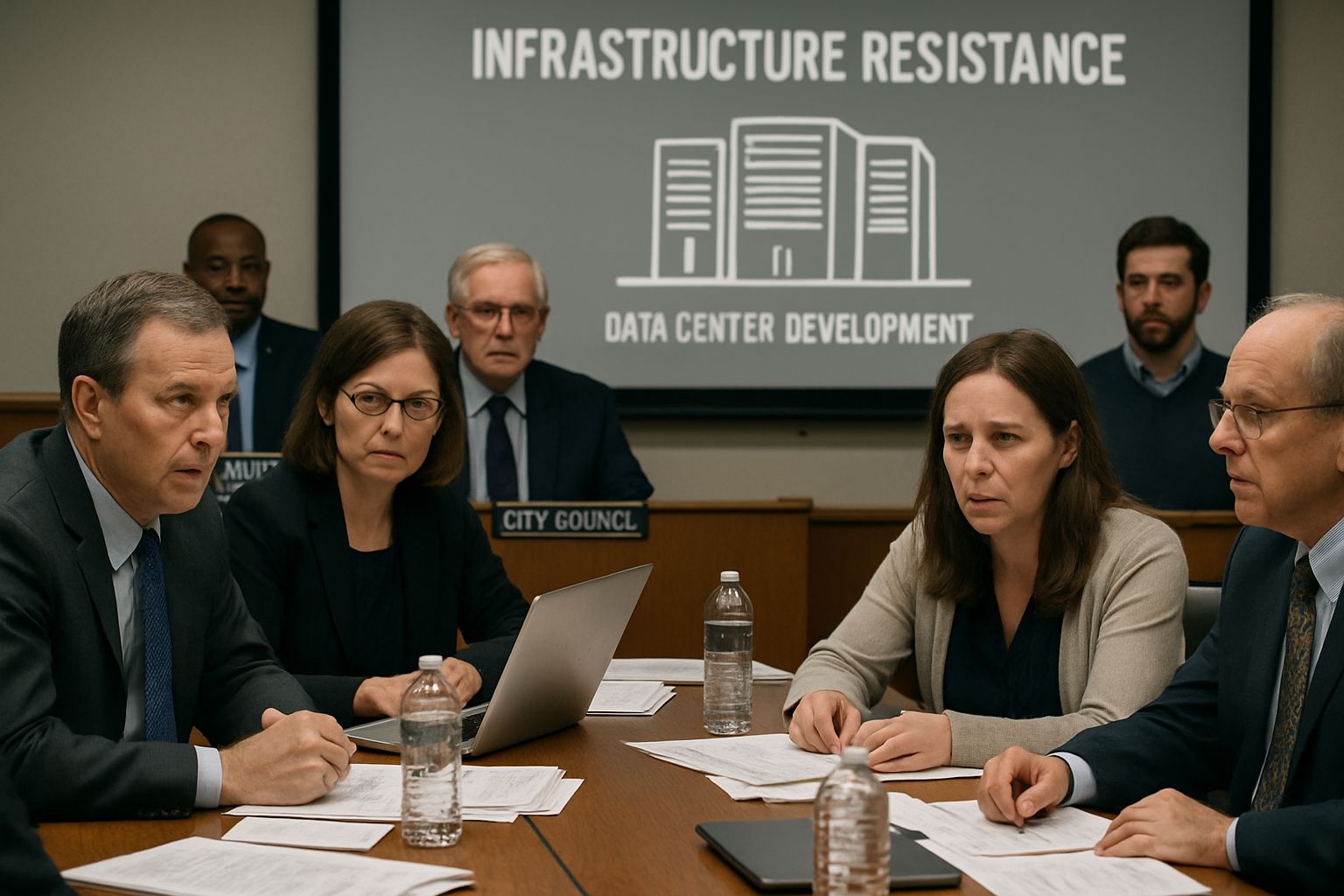
Grassroots Momentum Builds Fast
Local activism grew rapidly once flyers appeared in multiple languages. Meanwhile, organizers created online dashboards explaining diesel emissions and water demand. Subsequently, phone trees mobilized seniors, renters, and small businesses for council meetings. Data Center Watch analyst Miquel Vila claims Infrastructure Resistance has no safe geography. Moreover, the group lists over $64 billion in stalled facilities nationwide.
Community tactics therefore evolve quickly and travel across states. These lessons set the stage for the Monterey Park flashpoint.
Monterey Park Flashpoint Case
On 21 January 2026 the Monterey Park City Council voted unanimously for a moratorium near Saturn Park. Consequently, the planned 218,000-square-foot facility by HMC Capital paused. Officials cited insufficient Energy and environmental review under CEQA. In contrast, developers promised construction jobs and permanent positions. Residents feared Grid upgrades would inflate utility bills.
- 218k–250k square feet proposed floor area.
- 14 diesel engines estimated at 4 MW each.
- $39 million land purchase reported in 2024.
- Thousands of petition signatures collected in six weeks.
- $64 billion national project delays per December 2025 report.
These figures intensified local skepticism toward developer projections. However, wider environmental concerns amplify the resistance narrative. Consequently, Energy and water fears dominate the next phase of debate.
Energy And Water Fears
Data centers devour electricity for both computing and cooling. Accordingly, the DOE estimates 176 TWh annual U.S. consumption in 2023. That load equals roughly 4.4 percent of nationwide Energy use. Moreover, AI workloads project steep future rises. Water adds another stressor, especially in arid counties like Imperial Valley. Nevertheless, developers argue modern systems recycle water and pursue renewables. Grid operators warn sudden multi-megawatt hookups can overload substation capacity. So far, Infrastructure Resistance leverages these fears to stall permits.
Sustained scrutiny pushes companies to reveal detailed resource plans. Therefore, economic narratives now battle technical disclosures. The discussion now shifts to contested economic claims and industry pushback.
Economic Claims And Pushback
Developers tout hundreds of temporary construction jobs and steady tax revenue. Meanwhile, PG&E stresses the need for predictable network investment signals. Industry coalitions warn aggressive rules could drive capital to other states. In contrast, Assemblymember Rebecca Bauer-Kahan seeks stronger Energy reporting to protect ratepayers. Consequently, AB 222 now requires limited disclosure rather than strict caps. Stakeholders frame Infrastructure Resistance as either economic self-harm or prudent caution. Moreover, some investors quietly redesign projects to include onsite solar or battery storage.
Economic framing thus remains fluid and highly localized. However, legal levers ultimately determine project trajectories. Hence, attention turns to policy and legal pathways shaping approvals.
Policy And Legal Pathways
Cities wield moratoria, zoning amendments, and ballot measures as defensive tools. Nevertheless, permanent bans invite lawsuits alleging takings or contract breaches. Monterey Park is exploring a voter initiative to reduce litigation exposure. CEQA remains the primary statewide filter requiring extensive environmental studies. Furthermore, federal regulators watch for cumulative system impacts across regions. Developers sometimes sue municipalities, yet delays often outlast litigation. Infrastructure Resistance therefore couples procedural tactics with public storytelling.
Legal complexity favors well-prepared communities and transparent developers. Consequently, future trends will hinge on strategy evolution. The final section assesses where the conflict heads next.
Future Resistance Trend Outlook
Analysts expect AI demand to multiply data center proposals over the decade. Consequently, Infrastructure Resistance will likely intensify and professionalize. Activist networks already share template ordinances, expert witnesses, and multilingual outreach kits. Meanwhile, investors diversify sites, pursuing cooler climates and renewable-heavy regions. State energy commissions consider dedicated tariffs for hyperscale loads. Moreover, certifications such as the AI Ethics program help professionals navigate evolving governance debates. These credentials also inform balanced approaches to Infrastructure Resistance discussions.
- Standardized impact dashboards in municipal portals.
- Regional capacity auctions for large Energy users.
- Community benefit agreements tied to power upgrades.
- Higher water reuse targets for cooling loops.
Upcoming policies could create clearer pathways for sustainable facilities. Nevertheless, unresolved trust gaps keep local opposition vigilant.
Monterey Park’s stand illustrates a broader inflection point. Communities, utilities, and lawmakers now share power over digital infrastructure footprints. Consequently, Infrastructure Resistance shapes site selection, design choices, and public policy. Developers that embrace transparent Energy data and equitable network investments will move faster. Meanwhile, activists will refine strategies using national playbooks. Therefore, professionals should monitor evolving rules and pursue continuous education. Consider strengthening expertise with the AI Ethics certification to engage credibly in these debates. Stakeholders who bridge technical insight and community trust will define the next decade. Ultimately, Infrastructure Resistance will remain a critical KPI for data center feasibility.


