

AI CERTS
2 months ago
Goldman Sachs Bets Big on Financial AI Accounting Agents
The move underscores how rapidly generative technology is maturing for regulated tasks. Consequently, industry observers call the project a pivotal proof point for Financial AI.
However, speed is only half the story. Reliability, governance, and human oversight remain non-negotiable for every regulated institution. Therefore, understanding the technical and compliance foundations of Goldman's plan matters to every practitioner. This article unpacks the strategy, risks, and broader market consequences in detail. Additionally, it offers a practical playbook for finance teams exploring similar automation. Meanwhile, career leaders can discover upskilling paths to stay competitive in the algorithmic era.
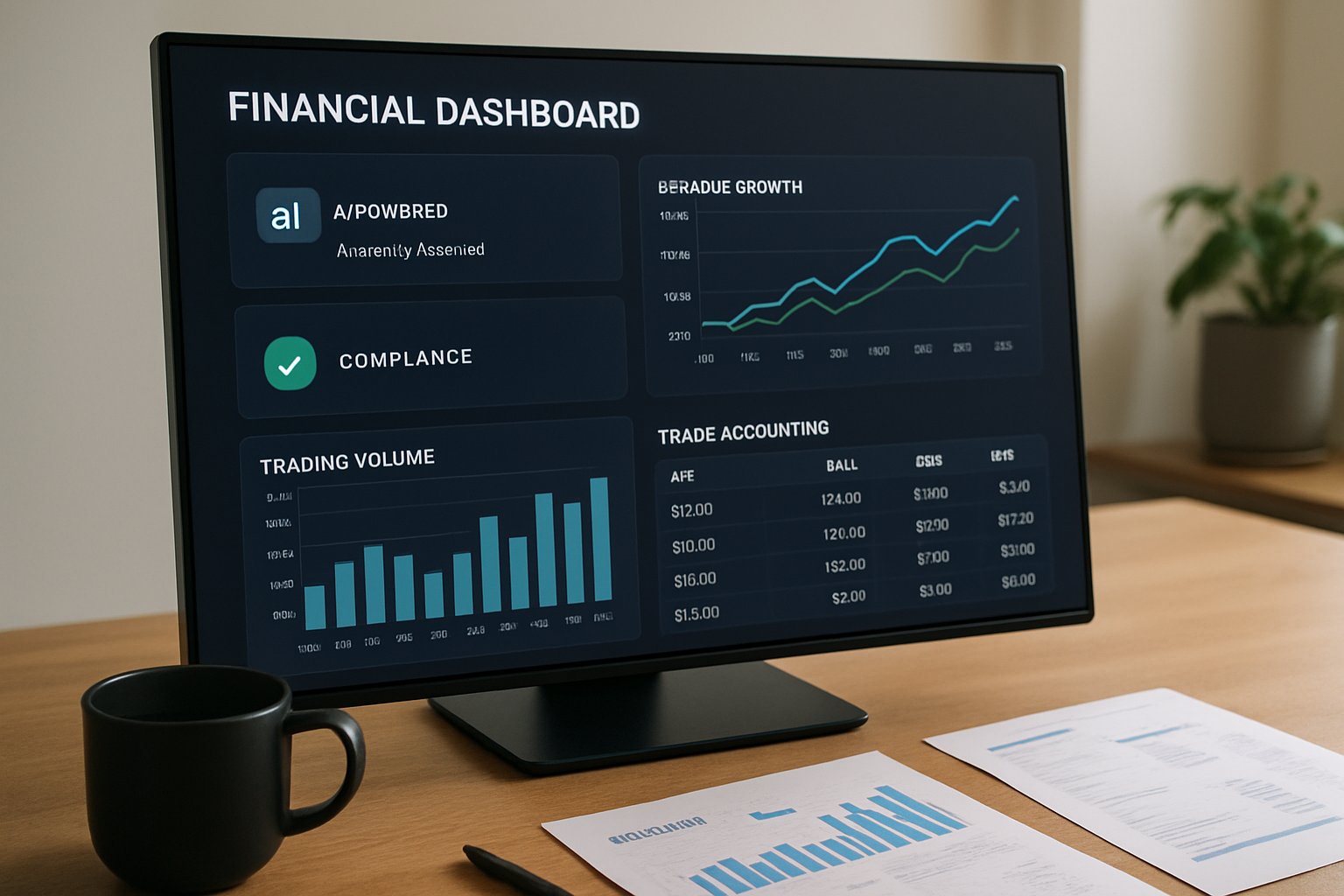
Goldman Bets On Financial AI
Goldman’s chief information officer, Marco Argenti, described Claude as a digital co-worker. Furthermore, he stressed that autonomy, not just chat, creates material productivity gains. The CIO said engineers embedded within trading operations iterated weekly with accountants. Consequently, prototypes matured quickly into pilot agents now being hardened for production rollouts.
Anthropic’s Cowork framework underpins these tools. It allows agents to read spreadsheets, parse PDFs, and trigger downstream connectors. In contrast, earlier bots only summarized content. Now, complex reconciliations can run end-to-end with minimal prompts.
Argenti signaled an imminent launch but withheld exact dates. Nevertheless, early disclosure reflects confidence in regulatory discussions already underway. Therefore, investors interpret the news as a forward indicator of margin expansion. The signal also pressures peers to accelerate their own agent evaluations.
Goldman’s early disclosure shows commitment beyond experimentation. Subsequently, attention shifts toward operational specifics and control frameworks.
How Agentic Tools Work
Agentic systems plan, act, and verify outputs across multiple steps. Moreover, they maintain context across documents, tickets, and ledger entries. Claude Cowork executes such chains through structured tasks called blueprints. Consequently, accountants specify goals, and the agent decomposes them automatically.
A reconciliation blueprint, for instance, ingests trade tickets and clearing data. It then matches identifiers, flags breaks, and drafts explanation memos. Additionally, exception cases route to humans through Slack or Microsoft Teams connectors. Escalation maintains accountability while still compressing cycle time. Financial AI frameworks depend on reliable connectors and robust context windows.
For client onboarding, the agent extracts identities, screens sanctions lists, and populates KYC fields. In contrast, legacy workflow tools demanded manual data re-entry across systems. Therefore, Cowork reduces swivel-chair fatigue and improves first-day customer experience.
These examples illustrate repeatable blueprints suited to finance’s rule-heavy tasks. However, increased autonomy requires equally rigorous guardrails, explored next.
Accounting Use Case Details
Trade accounting reconciles high-volume positions across exchanges, custodians, and counterparties. Regulatory Compliance demands every break be investigated and documented promptly. Manual queues often stretch overnight, exposing settlement risk. Consequently, Goldman expects agents to cut exception queues by 80%.
Automation starts by standardizing data ingestion through Cowork’s file readers. Subsequently, rule libraries transcribe firm policy and jurisdictional regulations. Audit Automation logs every rule fired, producing immutable trails for inspectors. Meanwhile, dashboards surface unresolved anomalies for human sign-off.
- Approximately six months of co-development elapsed before pilot readiness.
- 75% of UK financial firms already leverage AI for core processes.
- Anthropic models support over ten common enterprise file types.
These figures underscore why speed and scale appeal to controllers. Consequently, auditors will scrutinize decision logs more than ever. Here, Financial AI turns messy tickets into reconciled ledgers without scripting.
Regulatory Compliance Risk Guardrails
Finance watchdogs apply existing rules to generative systems. Therefore, Goldman must evidence model validation, scenario testing, and explainability. Hogan Lovells notes that concentration risk also faces supervisory review. Moreover, agreements with Anthropic need robust service levels and termination rights.
Audit Automation becomes essential for continuous monitoring of agent actions. Logs must capture prompts, intermediate reasoning, and external calls. In contrast, traditional RPA captured only surface activities. Consequently, dedicated observability stacks are emerging for Financial AI workloads.
Human-in-the-loop designs further mitigate hallucination or bias events. Additionally, escalation matrices align with Senior Managers regimes in major jurisdictions. Nevertheless, policy must evolve as agents gain downstream execution powers.
Effective controls transform perceived risk into competitive trust. Subsequently, the workforce conversation gains prominence.
Workforce And Vendor Impact
Executives frame the technology as capacity, not displacement. However, external reconciliation vendors may see contract pressure. Similarly, junior onboarding analysts will transition towards oversight roles. Therefore, upskilling becomes urgent across finance operations.
Professionals can strengthen relevance through strategic certifications. For instance, leaders can pursue the Chief AI Officer™ certification. Such programs cover governance, model selection, and enterprise implementation playbooks. Moreover, curriculum modules dive deeply into Financial AI policy trends.
Vendor dependence also warrants governance committees. Regulatory Compliance teams must assess Anthropic updates for material changes promptly. Consequently, contract clauses may require notification of significant model alterations. Meanwhile, multi-vendor strategies remain under discussion to avoid single points of failure.
Talent resilience and vendor oversight will shape ROI realizations. In contrast, ignoring these levers risks stalled adoption. Golden talent markets now reward Financial AI literacy across all seniorities.
Market Implications For Competitors
When a tier-one bank operationalizes agents, rivals move quickly. Therefore, procurement cycles at peer institutions are already shortening. OpenAI, Microsoft, and Google pitch alternative stacks within weeks of Goldman's reveal. Moreover, software vendors in reconciliation now confront disruptive price pressure.
Investors reacted swiftly to Anthropic’s Opus upgrade earlier in January. Share prices of niche compliance tools fell after the announcement. Consequently, expectations for accelerated consolidation are rising. Meanwhile, boutique KYC providers pursue partnerships to embed agent layers.
- Analysts forecast 15% operational cost reduction for early adopters.
- Time-to-client-revenue could shrink from weeks to days.
- Supplier diversity policies may slow single-vendor deals.
These signals highlight both opportunity and volatility. Subsequently, banks require executable implementation guidance. Analysts label the shift a watershed for enterprise Financial AI adoption curves.
Implementation Playbook For Banks
Begin with bounded pilots targeting document-heavy, rule-based flows. Moreover, secure sandbox environments prevent accidental data leakage during tuning. Schedule weekly calibration meetings between operations and model engineers. Consequently, domain knowledge transfers efficiently into blueprint libraries.
Embed Audit Automation from day one to capture every decision parameter. Logs should stream into existing GRC dashboards for unified reporting. Additionally, integrate synthetic exception suites to stress-test hallucination boundaries. Regulatory Compliance officers must approve escalation paths before limited production access.
Finally, measure success on cycle time, break rates, and user adoption sentiment. In contrast, focusing solely on headcount savings can mislead stakeholders. Therefore, balanced scorecards maintain strategic alignment across technology and risk teams. Financial AI metrics should complement, not replace, traditional operational KPIs.
Structured pilots de-risk innovation while delivering tangible wins. Consequently, enterprise rollouts become a reproducible science, not luck.
Goldman’s Claude partnership signals a new operational chapter for banking. Moreover, first movers are capturing tangible cycle-time and accuracy gains. Nevertheless, victory depends on disciplined controls, resilient vendors, and motivated talent. Financial AI will reward teams that blend algorithmic power with fiduciary rigor. Consequently, leaders should launch small pilots, measure early, and refine governance. Additionally, professionals should secure strategic credentials to remain indispensable. Choose action: explore deployment guides, join peer forums, or earn the linked certification. Future balance sheets will remember who moved first.


