

AI CERTS
2 months ago
Deepfake Heist Exposes Corporate Fraud Weaknesses
Singapore’s Anti-Scam Centre and Hong Kong police froze most funds within 48 hours. However, the episode shows how quickly AI tools can bypass traditional verification workflows. Moreover, analysts link such attacks to organised networks generating billions across Southeast Asia. Voice cloning costs are collapsing, making real-time impersonation accessible to mid-tier criminals. Consequently, businesses must revisit controls before the next synthetic meeting demands urgent transfers.
This report dissects the timeline, technology, and mitigation strategies in clear, actionable detail. Furthermore, readers gain guidance on certifications and policy steps to strengthen organisational defences. Meanwhile, secondary risks such as Business Email Compromise continue to intersect with deepfake campaigns. Nevertheless, proactive preparation can convert a potential disaster into a reputational success story.
Deepfake Heist Case Overview
On 26 March 2025, the finance director wired US$499,000 following a deceptive Zoom meeting. Attackers had cloned the voices and faces of the chief executive team in real time. Consequently, the victim believed the transfer supported an urgent regional restructuring. This brazen act of Corporate Fraud exploited normal approval workflows inside the multinational.
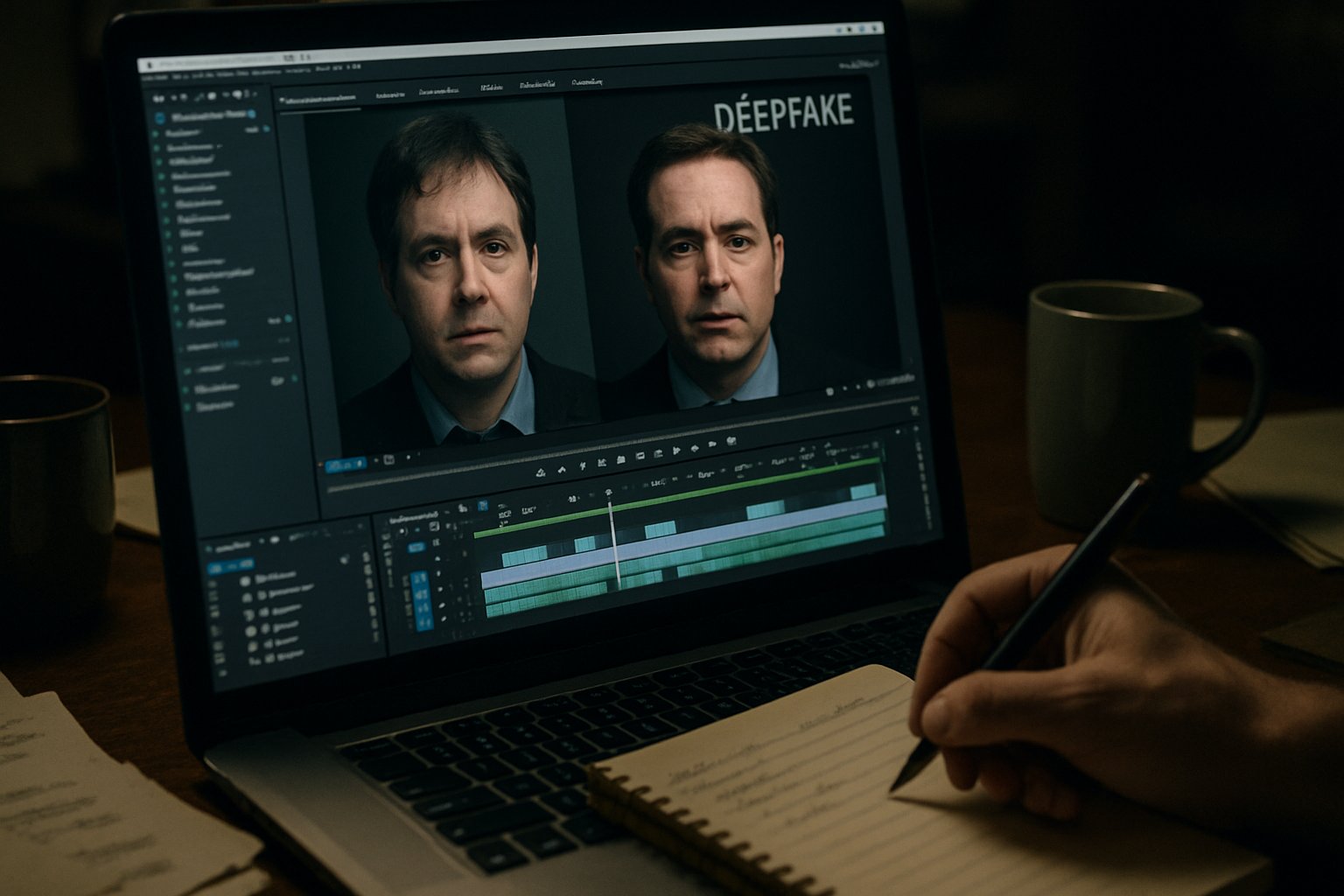
HSBC flagged anomalies when an additional US$1.4 million request arrived the next day. Meanwhile, Singapore’s Anti-Scam Centre contacted Hong Kong’s ADCC to halt cross-border withdrawals. Subsequently, authorities recovered almost the entire amount by 28 March. Nevertheless, about US$5,000 had already been siphoned off through a domestic mule account.
These events show deepfakes can trigger high-value losses within hours. However, swift detection limited damage, leading into a closer look at each timeline detail.
Attack Timeline Key Details
Investigators reconstructed the sequence to guide future incident response practitioners. Therefore, the precise timestamps deserve attention.
- 24 March: WhatsApp messages impersonating CFO arranged a Zoom call for restructuring discussion.
- 25 March: Deepfake video conference included cloned CEO, CFO, and a supposed lawyer requesting confidentiality.
- 26 March: Finance director transferred US$499,000 to a local account controlled by mules.
- 27 March: Attackers demanded another US$1.4m, triggering internal suspicion and bank escalation.
- 28 March: ASC and ADCC froze Hong Kong funds and seized remaining local balance.
Consequently, a two-day response window proved decisive for asset recovery. Next, understanding regional context clarifies why such schemes thrive across borders.
Wider Regional Scam Context
The Singapore case reflects a broader surge in AI-enabled scams throughout Southeast Asia. UNODC estimates scam centres now generate nearly US$40 billion annually across the region. Moreover, many operations integrate deepfake studios alongside call-centre floors. In contrast, Business Email Compromise traditionally relied on text deception alone. Now, synthetic audio and video amplify BEC success rates against finance teams.
Pindrop’s 2025 report recorded a 1,300% jump in synthetic-voice attacks during 2024. Additionally, CEO Vijay Balasubramaniyan warned the fraud is scaling faster than predicted. Consequently, regional governments fear reputational harm that could deter foreign investment. Such warnings underline the evolving face of Corporate Fraud across digital channels. Nevertheless, the same transnational links aiding BEC also facilitate rapid fund laundering.
These statistics frame a complex, lucrative ecosystem. Therefore, understanding technological tools becomes essential for defence strategies.
Technology Behind Impersonation Attacks
Deepfakes combine generative adversarial networks, autoencoders, and diffusion models to fabricate convincing media. Consequently, attackers need only minutes of reference audio to clone an executive voice. Meanwhile, open-source real-time video injectors overlay manipulated faces during live calls. In contrast, earlier Business Email Compromise schemes lacked such immersive credibility.
Researchers Simon Mylius and Fred Heiding note deepfake production costs have plummeted. Moreover, commercial voice-cloning services now charge under US$10 for high-fidelity output. In contrast, enterprise detection budgets often lag behind attacker innovation cycles. Therefore, Corporate Fraud actors can scale operations without specialised technical staff.
Specific Deepfake Tools Used
Police have not disclosed the exact software used in the Singapore breach. Nevertheless, incident forensics often observe popular open-source frameworks like DeepFaceLive or Avatarify. Additionally, malicious actors sometimes privatise these tools, adding custom latency reduction modules.
These technological enablers lower entry barriers dramatically. Subsequently, discussion must shift toward internal controls that catch synthetic requests.
Corporate Fraud Control Measures
Robust governance remains the strongest deterrent against evolving Corporate Fraud techniques. Consequently, firms should implement multi-factor verification for every high-value payment instruction. Furthermore, dual-approval policies create latency that frustrates deepfake urgency tactics. Out-of-band confirmation through a known office line remains essential despite increased remote work.
Banks can help by applying automatic time-delay holds on first-time beneficiary accounts. Moreover, AI-driven voice authentication flags anomalies that reveal synthetic callers. Consequently, continuous monitoring dashboards should visualise anomalous payment velocities in real time. Professionals can enhance their expertise with the AI Security Specialist™ certification.
Verification Best Practice Steps
- Establish standing callback numbers for executives and finance staff.
- Require second-factor approval for transactions above internal thresholds.
- Train employees to spot unusual video artifacts and voice latency.
- Log all meeting recordings for post-event forensic review when feasible.
These measures erect multiple barriers against Corporate Fraud attempts. Therefore, attention now turns to the role of law enforcement partnerships.
Swift Law Enforcement Response
The Singapore Anti-Scam Centre operates a 24-hour command post with direct bank links. Consequently, investigators could contact Hong Kong counterparts within minutes of HSBC’s alert. ADCC then used expedited legal orders to withhold funds before onward transfers. Consequently, quick mutual legal assistance treaties enabled near-real-time judicial orders. Meanwhile, cooperation illustrated the benefits of previous regional anti-scam memoranda.
Moreover, Singapore authorities published public advisories within two weeks, promoting transparent learning. Such openness strengthens deterrence and supports Corporate Fraud investigations globally.
These interventions demonstrate that cross-border speed matters. Subsequently, we assess strategic lessons leaders should carry forward.
Strategic Takeaways Moving Forward
Executives cannot view deepfakes as distant science fiction. Consequently, they must treat synthetic impersonation as a mainstream Corporate Fraud threat. Additionally, Business Email Compromise tactics now merge with video deception, forming hybrid playbooks. In contrast, legacy e-mail filters alone cannot detect cloned faces.
Boards should request quarterly simulations covering BEC, deepfake calls, and payment diversion scenarios. Moreover, incident runbooks must include bank escalation contacts and public-relations scripts. In contrast, teams that only draft policies rarely achieve operational readiness. Subsequently, organisations that practise can react under pressure without hesitation.
These forward-looking actions reduce both financial and reputational exposure. Therefore, concluding insights reinforce the urgency of certification and multidisciplinary engagement.
Singapore’s deepfake incident offers a concentrated lesson in modern Corporate Fraud resilience. Consequently, finance leaders must integrate Business Email Compromise defences with video verification protocols. Moreover, BEC risk escalates when attackers embed synthetic voice, creating multi-channel persuasion. Nevertheless, layered controls, staff awareness, and rapid police cooperation can still salvage misdirected funds.
Professionals should benchmark their processes against today’s case while pursuing continual learning. Therefore, consider enrolling in the AI Security Specialist™ programme to reinforce practical defences. Additionally, sharing incident data with industry peers accelerates collective immunity. Take decisive action now, and convert potential liabilities into a competitive trust advantage.


