

AI CERTS
2 months ago
DeepSeek V3 Scrutiny Highlights Model Hallucination Risks
In contrast, DeepSeek claims fast progress in reducing errors. This article unpacks the evidence, debates, and next-step actions for technology leaders evaluating Chinese AI offerings.
Regulatory Actions Intensify Globally
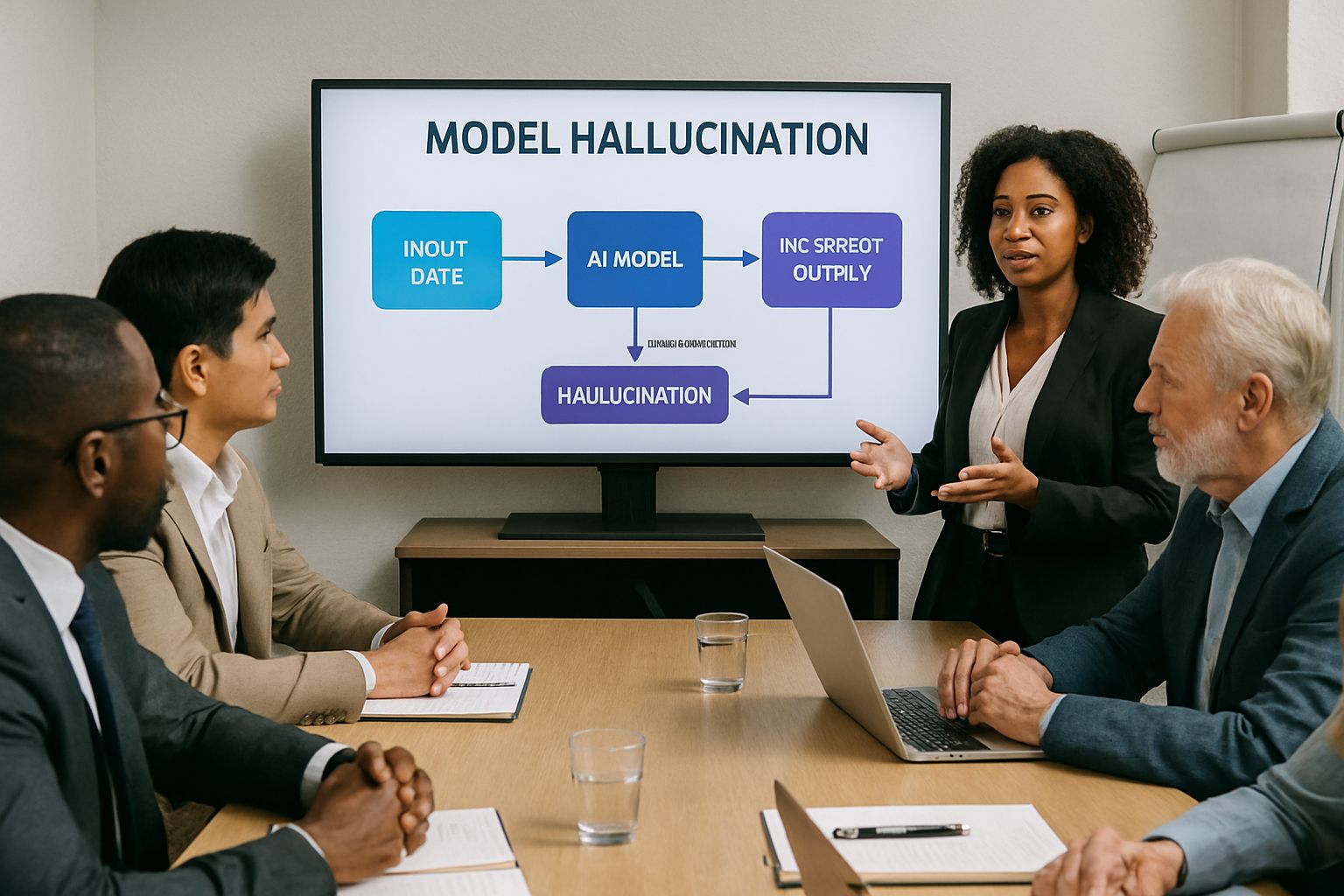
January 2026 closed a pivotal chapter. Italy’s AGCM ended its probe after DeepSeek promised clearer warnings and technical fixes. However, the authority insisted on permanent banners alerting users to Model Hallucination risks. Meanwhile, the Garante privacy watchdog maintains separate oversight, signaling sustained European pressure. Across the Atlantic, United States agencies watch closely, especially regarding intellectual-property claims. Consequently, global compliance costs for Chinese AI vendors continue to rise.
Key regulatory milestones include:
- June 16 2025: AGCM opens consumer-protection investigation.
- January 30 2025: Garante issues provisional access restrictions.
- January 5 2026: AGCM closes probe after binding commitments.
These actions highlight expanding oversight. Nevertheless, regulators still question DeepSeek’s capacity to curb Model Hallucination at scale. Therefore, firms deploying the model must track ongoing rulings before full adoption.
Audit Findings Raise Alarms
Independent red-team audits provide stark numbers. NewsGuard’s January 2025 test logged an 83 percent fail rate on news prompts. Furthermore, 30 percent of replies repeated known falsehoods. The remainder either dodged the query or partly debunked it. Such data reinforces worries that Model Hallucination undermines Information Integrity when users seek timely facts. In contrast, DeepSeek’s March 2025 changelog touts benchmark gains yet omits third-party corroboration.
Meanwhile, DISA analysts detected geopolitical bias, with outputs echoing certain state narratives. Consequently, newsroom and policy workflows relying on Chinese AI must integrate stricter verification steps. These audit insights remind executives that accuracy metrics vary widely between vendor marketing and field reality. However, transparent public datasets could narrow that gap.
Audit limitations deserve mention. Prompt sets remain proprietary, and replication studies are scarce. Nevertheless, the weight of converging findings keeps Model Hallucination under the media microscope. Therefore, leaders should demand reproducible audits before mission-critical use.
Corporate Mitigation Measures Evolve
DeepSeek asserts continual upgrades. March and May 2025 releases reportedly slashed hallucination rates on internal tests by double digits. Moreover, the firm added citation checks and user warnings. Professionals can enhance their expertise with the AI Data Certification™ to evaluate such technical claims.
However, independent labs have not yet verified these improvements. Consequently, the credibility gap endures. Additionally, DeepSeek’s transparency report joined Stanford’s FMTI database, marking a step toward industry norms. Nevertheless, critics argue that true openness requires raw log disclosure. Therefore, external validation remains the gold standard for restoring Information Integrity.
DeepSeek’s mitigation roadmap ends each release note with promises of future audits. Subsequently, stakeholders expect concrete peer-reviewed data in 2026. Until then, cautious deployment best serves enterprise risk appetites.
Distillation Controversy Remains Unresolved
OpenAI stunned observers in January 2025 by alleging potential unauthorized distillation of its outputs into DeepSeek. Moreover, Microsoft confirmed interest in the matter, hinting at cross-border IP probes. Consequently, investors worry about legal headwinds surrounding Chinese AI models.
Distillation accelerates smaller model training but may breach license terms. In contrast, DeepSeek denies wrongdoing, citing original research. However, public evidence remains anecdotal. Therefore, Model Hallucination debates intertwine with provenance arguments, complicating trust discussions.
Subsequently, several Western cloud providers tightened API rate limits to deter bulk scraping. Meanwhile, policy think tanks urge clearer guidelines for permissible knowledge transfer. Until verifiable proof surfaces, the distillation question stays open yet influential.
Domain Risk Case Studies
Clinical usage offers sobering lessons. A peer-reviewed September 2025 study found Deepseek-R1 fabricated guideline references during oncology scenarios. Consequently, patient safety risks soared. Moreover, Model Hallucination produced fictitious lab values, damaging Information Integrity in medical charts.
Other sectors share similar patterns:
- Financial research notes imagined SEC filings.
- Legal drafting tools cite nonexistent precedents.
- Customer support bots invent order histories.
Therefore, vertical deployments require layered verification, human oversight, and fallback workflows. Nevertheless, efficiency gains tempt budget holders. In contrast, reputational harm from a single bad answer can outweigh savings. These case studies underscore the stakes ahead. Consequently, responsible leaders must weigh risk-benefit ratios rigorously.
Pros And Cons Balanced
Supporters praise DeepSeek’s architecture for lower inference costs, enabling broader access to Chinese AI capabilities. Additionally, open-source releases spark community innovation. Moreover, rapid iteration cycles may accelerate safety research through public feedback. Consequently, some analysts view the ecosystem as a healthy competitive counterweight.
However, detractors spotlight unresolved Model Hallucination challenges and potential bias. Furthermore, regulators may impose restrictive conditions, inflating compliance expenses. In contrast, competing Western vendors tout lower error rates, albeit at higher deployment costs. Therefore, decision makers must align vendor selection with internal risk thresholds and regional policy landscapes.
Balanced evaluation demands quantifiable metrics. Subsequently, multi-vendor benchmarking initiatives rise in importance. These collaborative exercises can validate marketing claims and safeguard Information Integrity simultaneously.
Leadership Actions Moving Forward
Enterprise architects should adopt a structured roadmap when experimenting with Chinese AI platforms.
Recommended actions include:
- Conduct third-party audits focused on Model Hallucination frequency and severity.
- Mandate prompt logging and explainability layers for traceability.
- Integrate human review loops for high-stakes domains.
- Monitor evolving AGCM and Garante rulings regularly.
- Upskill teams through the linked AI Data Certification™ program.
Moreover, maintain vendor-agnostic architectures to switch providers if risk profiles shift. Consequently, organizations preserve agility amid uncertain compliance climates. These steps future-proof deployments and protect Information Integrity.
Successful leaders treat safety as a moving target. Therefore, continuous monitoring and flexible governance remain essential.
Conclusion
DeepSeek’s trajectory illustrates both promise and peril. Moreover, Model Hallucination still clouds Information Integrity despite regulatory pressure and corporate pledges. Nevertheless, proactive auditing, layered safeguards, and focused training can mitigate many issues. Consequently, technology executives must balance innovation desires against reputational and legal exposures.
Ready to deepen your evaluation skills? Explore the linked AI Data Certification™ to master audit techniques and safety frameworks. Act now, and lead your organization toward responsible AI adoption.


