

AI CERTS
6 months ago
Industrial Deepfakes Drive Cyber Fraud Surge Across Markets
These attacks exploit weak verification layers, turning isolated stunts into repeatable money machines. Industry data between mid-2024 and early 2026 confirms the trend with triple-digit growth rates. Moreover, regulators and vendors scramble for defenses while organized gangs reinvest proceeds into better automation. This article dissects the industrial-scale impersonation economy, its rising costs, and the countermeasures shaping policy. Professionals tracking Financial Crime will find actionable insights, authoritative statistics, and guidance on risk mitigation. Meanwhile, leaders seeking formal upskilling can explore the linked certification to strengthen AI security competencies.
Threat Landscape Expands
“Industrialized plausibility: cheap realism plus distribution equals credibility capture,” states the AI Incident Database roundup. Therefore, criminals no longer need Hollywood budgets to fool victims. Pindrop notes synthetic voice attacks grew 1,300% in 2024, from one monthly event to seven attempts daily. In contrast, bank fraud lines saw a 149% surge, while insurers reported 475% more suspected impersonations.
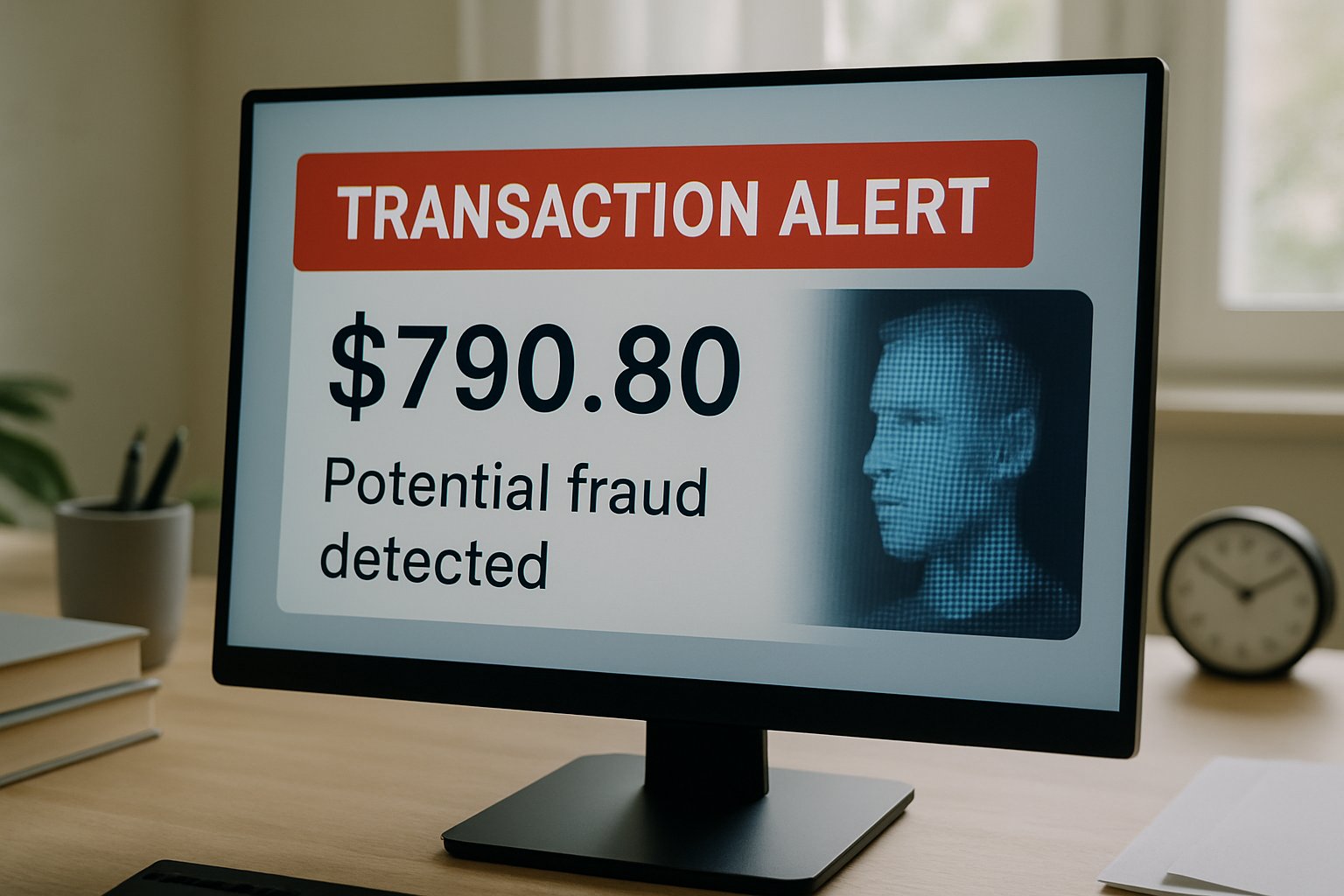
Europol’s December 2025 raid shattered a crypto racket laundering over €700 million through deepfake promotion funnels. Consequently, investigators characterized the operation as cross-border, data-driven, and brutally efficient. INTERPOL’s Cyril Gout observed that scam centres now span continents, demanding coordinated international responses. Furthermore, vendor telemetry predicts multi-channel scams will intensify during 2026, linking SMS, social networks, and encrypted chat.
These numbers confirm a broad, accelerating threat surface. However, understanding the production model clarifies why scale became possible.
Industrialized Plausibility Deep Dive
Deepfake generation costs have plunged thanks to open-source models and rental GPUs. Meanwhile, criminal forums sell “deepfake-as-a-service” kits that bundle voice cloning, video templates, and targeting scripts. Affiliate marketers drive traffic through pay-per-click ads, then route victims into scripted call centres. Consequently, inexperienced actors can now launch large campaigns without technical skill.
Attackers clone as little as five seconds of audio to bypass speaker verification. Injection attacks then feed manipulated media directly into onboarding flows, sidestepping liveness checks. Entrust reports one in five biometric fraud attempts involved such deepfakes between 2024 and 2025. Additionally, deepfaked selfies rose 58% during the same window, highlighting mobile channel exposure. Cyber Fraud actors leverage pay-per-install malware bundles to seed channels.
Industrialized plausibility thrives on automation, distribution, and weak identity proofing. Therefore, financial exposure climbs as production barriers fall.
Escalating Financial Impact Figures
Quantifying losses helps boards prioritize investments. Cyber Fraud metrics reveal the widening deficit between prevention spend and realized theft. Below are standout numbers from 2025 research.
- Pindrop saw one voice-fraud attempt every 46 seconds across 1.2 billion calls.
- AI Incident Database logged 346 AI incidents in 2025; 179 involved deepfakes.
- UK consumers lost £9.4 billion during the 12-month span ending November 2025.
- Entrust found deepfakes in 20% of biometric fraud, selfie spoofs rose 58% year-on-year.
- Europol traced €700 million laundering to crypto schemes powered by cloned celebrity ads.
Cyber Fraud Impact Metrics
Researchers link 81% of AI-driven scams to impersonation tactics, underscoring budget priorities. Moreover, analysts classify deepfake based theft as a subset of broader Financial Crime losses. CFOs now model potential quarterly losses by merging vendor telemetry with sector attack rates. Consequently, procurement teams request tougher identity proofing during customer acquisition.
The fiscal toll is undeniable across regions and industries. Nevertheless, spotting how money flows through networks exposes pressure points for defenders.
Criminal Ecosystem Mechanics Unveiled
Transnational scam centres operate like business process outsourcers, yet with darker incentives. Workers follow scripts while AI avatars front customer interactions, maximizing believability. Meanwhile, SIM farms, money-mule recruiters, and crypto mixers launder proceeds rapidly. Investigators found affiliate networks earning commissions for each converted victim, reinforcing scale. Cyber Fraud revenue funds new language models, reinforcing feedback loops.
In contrast, traditional phishing gangs lacked such modular specialization. Now, marketplace listings offer ready-made Synthetic Identity packages, complete with fake credit histories. Deepfake tools integrate seamlessly, producing matching selfies and documents for KYC bypass. Consequently, onboarding systems face novel collision attacks blending stolen data with generated media.
Criminal supply chains mirror legitimate SaaS structures, enabling rapid product iteration. Therefore, defenders must disrupt services, not just individuals.
Defensive Measures Rapidly Emerging
Banks increasingly deploy layered verification combining liveness, device, and behavioral analytics. Additionally, real-time audio classifiers from Pindrop flag synthetic voices during support calls. Platforms test provenance standards like C2PA to watermark legitimate content, though adoption remains patchy. Meanwhile, regulators debate explicit Cyber Fraud statutes to speed prosecution and asset freezes.
Identity vendors advocate orchestration frameworks so no single bypass grants account access. Entrust executives note that identity now represents the front line of Financial Crime defense. Moreover, enterprises prioritize employee training to detect suspicious media cues. Cyber Fraud watchdogs also recommend stronger ad buyer vetting to block malicious funnels. Professionals can upskill via the AI Security Specialist™ certification focused on detection and policy.
Nevertheless, detection tools still struggle with novel model families and compressed audio. Therefore, risk managers combine technical controls with strict payout verification and fraud-loss insurance.
Defense now blends technology, policy, and employee vigilance. However, proactive road-mapping remains essential as threats evolve.
Strategic Outlook Moving Forward
Experts predict deeper convergence between disinformation, Cyber Fraud, and ransomware crews during 2026. Subsequently, security budgets will pivot toward continuous identity assurance rather than perimeter hardening. Technologists expect watermarking standards to mature, yet evasion research will follow closely. Meanwhile, civil remedies, takedown portals, and victim compensation funds may reduce downstream harm.
Analysts advise boards to map Synthetic Identity attack surfaces across customer, vendor, and workforce flows. Cyber Fraud will likely intersect with elections, amplifying social engineering reach. Furthermore, cross-team exercises should rehearse response steps for deepfake driven Financial Crime scenarios. Vendor selection criteria now include explainable detection pipelines and evidence storage for legal proceedings. Consequently, early adopters will gain resilience and regulatory goodwill.
The arms race will continue regardless of near-term arrests. Nevertheless, informed strategy shrinks impact and preserves trust.
Deepfakes have transformed online scams from opportunistic grifts into assembly-line operations. Quantitative evidence highlights soaring losses, rapid attack growth, and expanding Synthetic Identity abuse. However, layered verification, provenance standards, and policy coordination show promise against this Cyber Fraud epidemic. Professionals must champion continuous monitoring, proactive education, and controlled testing of new defenses. Moreover, industry leaders should pursue recognized credentials to align with evolving frameworks. Start today by exploring the linked certification and fortify your organization’s defense posture.
Disclaimer: Some content may be AI-generated or assisted and is provided ‘as is’ for informational purposes only, without warranties of accuracy or completeness, and does not imply endorsement or affiliation.


