

AI CERTs
4 months ago
New York Pause Tests AI Infrastructure, Energy, Climate Policy
New York lawmakers have fired a warning shot at the booming world of hyperscale computing. On 6 February, Senate Bill S9144 proposed a three-year plus 90-day pause on new data-center permits. The move targets projects over 20 MW, many designed for AI Infrastructure workloads. Consequently, the bill demands an environmental study and a parallel Public Service Commission review of rate impacts. Supporters argue the Moratorium provides breathing space for regulators and communities. Meanwhile, industry groups fear lost investments and weakened competitiveness. The debate surfaces as national electricity prices rose 13 percent in 2025, and power queues swell with large load requests. Furthermore, Governor Kathy Hochul has floated an “Energize NY Development” plan that would force high-demand projects to pay their own Energy costs. Consequently, stakeholders must weigh climate goals, Grid stability, and economic opportunity. This article unpacks the bill, the numbers behind it, and what the pause could mean for AI Infrastructure builders and policy leaders.
New York Moratorium Details
The bill spans 39 pages and offers precise definitions. It halts permits for data centers exceeding 20 MW until the Department of Environmental Conservation finishes a generic environmental impact statement. Moreover, the Public Service Commission must complete a rate analysis before lifting the pause. The Moratorium lasts at least three years because DEC cannot issue final regulations earlier. Consequently, developers of AI Infrastructure projects face an extended planning horizon. Sen. Liz Krueger stated, “It’s time to hit the pause button,” framing the proposal as protective, not punitive. Additionally, the text cites a projected 9,000 MW surge in state data-center demand, equal to several nuclear plants. Nevertheless, regulators can issue case-by-case waivers for critical public facilities, but commercial hyperscale builds receive no such relief.
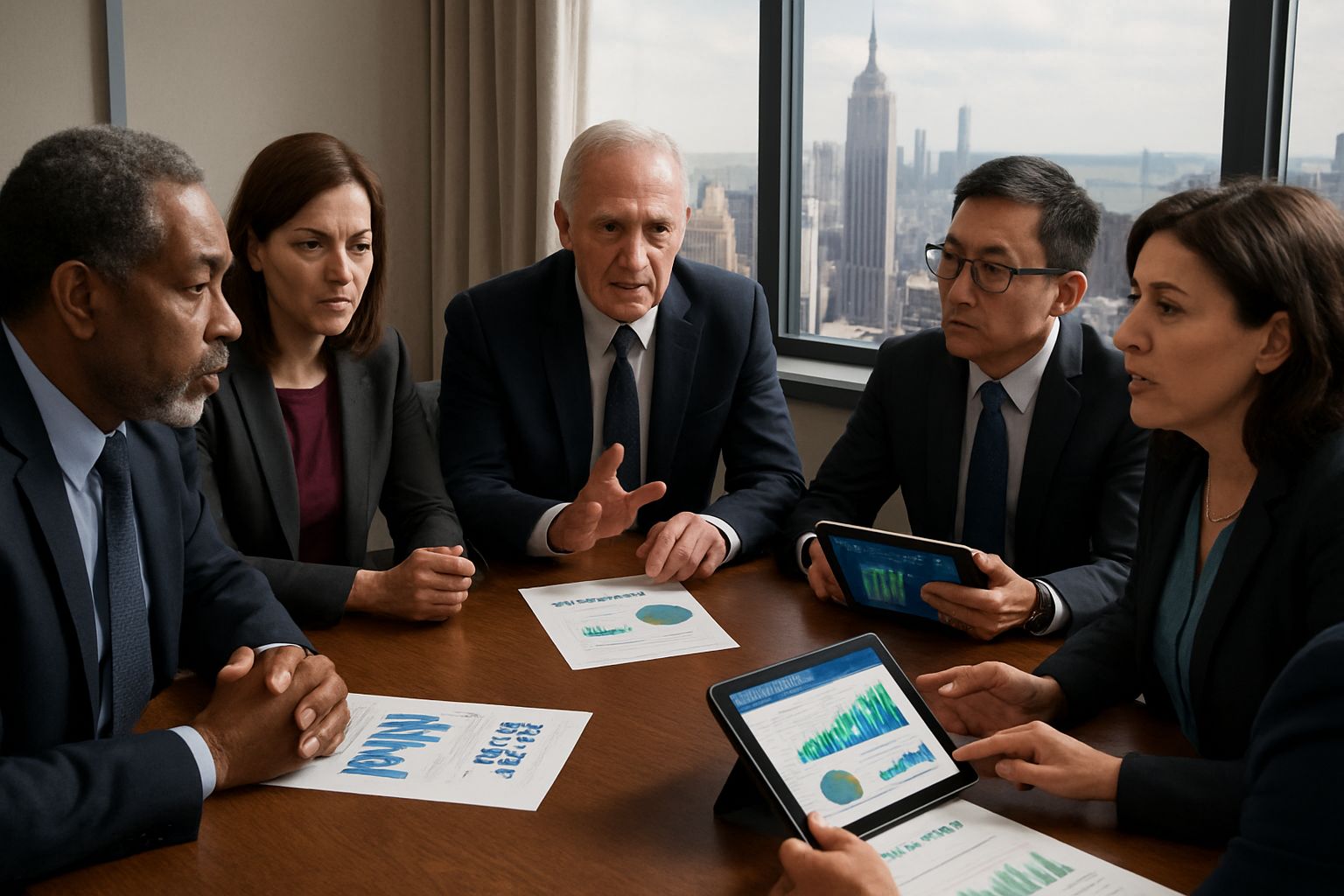
These clauses create hard deadlines for agencies and clear hurdles for investors. However, several procedural uncertainties remain, including rule-making scope and judicial review timing.
The provisions establish a structured pause and mandate data transparency. Consequently, the next section reviews why demand forecasts triggered legislative alarm.
Surging Data Center Demand
New York’s queue for large loads tells a striking story. NYISO listed 29 Energy-intensive projects totaling roughly 6,055 MW in 2025. By January 2026, requested capacity ballooned to nearly 12 GW, according to SpectrumLocal reports. BloombergNEF expects national data-center demand to reach 106 GW by 2035, almost triple today’s figure. Kevin Lanahan of NYISO compared developers to customers “in the deli line,” waiting for studies before ordering electricity.
- 9,000 MW additional load cited in S9144 sponsor memo
- 13 % national household electricity price rise in 2025
- 106 GW possible U.S. data-center demand by 2035, BloombergNEF
Furthermore, the sponsor memo claims 56 percent of data-center electricity now comes from fossil sources. However, those figures still need independent validation. For policymakers, the pace of AI Infrastructure expansion outstrips traditional planning cycles. Consequently, lawmakers fear unchecked development could overwhelm the Grid and inflate Energy prices statewide.
These numbers explain the legislative urgency. In contrast, industry experts argue many queued projects will never materialize, limiting real impact.
Grid Strain And Costs
Electricity systems must balance supply and demand every second. Consequently, a single hyperscale facility can require as much power as a small city. NYISO warns that simultaneous onboarding of several AI Infrastructure campuses would force expensive transmission upgrades. Moreover, if utilities socialize those costs, residential customers could feel higher bills. The Public Service Commission report mandated by S9144 aims to prevent that outcome.
Governor Hochul’s separate “Energize NY Development” plan tackles the same challenge from another angle. It would compel projects lacking substantial jobs to pay for their incremental Energy burden or self-supply renewables. Meanwhile, analysts emphasize that not all queued loads become real. Nevertheless, financial commitments accelerate once interconnection studies finish, locking in Grid investment needs.
The debate centers on who pays for capacity that benefits AI Infrastructure providers. Therefore, clear cost-allocation rules could shape investment timelines more than any statutory Moratorium.
Cost recovery questions underscore the stakes. Subsequently, the article turns to industry opposition and proposed alternatives.
Industry Pushback Emerges
Cloud providers and real-estate developers caution that prolonged uncertainty deters capital. Amazon, Microsoft, Google, and Meta have not released detailed statements on S9144 yet. However, they routinely highlight regional tax revenue and construction employment created by AI Infrastructure campuses. Trade groups note that New York already competes with Virginia, Georgia, and Ohio for hyperscale investment. Consequently, a Moratorium could redirect billions to friendlier states.
Additionally, companies emphasize their renewable procurement programs. Google claims it matched 100 percent of its global Energy use with clean purchases in 2025. Industry lobbyists argue such voluntary action makes statewide bans unnecessary. Nevertheless, local advocates counter that off-site certificates do not reduce peak demand or immediate Grid stress.
The standoff sets the stage for intense negotiations. Furthermore, upcoming budget hearings may reveal whether incentives or new siting rules can bridge positions.
Climate And Equity Stakes
Environmental groups frame the debate through a Climate justice lens. Food & Water Watch argues that fossil-fired generation currently supplies more than half of data-center electricity. Consequently, unchecked AI Infrastructure growth could undermine New York’s Climate Act targets. Moreover, water-cooled servers place extra stress on drought-prone localities.
Advocates also highlight equity. Rising Energy bills hit low-income households hardest, while data-center profits flow to distant shareholders. In contrast, Senator Krueger maintains that the Moratorium merely pauses permits until comprehensive impact studies finish. Meanwhile, community leaders near Cayuga Lake worry about air emissions and water withdrawals from a planned facility.
Climate considerations thus amplify the policy stakes. Therefore, holistic modeling of power portfolios, transmission, and efficiency must accompany any expansion of AI Infrastructure.
These arguments resonate with voters focused on sustainability. Subsequently, attention shifts to legislative calendars and expected agency deadlines.
Policy Outlook Timeline
Committee hearings could begin before spring recess. DEC has 18 months to draft the generic environmental impact statement. Furthermore, PSC must issue ratepayer protection orders within the same window. Because both actions precede lifting the Moratorium, the earliest new permits might arrive in 2029 if schedules slip. Consequently, developers planning AI Infrastructure campuses must reassess site strategies now.
Meanwhile, NYISO will continue its reliability planning. The operator intends to publish quarterly load updates, offering fresh visibility into Grid capacity. Additionally, state budget negotiations may determine resources for DEC and PSC staffing.
The legislative path therefore remains fluid. Nevertheless, early bipartisan signals appear limited, suggesting tough committee debates ahead.
Timeline uncertainties demand vigilance. Consequently, professionals should track agency dockets and future bills addressing pricing reforms.
Skills For Professionals
Policy flux creates demand for versatile talent. Engineers, lawyers, and planners fluent in AI Infrastructure policy can guide compliant project design. Moreover, cybersecurity remains central as facilities connect thousands of servers. Professionals can enhance their expertise with the AI Network Security™ certification. Additionally, knowledge of power markets and sustainability reporting frameworks adds competitive advantage.
Key competencies include:
- Understanding interconnection studies and cost allocation
- Navigating environmental review statutes and permitting pauses
- Aligning hyperscale efficiency targets with corporate sustainability pledges
Skill building positions teams to adapt as rules evolve. Subsequently, the conclusion distills core insights and recommended actions.
New York has placed itself at the center of a national debate over hyperscale computing. The proposed pause forces regulators, utilities, and developers to confront hard evidence on cost, capacity, and carbon. Consequently, agencies will study load forecasts, strengthen Grid planning, and refine cost-allocation tools before construction resumes. Meanwhile, companies must navigate shifting timelines and demonstrate genuine sustainability leadership. For professionals, continued learning offers the best hedge. Therefore, review upcoming hearings, track agency dockets, and pursue advanced credentials to stay ahead in this fast-moving sector.
Disclaimer: Some content may be AI-generated or assisted and is provided ‘as is’ for informational purposes only, without warranties of accuracy or completeness, and does not imply endorsement or affiliation.


