

AI CERTs
2 months ago
SpaceX-xAI Merger Reshapes Business, AI, and Space Industries
Global markets woke to surprising news on 3 February 2026. SpaceX revealed an all-stock Merger with Musk’s AI venture xAI. Consequently, analysts immediately debated the strategic logic behind the colossal move. However, Musk’s internal memo framed the combination as a leap toward orbital data centers. Moreover, the announcement signaled a valuation near $1.25 trillion, eclipsing many public peers. The step intertwines rockets, satellites, social data, and cutting-edge algorithms into one ambitious Business engine. In contrast, skeptics questioned regulatory feasibility and the scale of engineering required in orbit. Meanwhile, Corporate leaders watch closely, sensing potential disruption across supply chains and capital markets. This article unpacks the deal’s facts, opportunities, and risks for informed decision-making. Subsequently, each section ends with concise takeaways guiding readers through the evolving narrative.
Merger Deal Overview Facts
The deal is an all-stock share exchange rather than a cash acquisition. Therefore, xAI stakeholders receive SpaceX equity at a ratio undisclosed in public filings. Media reports peg the implied xAI valuation at roughly $250 billion. Furthermore, the merged entity’s notional share price hovers near $527, according to insiders. Merger mechanics reflect Musk’s preference for tight control and capital efficiency.
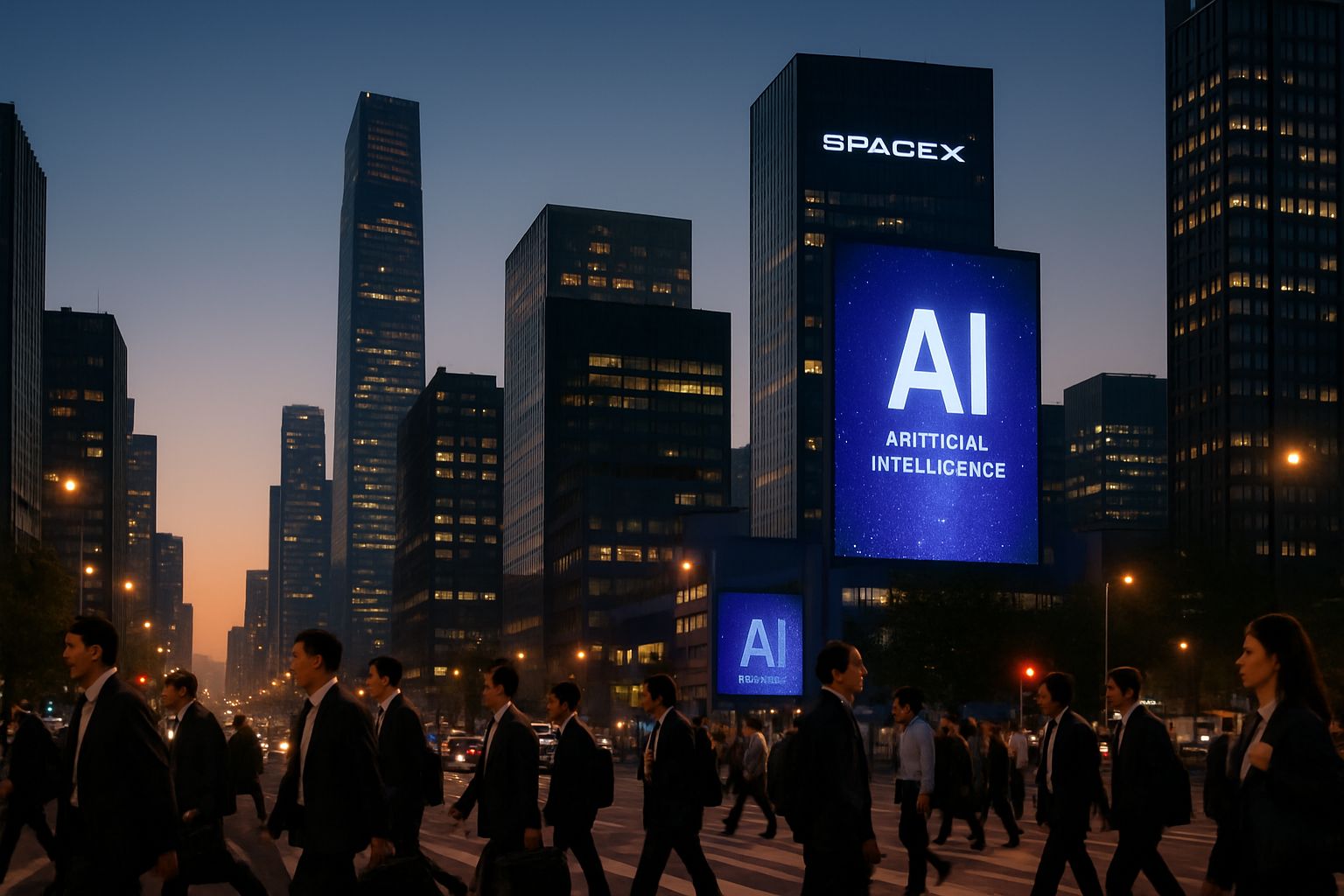
Additionally, SpaceX told employees that the consolidation creates a vertically integrated Business platform from launch pad to chatbot. Official quotes stress speed, shared culture, and Musk’s unilateral leadership as enabling factors. Finance analysts caution about dilution and governance once public disclosures begin.
These facts establish the transaction’s scale and structure. Consequently, attention now shifts to technical ambition.
Orbital Data Center Ambition
SpaceX simultaneously filed an FCC application covering up to one million satellites. Moreover, the filing outlines a "SpaceX Orbital Data Center" operating on persistent solar power. Engineers envision server-laden platforms linked by optical inter-satellite lasers for low-latency AI workloads. Consequently, cooling occurs through direct radiation into space, avoiding expensive water or air systems.
However, radiation, maintenance logistics, and bandwidth remain open engineering questions. Industry veterans warn that hardened GPUs weigh more and degrade faster in low Earth orbit. In contrast, Musk insists Starship launch cadence will offset replacement costs. This vision could transform Business compute economics if execution matches rhetoric. Thus, IT planners must prepare for satellite data pathways becoming part of standard architectures.
Orbital compute promises limitless energy and unique cooling advantages. However, practical hurdles challenge the aspiration and warrant close scrutiny next.
Financial Valuation Dynamics Explained
Bloomberg sources estimate combined valuation near $1.25 trillion, dwarfing several aerospace peers. Moreover, Starlink’s recurring revenue underpins most of that figure, reducing perceived volatility. xAI reportedly burns about $1 billion monthly while scaling its Grok model. Consequently, the Merger loads SpaceX with substantial cash requirements. Investors speculate that an IPO within 18 months will inject liquidity.
In contrast, bullish funds view satellite launch demand as a self-reinforcing profit loop. Management school researchers highlight the unprecedented scope of vertical integration across space and AI.
- Combined valuation: $1.25 trillion
- Implied share price: ~$527
- xAI burn rate: $1 billion per month
- Starlink satellites in service: >9,000
These numbers reveal both potential and fragility in the capital structure. Subsequently, regulatory barriers could reshape financial projections.
Regulatory And Safety Hurdles
Launching one million satellites alarms astronomers and orbital debris researchers. Furthermore, FCC historically trims constellation requests before granting spectrum licenses. International bodies may impose additional coordination under ITU rules. Meanwhile, environmental groups contest Starship launch emissions and night-sky light pollution.
Nevertheless, Musk argues that faster deorbit capabilities mitigate collision risk. Corporate lobbyists already engage regulators to streamline approvals before hardware production scales. In contrast, independent experts demand transparent traffic-management algorithms for autonomous satellite avoidance. Business stakeholders should therefore monitor rule-making timelines closely.
Regulatory friction could delay orbital compute rollouts significantly. Therefore, technical synergies face external gatekeepers moving forward.
Strategic Synergies And Risks
Combining launch, connectivity, and AI research creates a rare technological synergy. Moreover, Starship becomes both infrastructure and revenue generator through internal payload demand. Grok gains proprietary Starlink telemetry, enriching real-time training data. Consequently, latency between space assets and user devices shortens, enhancing product stickiness.
However, integration risk multiplies when culture, cybersecurity, and supply chains collide. Merger failures often stem from misaligned incentives across engineering and finance functions. Industry historians note that rapid scaling can overextend managerial bandwidth. Business continuity plans must therefore address satellite outages and model failures simultaneously.
Synergies promise growth, yet operational complexity remains daunting. Consequently, investor optimism must be balanced against execution realities ahead.
Market Outlook And IPO
Venture funds anticipate record-breaking underwriting fees once the combined company files prospectus documents. Moreover, bankers pitch a dual-class structure preserving Musk’s decisive control. In contrast, governance advocates prefer equal voting rights to protect minority investors. Analysts predict valuation could exceed $1.5 trillion if orbital compute milestones materialize.
Nevertheless, public markets may discount earnings until regulatory clarity improves. Corporate treasurers tracking supply contracts should model price swings in launch services. Business media expect detailed financials to emerge during late-2026 roadshows.
IPO timing therefore hinges on regulatory progress and cash burn stabilization. Subsequently, professional certification can help leaders analyze milestones objectively.
Implications For Tech Professionals
Engineers, data scientists, and strategists will face new architecture patterns linking space assets to cloud pipelines. Moreover, knowledge of orbital telemetry, laser links, and radiation effects will become valuable. Professionals can enhance their expertise through the AI+ Healthcare™ certification. Consequently, cross-functional fluency in aerospace, networking, and ML will distinguish ambitious talent.
Corporate recruiters already list satellite analytics and GPU thermal modeling as emerging requirements. Meanwhile, Business leaders must build compliance teams versed in space law and data sovereignty.
Career paths are widening alongside orbiting servers. Therefore, proactive learning now strengthens competitive positioning before launches ramp.
SpaceX’s purchase of xAI marks a watershed in space-AI convergence. Moreover, the plan unfolds against unprecedented valuation figures and regulatory scrutiny. Technical potential appears vast, yet orbital hazards and cash demands remain material. Consequently, Corporate stakeholders should monitor FCC dockets, funding burn, and Starship cadence. Business teams must weigh projected compute gains against ethical and environmental responsibilities. Nevertheless, successful integration could unlock scalable AI power unbound by terrestrial limits. In contrast, missteps would amplify financial and reputational risk. Act now: explore certification pathways, deepen market research, and position your organization for the next frontier.


