

AI CERTs
5 months ago
Aronofsky’s AI Backlash Rocks Media
On January 30, 2026, director Darren Aronofsky expected applause. Instead, his AI-assisted series, On This Day… 1776, met immediate rejection. Critics labelled the visuals “AI slop,” while social feeds echoed the complaint. Moreover, the project’s debut reignited long-running arguments about generative video. The backlash now dominates Media and Entertainment conversations across studios, unions, and tech labs. Consequently, the experiment offers a real-time lesson for storytellers balancing machine output and human craft. This article unpacks what went wrong, why it matters, and how decision makers can respond. Furthermore, it analyses technical constraints, labor fears, ethical gaps, and strategic missteps. Industry leaders require precise insight rather than outrage alone. Therefore, we dissect the rollout, reception, and partnerships behind the noise. Finally, we outline practical steps for creators who still see promise in synthetic images.
AI Ambition Backfires Hard
Aronofsky framed the partnership with Google DeepMind as an artist-led moonshot. He cited lower costs, rapid iteration, and unprecedented visual scope. However, early footage revealed the gulf between aspiration and execution. Faces slid off-model, lip sync failed, and historical pamphlets displayed unreadable gibberish. Consequently, reviewers from The Guardian to NME described watching the series as entering the uncanny valley’s basement. The mismatch between auteur reputation and unstable outputs amplified disappointment across Media trade columns. In contrast, supporters argued mistakes were normal for version-one experiments and should inform successive updates. Technical ambition alone could not mask fundamental model weaknesses. These misfires set the stage for deeper technical scrutiny.
Technical Limits Exposed Early
Generative video models such as DeepMind’s Veo remain impressive yet brittle. Moreover, they struggle with continuous motion, micro-expressions, and embedded text. PetaPixel noted frame-to-frame jitter that thwarted emotional engagement.
Key Project Timeline Points
- May 20, 2025: Primordial Soup–DeepMind partnership announced during Google I/O.
- Jan 29–30, 2026: Trailer and first episodes released on TIME’s YouTube channel.
- Weekly releases scheduled through 2026 to match 250th anniversaries.
Additionally, technical transparency remained scarce. Neither Primordial Soup nor DeepMind published model versions, data provenance, or guardrail details. Therefore, outsiders could only speculate about why the models misrendered Common Sense’s title page. Such opacity hindered constructive Critique from academic experts and user communities. Traditional Media analysts quickly highlighted those faults during live-stream discussions. Clear documentation could have turned public frustration into collaborative debugging. Lack of disclosure added mystery to already noticeable flaws. Consequently, attention shifted toward labor implications.
Labor Concerns Intensify Debate
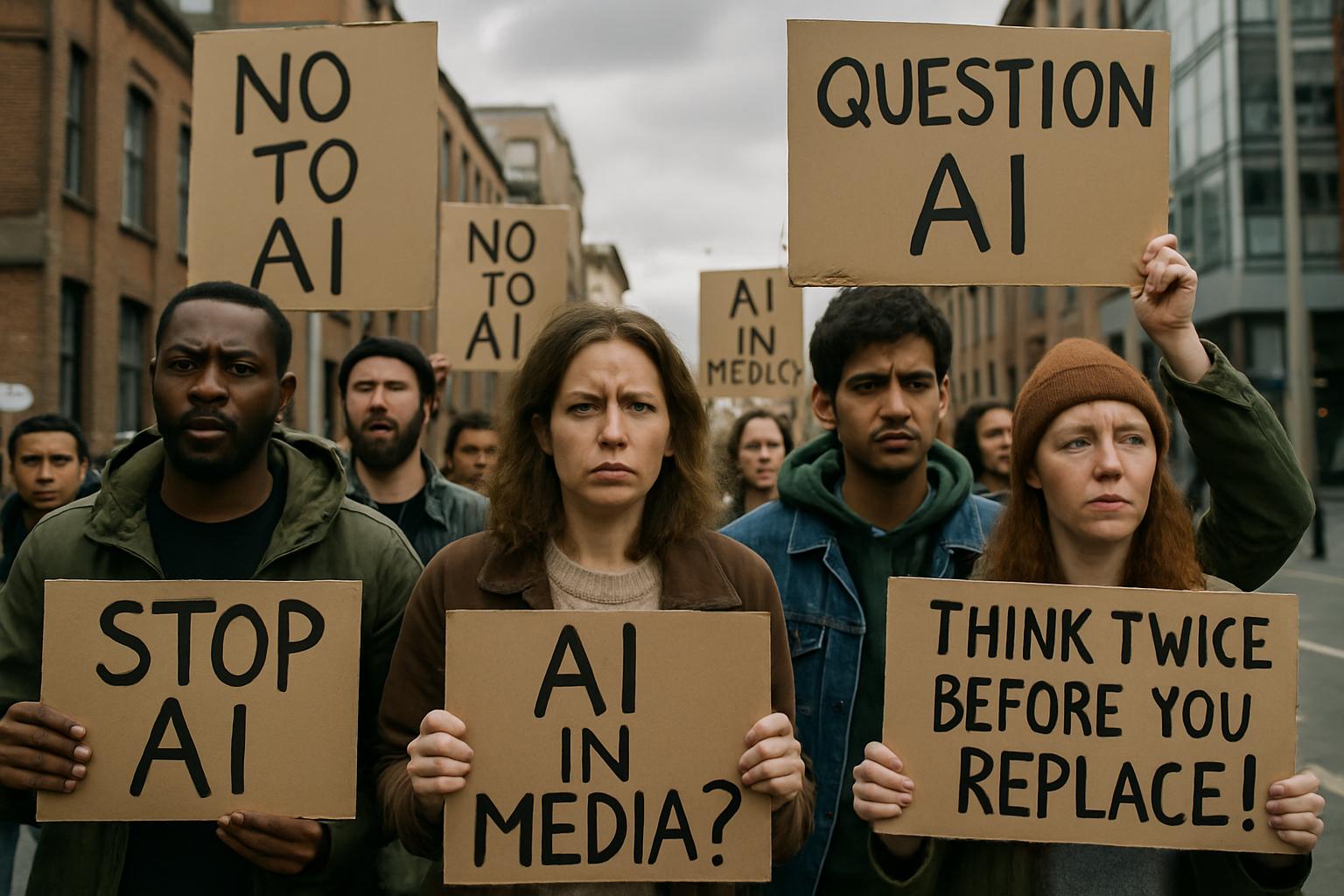
SAG-AFTRA members voiced anxiety about AI voices replacing human session fees. Meanwhile, visual artists noted missing credits in YouTube descriptions. Moreover, unions framed the series as a warning about job erosion if automation scales. TIME Studios claimed human editors, colorists, and sound designers finished each cut. Nevertheless, the public narrative focused on automation replacing craft rather than expanding Creativity. Trade Media coverage also spotlighted the missing credits issue. Professionals can enhance their expertise with the AI Data Robotics™ certification. Such upskilling offers leverage when negotiating hybrid pipelines. Labor unease will persist until crediting, pay, and reskilling policies mature. Next, ethical legitimacy enters the spotlight.
Ethical Questions Surface Loudly
Critics also challenged data provenance behind DeepMind’s training corpora. If copyrighted films informed the model, consent and compensation remain unresolved. In contrast, Aronofsky argued that guided prompting still embodies human Creativity. However, many reviewers countered that derivative style without attribution violates artistic norms. Furthermore, historians flagged factual errors that reduce educational value. Social Media outrage soon linked these ethical gaps to wider AI debates. Robust governance frameworks and transparent audits could ease Critique and rebuild trust. Ethical opacity magnifies reputational risk for high-profile experiments. Therefore, industry watchers examined community sentiment next.
Industry Divided Response Emerges
Hollywood veterans remain split over generative imagery. Roger Deakins, George Miller, and James Cameron voiced cautious optimism about new visual grammars. Meanwhile, established showrunners condemned the series as betrayal of cinematic heritage. Moreover, Wired reported growing audience fatigue toward low-depth AI novelties. Streaming algorithms, press cycles, and social groups amplified polarisation, keeping Media engagement metrics unpredictable. Consequently, TIME’s YouTube view counts fluctuated, with likes and dislikes appearing in equal measure. Legacy Media outlets published think pieces both praising ambition and condemning execution. Such volatility complicates green-light decisions for future Entertainment ventures. Balanced coverage that blends praise and Critique can anchor audience expectations. Still, investors demand measurable returns before funding additional hybrid projects. The split reveals opportunity and peril in equal proportion. Lessons distilled from this divide now guide next steps.
Lessons For Future Projects
Project leaders should align ambition with current model capability. Moreover, transparent documentation shields reputations and accelerates community feedback. Teams must budget extra time for human polish to satisfy premium Entertainment audiences. Additionally, dynamic risk registers covering ethics, labor, and IP help manage stakeholder expectations. Iterative user testing catches uncanny failures before entering public Media channels. Creative supervisors can harness AI for exploratory previz while preserving human Creativity at key narrative beats. Subsequently, balanced governance allows experimentation without abandoning artistic integrity. These recommendations convert hard lessons into actionable policy. Nevertheless, success depends on disciplined execution and honest communication.
Conclusion And Strategic Outlook
Generative video remains a potent yet volatile force within Media production. However, Aronofsky’s misfires demonstrate that technology cannot outpace storytelling fundamentals. Consequently, studios must integrate transparent pipelines, fair labor terms, and rigorous testing. Moreover, Entertainment consumers expect authentic emotion, not algorithmic novelty. Balanced Creativity paired with clear governance will determine who thrives in this evolving Media landscape. Therefore, executives should monitor technical progress while investing in human talent. Professionals ready to lead hybrid teams can validate skills through the linked certification. Explore emerging standards, refine processes, and shape the future rather than react to it.
Disclaimer: Some content may be AI-generated or assisted and is provided ‘as is’ for informational purposes only, without warranties of accuracy or completeness, and does not imply endorsement or affiliation.


