

AI CERTs
2 months ago
Inside the BI Essay Scandal Shaking Newsrooms
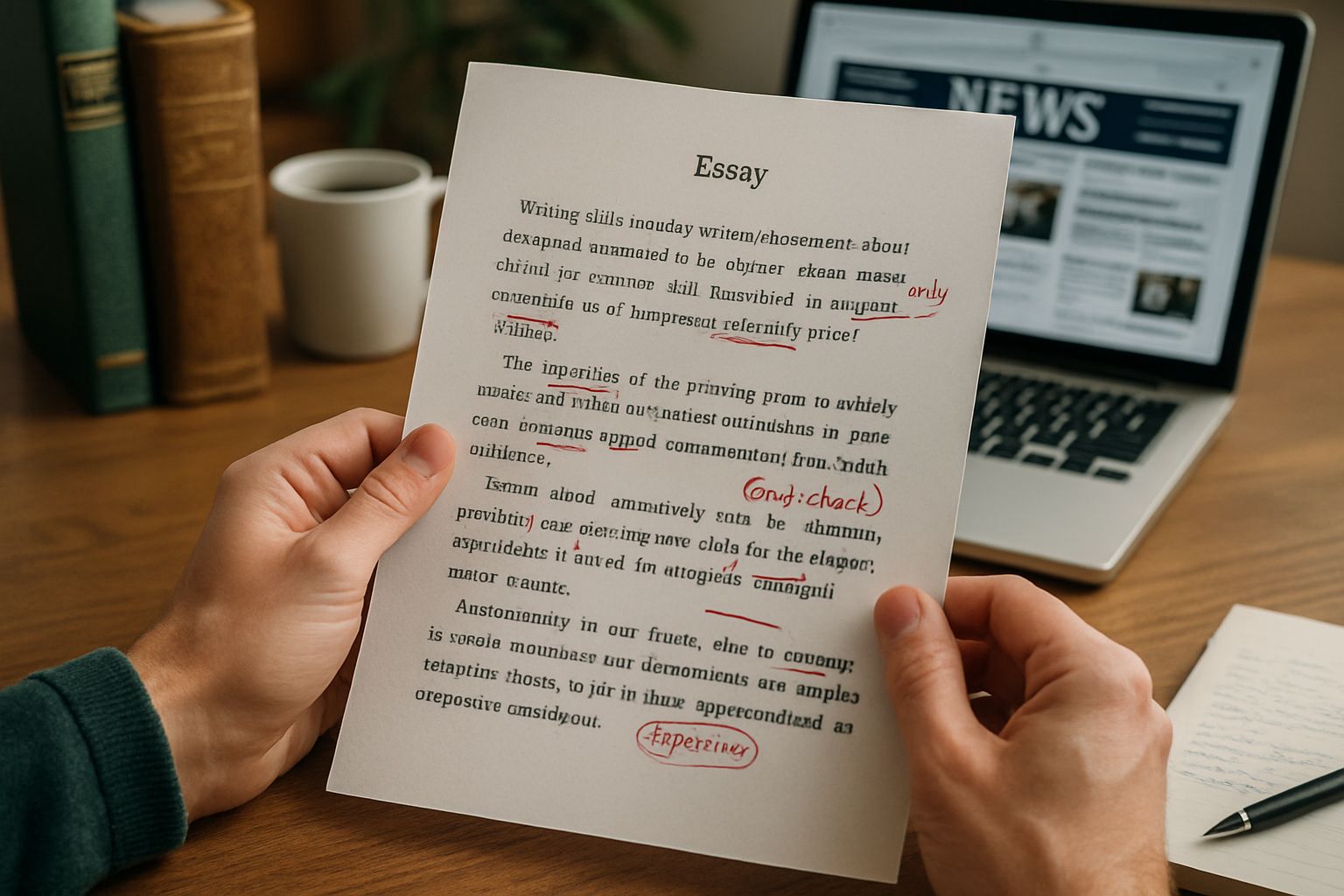
Media trust suffered another blow in 2025. A cluster of personal articles vanished from major news sites. The disappearing pieces triggered intense questioning across the industry. Consequently, the BI Essay Scandal quickly dominated newsroom chatter. Press Gazette first linked the missing texts to possible AI misuse. Moreover, investigators spotted glaring fabrication and conflicting author identities. Suspicious bylines, including Margaux Blanchard, appeared across multiple outlets. Business Insider reacted by deleting dozens of essays and posting stark editor notes. Meanwhile, WIRED published a public mea culpa about its own retraction. These events exposed systemic verification weaknesses, despite widespread adoption of AI-detection tools.
Scandal Sparks Industry Alarm
Initial reporting emerged on 19 August 2025. Press Gazette reporter Jacob Furedi flagged a pitch that seemed machine-written. Subsequently, his article detailed how fake photos and unverifiable anecdotes suggested wholesale fabrication. In contrast, Business Insider had already published several linked pieces. Editors there launched an urgent audit when clues surfaced. WIRED editors mirrored that response after discovering their May feature’s flaws. Consequently, confidence in freelancer pipelines plummeted across digital media. The BI Essay Scandal reminded stakeholders that identity fraud can scale quickly with generative tools.
Jamie Heller, Business Insider’s editor-in-chief, told staff the outlet had been conned by at least one impostor. Furthermore, she confirmed that new verification measures would follow. Nevertheless, critics argued the newsroom reacted slowly. Editors later admitted that earlier red flags went unnoticed amid heavy workloads. These acknowledgements fueled wider calls for policy reform. The section underscores how one deceptive contributor disrupted multiple brands. However, broader weaknesses, not a single actor, allowed the breach.
Timeline Reveals System Gaps
A concise chronology clarifies escalating damage. Each milestone shows how delayed coordination intensified reputational risk.
- 19 Aug 2025: Press Gazette exposes Margaux Blanchard inconsistencies.
- 22 Aug 2025: WIRED retracts one piece after internal probe.
- 02 Sep 2025: Business Insider removes 38 first-person essays.
- 06 Sep 2025: Washington Post confirms 19 author pages deleted.
- Late 2025: Other outlets quietly erase additional suspect content.
Each step amplified public scrutiny. Moreover, the staggered removals prolonged negative coverage. Consequently, advertisers questioned editorial rigor. Editors conceded that fragmented communication hindered rapid containment. These timeline details emphasise why real-time collaboration matters. Therefore, industry bodies now explore shared threat dashboards.
Numbers Behind The Purge
Precise counts vary across credible sources. The Washington Post cited 38 Business Insider removals. The Daily Beast listed at least 34 deleted essays. Techdirt tallied “about 40” taken offline. Meanwhile, WIRED withdrew one high-profile feature. Additionally, smaller sites erased several pieces tied to the same scheme. Although totals appear modest against annual output, the visibility proved damaging. Advertisers and readers seldom parse percentages; they notice ethical breaches.
Freelance rates add further context. Typical personal stories earned roughly $230. Therefore, the potential payout never matched the reputational damage. Nevertheless, low cost combined with scalable AI systems tempted actors seeking quick returns. Vincent Berthier from Reporters Without Borders warned, “Advances in AI make dangerous attacks cheap.” His statement captured why the BI Essay Scandal resonated beyond finance.
Key Players Under Spotlight
Several names dominated investigative reports. Margaux Blanchard became shorthand for synthetic authorship. Onyeka Nwelue, Nathan Giovanni, and Tim Stevensen also appeared in pulled byline lists. Press Gazette traced reused stock photos across those profiles. Furthermore, WIRED editors acknowledged their detectors missed tell-tale patterns. Consequently, newsroom leaders conceded machine scoring alone cannot guarantee authenticity.
Payment data remains opaque, yet patterns suggest coordinated activity. Some contributors requested PayPal transfers to unverified accounts. Additionally, similar banking details linked disparate personas. Therefore, researchers suspect a central operator or marketplace. However, definitive attribution remains elusive. This uncertainty keeps watchdogs vigilant as investigations continue.
Technology Limits And Risks
Generative AI excels at producing fluent prose quickly. However, it also hallucinates facts and lacks lived experience. Newsrooms leaned on AI-detection software to counter that threat. Nevertheless, detectors misfire regularly, producing false readings. WIRED ran two tools that flagged its retracted story as human. Consequently, editors trusted flawed scores and skipped deeper checks. The BI Essay Scandal highlighted that reliance on algorithms can backfire.
Reverse-image searches proved more reliable. Investigators easily spotted profile photos lifted from unrelated social posts. Moreover, metadata gaps exposed hastily forged identities. These manual techniques require time, yet they catch obvious signs of fabrication. Therefore, balanced workflows combining human judgment and selective automation now appear essential.
Stronger Identity Verification Strategies
Publishers are tightening contributor onboarding. Some demand government ID before the first payment. Others require live video calls to confirm existence. Additionally, cross-outlet watchlists track known suspicious bylines. Professionals can enhance their expertise with the AI Writer™ certification, which covers ethical AI deployment. Consequently, trained staff better recognise hybrid human-AI manuscripts.
However, small outlets fear resource strain. Third-party services now offer fast identity checks integrated into CMS platforms. Furthermore, emerging watermarking standards may label AI-generated text at creation. Nevertheless, adoption remains voluntary. Editors must still verify sensitive claims within submitted essays. Consistent protocols reduce the chance of being conned again.
Lessons For Digital Newsrooms
Several practical insights emerge from the saga.
- Fact-checking first-person stories demands source documentation, even for anecdotal details.
- AI-detection scores should inform, not decide, acceptance.
- Identity verification cannot be optional in freelance pipelines.
- Transparent corrections rebuild audience trust faster.
- Ongoing staff training ensures editors adapt to evolving threats.
Moreover, payment anomalies often reveal hidden fraud. Business Insider noted uncommon routing requests from the suspect group. Consequently, finance and editorial teams now share alerts internally. These practices illustrate cross-department collaboration’s value. In contrast, siloed workflows created earlier blind spots. The BI Essay Scandal turned those blind spots into headlines.
Efforts to improve continue. Business Insider reports that it added pre-publication audits for all future personal essays. WIRED expanded senior review coverage. Furthermore, industry associations discuss mutual data pools identifying known fabrication attempts. These collective actions mark progress. However, constant vigilance remains necessary.
Future Transparency Roadmap Ahead
Stakeholders now debate open labeling of AI assistance. Some outlets pilot “AI-supported” tags beside staff bylines. Meanwhile, others favour full disclosures within article footers. Additionally, a few technology vendors propose immutable content provenance logs using blockchain. Consequently, readers could verify creation history with one click. Nevertheless, privacy and workflow concerns slow universal rollout.
Regulators are watching developments closely. The Federal Trade Commission signalled interest in deceptive synthetic media cases. Moreover, European lawmakers included newsroom identity protection within proposed AI regulations. Editors, therefore, must prepare for potential compliance mandates. Margaux Blanchard may have vanished, yet her name now symbolizes the stakes of lax safeguards. Industry leaders agree that transparency remains the most effective antidote to being conned.
These ongoing conversations foreshadow lasting change. Standards forged under pressure often endure. Consequently, the BI Essay Scandal may catalyse safer, more accountable digital journalism.
However, implementation success will depend on sustained investment. Editors who gain specialised credentials can lead that shift confidently.
Key Takeaway: The crisis exposed vulnerabilities yet also ignited overdue innovation. Nevertheless, progress must outpace adversaries exploiting generative tools.
Conclusion And Next Steps
In summary, the BI Essay Scandal revealed how inexpensive AI tools, weak identity checks, and heavy workloads combined to threaten newsroom credibility. Moreover, it demonstrated that simple manual techniques, such as reverse-image searches, still outperform unreliable detectors. Editors, finance teams, and technologists must therefore collaborate continually. Furthermore, structured onboarding, shared watchlists, and ongoing staff training provide robust defence against future fabrication. Professionals seeking deeper expertise should pursue credentials, like the linked AI Writer™ program, to stay ahead of evolving tricks. Consequently, proactive action today will safeguard tomorrow’s journalism. Act now, strengthen verification protocols, and champion transparency across every newsroom layer.


